The key facts
- PUK announced its withdrawal from the KRG after the parliament speaker was elected amid an opposition boycott
- Bafel Talabani threatened a mirror appointment of a president and prime minister in Sulaymaniyah
- The KDP rejected the accusations, saying the region's future is not decided unilaterally
PUK's exit from the regional government
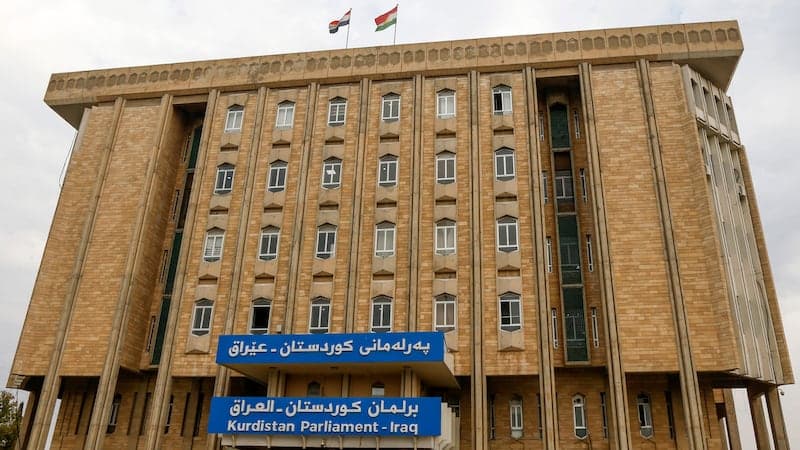
The Patriotic Union of Kurdistan (PUK), one of Iraq's two leading Kurdish parties, has announced its withdrawal from the Kurdistan Regional Government (KRG), deepening a political crisis with its longtime rival, the Kurdistan Democratic Party (KDP). The National reports this. The trigger was a session of the region's parliament, convened for the first time in almost two years: despite a boycott by the PUK and allied parties, who demanded continued negotiations on the distribution of top posts, deputies elected a speaker. A quorum was met — 52 of the 100 members present took part in the vote, with 51 required, and the head of the KDP's parliamentary bloc, Vala Farid, became speaker.
Talabani's statement and the KDP's response
In a video address, PUK leader Bafel Talabani said the party had decided to 'walk out of this failed government,' accusing part of the KDP of ignoring democratic principles and the will of voters. 'A minority within the KDP has today proven that they do not know what democracy is, that they have no respect for you, the voters,' he said. According to him, the PUK does not recognize the parliamentary session itself, 'nor anything that follows from it.' Talabani warned that any unilateral steps by the KDP to form new regional leadership would receive a mirror response in the PUK stronghold of Sulaymaniyah: 'If they appoint a president of the region, we will appoint a president of the region. If they appoint a prime minister, we will appoint a prime minister.' In response, a senior KRG official said the KDP accuses the PUK of blocking the democratic process and rejects Talabani's calls to separate Sulaymaniyah province from autonomous Kurdistan. 'The Kurdistan Region is not the property of any individual or party, and no one has the right to decide its future single-handedly,' the statement quoted by The National reads.
The power-sharing system dating back to 2006 is under threat
The dispute threatens the power-sharing mechanism on which Kurdish self-rule has rested since the rival factions formally reunified their administrations in 2006 after years of conflict. Victoria Taylor, former deputy assistant secretary of state for Iraq and director of the Atlantic Council's Iraq Initiative, linked the breakdown of talks not to a recent disagreement but to years of mutual distrust between the two dominant parties: according to her, the sides have repeatedly come close to a compromise but 'simply do not trust each other.' She also noted that the Donald Trump administration has taken a different approach — Washington has shown less interest in acting as a mediator between Kurdish factions, leaving the sides to sort things out themselves. Against the backdrop of the crisis, Iraqi Prime Minister Ali al-Zaidi met in Baghdad on Friday with Trump's special envoy for Iraq, Tom Barrack, who said Washington is 'proud to stand alongside Iraq,' deepening economic and trade ties. It remains unclear whether the PUK's actions will lead to the actual restoration of parallel administrations in the region — Talabani has only signaled such a threat, and the sides have announced no concrete steps since the session.