The key facts
- The EU loses around €59.3 billion a year to profit shifting by multinational companies; €8 billion (13.6%) is linked to the UK and its territories
- France loses €13.1 billion and Germany €11.8 billion; together 42% of the EU's losses
- The UK and six of its jurisdictions account for 31% of the global risk of tax abuse according to the Corporate Tax Haven Index
The scale of losses and the role of the British network
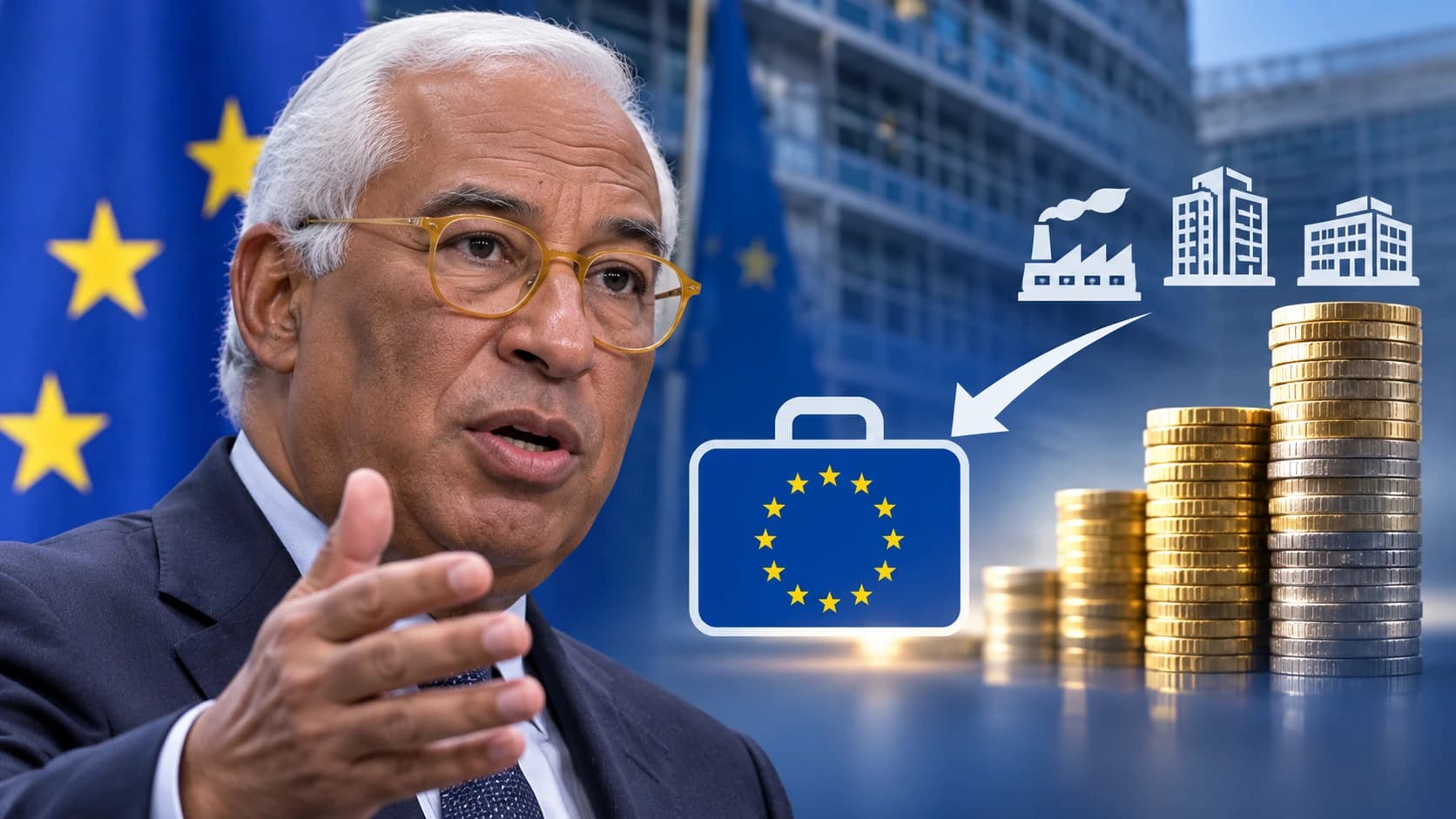
EU countries lose around €59.3 billion in tax revenue every year because multinational companies shift profits between jurisdictions. This is the estimate by the Tax Justice Network, whose analysis was published alongside the update of the Corporate Tax Haven Index on 5 November. According to the organisation, about €8 billion of these losses — 13.6% of the total — are linked to the United Kingdom and its Overseas Territories and Crown Dependencies. This is the first estimate of the British network's contribution for each individual EU country, Euronews reports.
Who loses the most
The country-level data refer to 2022 and cover losses from companies, not private individuals. France leads with €13.1 billion and Germany with €11.8 billion — together €24.9 billion, or 42% of the EU's total losses. Spain (€4.8 billion), Poland (€4.7 billion) and Belgium (€4.1 billion) lose more than €4 billion; Italy (€3.6 billion), the Netherlands (€3.5 billion) and Luxembourg (€3.2 billion) lose more than €3 billion. The smallest losses are in Lithuania (€59 million), Malta (€61 million), Latvia (€68 million), Estonia (€73 million) and Croatia (€75 million).
How profit shifting works
The mechanism is that a company records its profit in a low-tax jurisdiction rather than where the business is actually conducted. This is done, for example, through intra-group payments — interest or royalties — that reduce taxable profit in high-tax countries. According to the OECD, most such schemes are not illegal, although some are; the organisation believes they undermine the fairness of tax systems and cost governments $100–240 billion (€89–214 billion) a year — 4–10% of global corporate income tax revenue.
British jurisdictions in the index
Four British jurisdictions are in the index's top 10: the British Virgin Islands, the Cayman Islands and Bermuda rank first, second and third, and Jersey is eighth. Guernsey and the Isle of Man are in the top 20, while the United Kingdom itself ranks 19th. Together they account for 31% of the global risk of corporate tax abuse, or 33.3% when Gibraltar, Anguilla, the Turks and Caicos Islands and Montserrat are included. The Crown Dependencies set their own tax rules, and the tax policy of the Overseas Territories is usually determined locally; the UK retains the right to intervene but rarely legislates on their internal affairs.
The British network's contribution by country and the organisation's position
The largest losses linked to the British offshore network are borne by France (€2.8 billion — 21.3% of its losses, the highest share in the EU) and Germany (€1.4 billion, 11.9%). They are followed by Luxembourg (€570 million), Spain (€475 million), Poland and Italy (€438 million each) and Belgium (€415 million). The United Kingdom itself, according to the organisation, loses £12.8 billion (€14.7 billion) a year — the average for 2018–2022. Moran Harari, the lead researcher of the Tax Justice Network index, said that the UK and the EU 'would benefit most from the changes the UN tax convention seeks', yet remain opponents of it. Euronews Business contacted the UK Treasury for comment.
A broader estimate
When wealthy private individuals are included, the scale of losses is significantly higher: the State of Tax Justice 2024 report puts global losses at €416 billion ($492 billion) a year, including both profit shifting by corporations and evasion through undeclared offshore wealth. Companies account for about 71% of that amount. The organisation also notes that, despite years of OECD-led efforts, many countries still do not require companies to disclose the basic information tax authorities need to detect abuse.