The key facts
- The permissible temperature in educational premises is 18–24 °C; from September 1, 2026, new sanitary rules SP 2.4.2.4283-26 are in force, requiring schools to monitor temperature with thermometers.
- There is no automatic cancellation of lessons at a specific temperature — the school is obliged to stop the violation itself: move the class to a warm room, repair the heating, or change how lessons are organized.
- An effective procedure: record the measurements, submit a written statement to the principal, then complain to the founder and the territorial office of Rospotrebnadzor.
The standard and the new rules
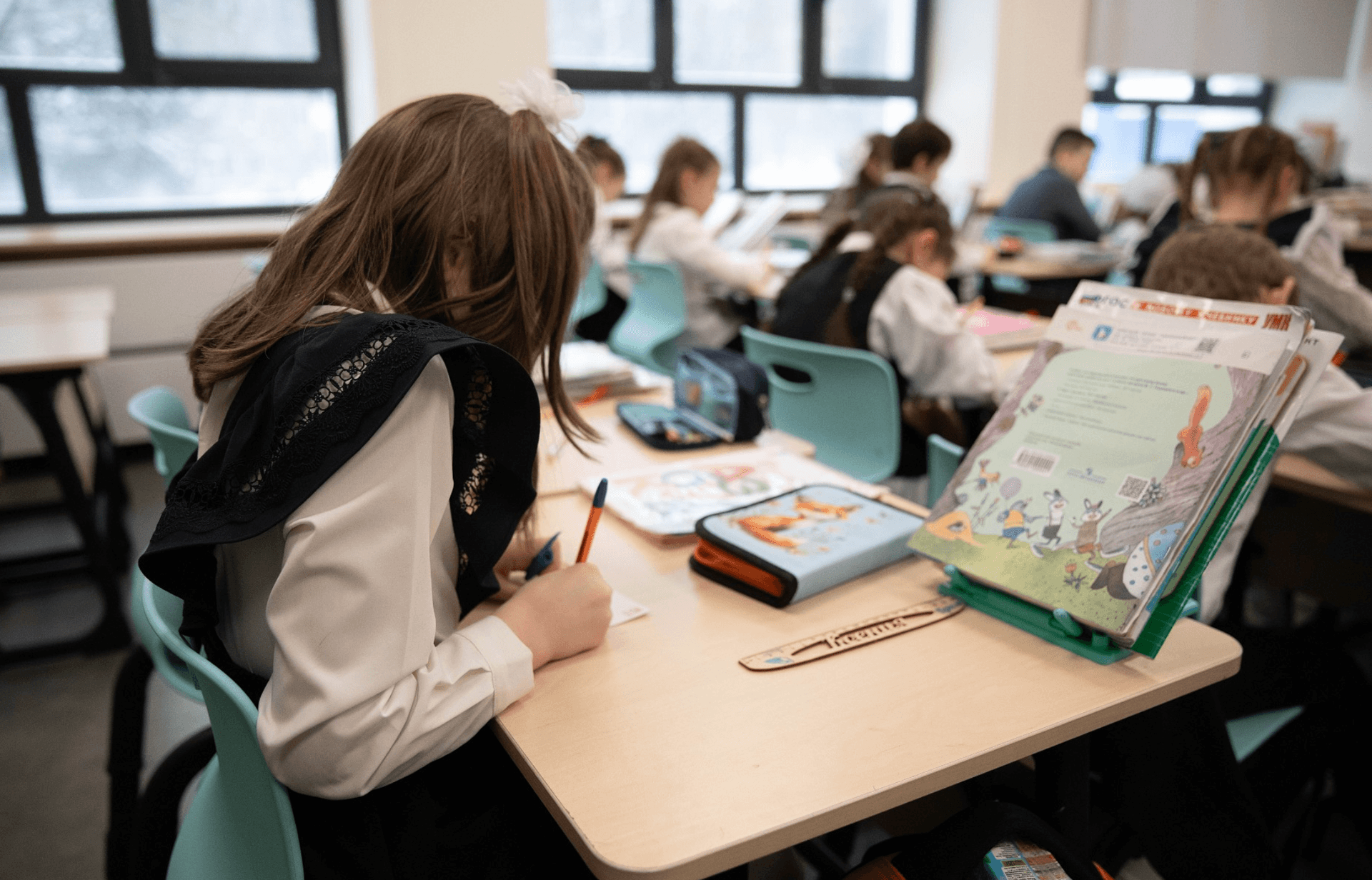
If a child sits through lessons wearing a coat and the thermometer reads +16 or +17 degrees, the advice to 'dress warmer' does not solve the problem: for classrooms of general education organizations during the cold season, the permissible temperature is 18–24 °C, meaning a constant +16–17 °C is a violation of the hygienic standard. This is the reminder given by Life.ru in its breakdown of the steps parents can take.
What changed on September 1, 2026
Since September 1, 2026, schools have operated under the new sanitary rules SP 2.4.2.4283-26, which replaced the former SP 2.4.3648-20 and remain in force until September 1, 2032. A change that matters practically for parents: the organization is required to monitor the temperature itself, using thermometers, in all rooms intended for children's presence. This means that the answer 'we don't know how many degrees there are in the classroom' does not correspond to a proper control system. At the same time, airing the rooms is not carried out while children are present.
Cancelling lessons: what the rules do not contain
The federal rules contain no formula such as 'at +17 °C lessons are automatically cancelled' or 'at +16 °C the class must be moved to another room.' However, the school cannot ignore the violation: it is obliged to ensure safe learning conditions, and the method depends on the situation — moving the class to a warm room, fixing the heating fault, or changing how lessons are organized while the breakdown lasts. Practice in 2026 confirms this: according to Life.ru, in February 2026 in Voronezh, after a prosecutor's inspection, classrooms where the temperature dropped to +14 °C were closed, children were moved to warm premises, and administrative cases were opened against school administrators. Lack of funding, as the outlet notes, does not remove the school's obligation to comply with sanitary requirements.
What parents should do
The key legally significant question is not 'are the radiators hot' but whether the air temperature in the room meets the standard. A photo of a household thermometer is useful as initial evidence, but stronger is a series of measurements taken under normal lesson conditions (not right after airing and not next to a window or radiator). The recommended procedure: ask the administration to conduct an official measurement and record it in writing; if the violation is not corrected, submit a written statement to the principal with specific facts (room, dates, readings), then contact the school's founder or the education authority, attaching a copy of the statement and the school's response, and also the territorial office of Rospotrebnadzor. Rospotrebnadzor states that complaints about temperature conditions can be sent to its territorial offices, and where there are grounds, specialists carry out control measures with microclimate measurements. For a complaint that could become the basis for an inspection, it is important to include the applicant's full name and contact details. The prosecutor's office is not the first point of contact, but it is appropriate in cases of prolonged inaction or systematic violations. If several classes are cold, a collective complaint listing the rooms, dates and readings strengthens the factual part. The general 30-day deadline for responding to a complaint does not mean the school may do nothing for a month: in the statement it is worth requesting urgent measures while the matter is being considered.