The key facts
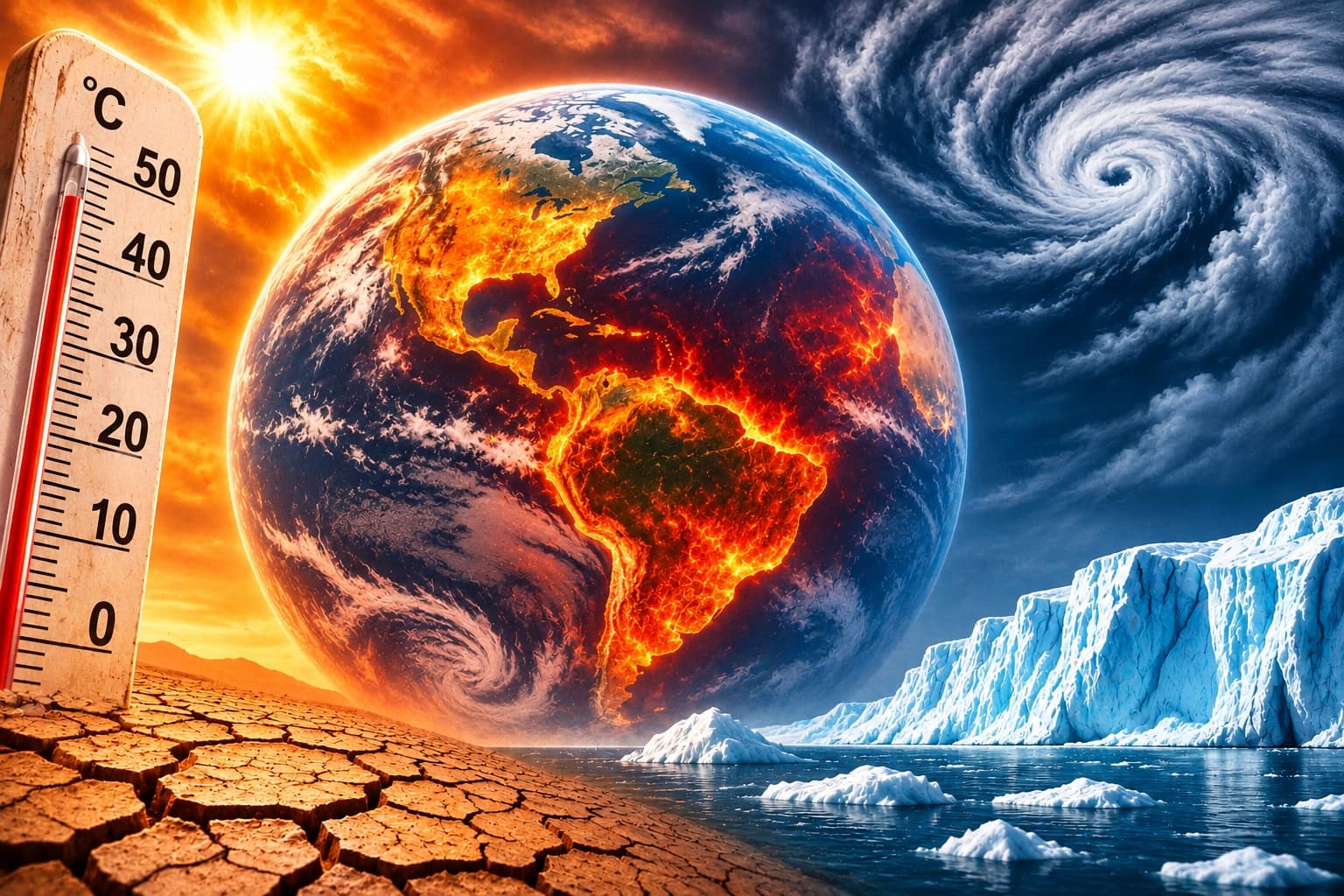
- Copernicus: 2026 is almost certain to become the second calendar year after 2024 above the 1.5°C threshold; the chance of it becoming the warmest year is 20%
- October 2026 was the warmest October on record, 1.75°C above the pre-industrial level; the third consecutive month above 1.5°C
- UNEP expects the Paris Agreement goal to be exceeded; a scenario of returning to 1.5°C by 2100 requires cutting emissions by 69% by 2040 relative to 2025
Copernicus forecast: a second year above 1.5°C
The global average temperature in 2026 will almost certainly exceed the pre-industrial level by more than 1.5°C, the EU climate service Copernicus said on Friday, according to Deutsche Welle.This will make 2026 the second calendar year after 2024 above that threshold. According to the service, 2026 is likely to become the second warmest year on record after 2024, although there remains a 20% probability that it will surpass the 2024 record. Copernicus also expects the average for the four years 2023–2026 to be above the 1.5°C threshold.
A record October and the role of El Niño
October 2026 was the warmest October on record: the global average surface temperature that month was 1.75°C above the pre-industrial level. It was the third consecutive month above the 1.5°C threshold. “An exceptionally strong El Niño is adding heat to a climate already warmed by human activity, and 2026 is on track to become the second calendar year above 1.5°C,” said Samantha Burgess of the European Centre for Medium-Range Weather Forecasts.
What the 1.5°C threshold means and why exceeding it is not yet final
The 2015 Paris Agreement set the goal of holding the rise in global temperature well below 2°C compared with the pre-industrial level and of “pursuing efforts” to keep it from exceeding 1.5°C. The goal, however, concerns long-term warming, so a single year above 1.5°C does not in itself constitute a formal breach of the agreement. Nevertheless, the UN Environment Programme (UNEP) now expects warming to exceed the 1.5°C goal and notes that, since this threatens sharp climate extremes and dangerous tipping points, the overshoot must be as small and as brief as possible. According to UNEP's September report, every additional fraction of a degree increases the risks and consequences.
A scenario for returning to 1.5°C and scientists' assessments
UNEP describes a scenario in which warming peaks at 1.7–1.8°C around mid-century and returns to 1.5°C by 2100. That would require cutting emissions by 69% by 2040 relative to 2025 levels. Climate scientist Johan Rockström, director of the Potsdam Institute for Climate Impact Research, called for rapidly bringing temperatures back down through removing CO2 from the atmosphere and said at a briefing that exceeding 1.5°C within the next five years is now inevitable. In his words, humanity is currently “on a path to an unmanageable future.”