The key facts
- Zipline raised $1.5 billion, reaching a $21.5 billion valuation; the round was led by Paradigm, WCM Investment Management and Layer Global
- Walmart and Zipline agreed on 300 new drone delivery sites in the US, up from 21 currently active
- The company's share of delivery revenue grew from 10.8% to 34.9% between March and October 2026
A major funding round and an expanded partnership with Walmart
Drone logistics startup Zipline has raised $1.5 billion, reaching a valuation of $21.5 billion, TechCrunch reports. The round was led by Paradigm, WCM Investment Management and Layer Global; other participants include Valor Equity Partners, Fidelity Management & Research Company, Uber, Tiger Global, J.P. Morgan, ARK Invest and Salesforce Ventures.
300 sites instead of 21
At the same time, Zipline and Walmart signed a new multi-year agreement to add 300 drone delivery sites across the US. The companies have been working together since 2021, but currently have only 21 active delivery sites — meaning the new deal represents more than a tenfold expansion of the network, although this concerns plans rather than already operational infrastructure. The company said it will use the raised funds to expand its manufacturing capacity in the US and hire staff to build a nationwide delivery network.
From blood delivery in Rwanda to a US network
Zipline was founded in 2014 and began with autonomous drone blood deliveries in Rwanda, later operating in Ghana and Nigeria. The California-based company launched its first US operations in 2020, delivering medical supplies for Novant Health in North Carolina. 2022 was a turning point, when Zipline received the Part 135 air carrier certificate from the Federal Aviation Administration (FAA) — permission for long-range commercial drone deliveries, which had been a key regulatory barrier to growth. Since then, the company has formed a number of partnerships, including adding Zipline drones to the Uber Eats delivery network in August 2026.
Scale of operations and performance
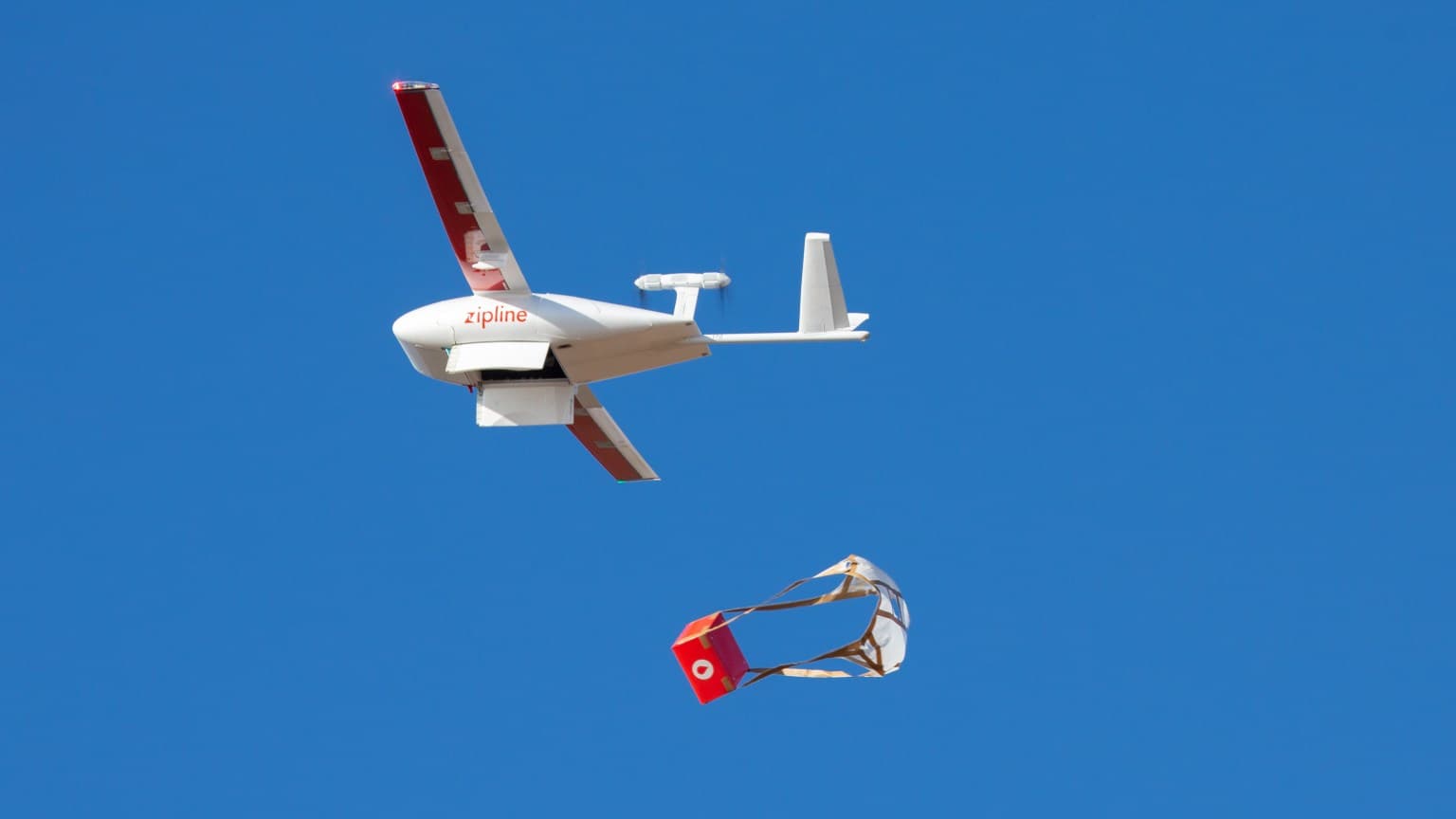
Zipline currently delivers food, retail, agricultural and medical goods in five African countries, several US cities and Japan. For home delivery, it uses Platform 2 drones, designed to carry loads of up to eight pounds (about 3.6 kg) within a 10-mile radius; the larger Platform 1 drones handle long-range corporate and government deliveries with a range of up to 120 miles round trip. The company also reported that its share of delivery revenue grew from 10.8% to 34.9% between March and October of this year; the new round is intended to increase that figure.