The key facts
- Swift re-entered the atmosphere over North Sumatra; most of the spacecraft burned up, and individual fragments may have reached the surface
- A mission designed for two years lasted nearly 22 years; the observatory studied more than 2,000 gamma-ray bursts and over 1,400 supernovae
- The rescue operation with the LINK spacecraft failed due to loss of control; Swift ceased operations on October 20
The observatory left orbit over Indonesia
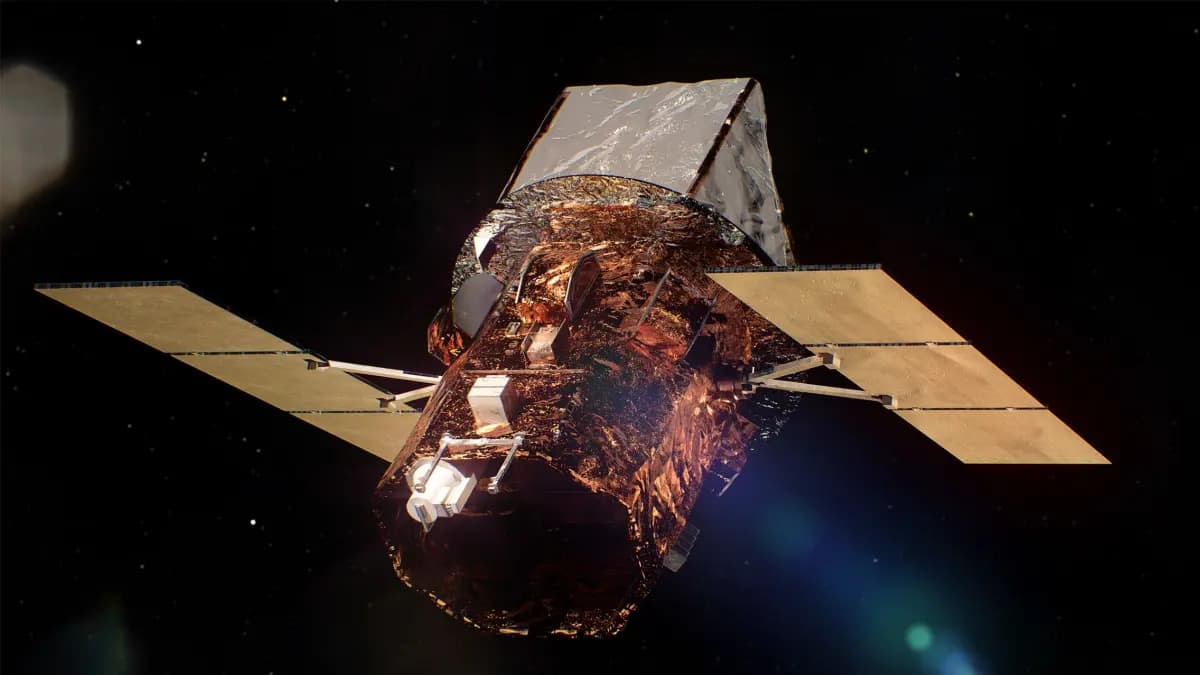
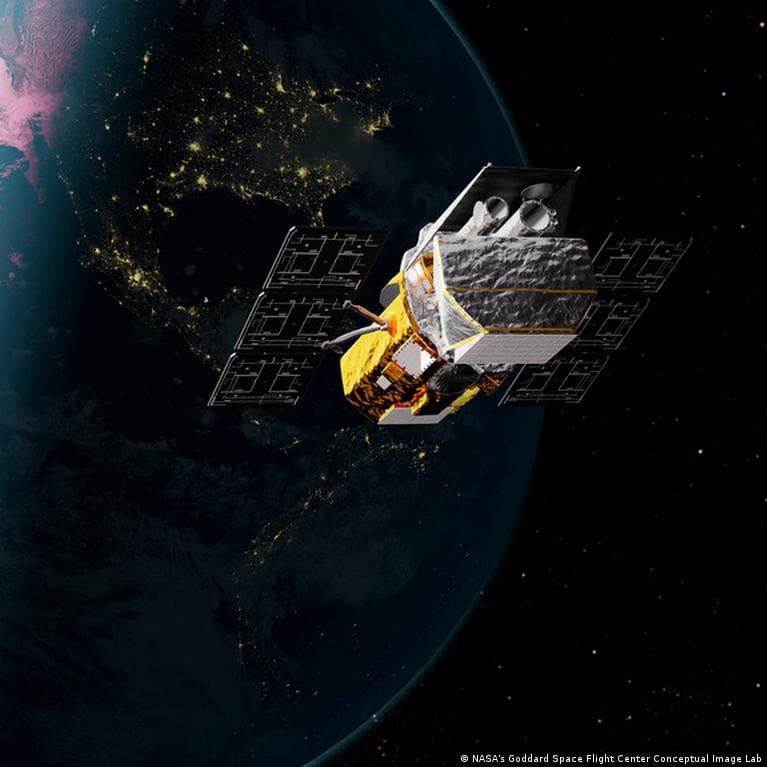
NASA's orbital observatory Neil Gehrels Swift re-entered Earth's atmosphere over the North Sumatra region in Indonesia and was destroyed nearly 22 years after launch. According to NASA, the re-entry was recorded at 7:39 a.m. Eastern Time; at the moment of re-entry, the spacecraft was traveling at a speed roughly 22 times the speed of sound. Russian outlets differ in converting the time: Life.ru, citing the US Space Force, gives 15:39 Moscow time on November 4, while Gazeta.Ru gives 14:39 Moscow time. Most of the structure burned up at high altitude, however, according to NASA estimates, individual components may have survived the descent and reached the surface. No reports of injuries or damage were received.
A mission that lasted 11 times longer than planned
Swift was launched in November 2004 to study gamma-ray bursts — the most powerful energy events in the Universe. The mission was originally designed for two years, but the spacecraft operated almost 11 times longer — just under 22 years. The satellite cost $500 million and weighed about 1,452 kg. During its operation, the observatory, equipped with three telescopes, studied more than two thousand gamma-ray bursts and over 1,400 supernova explosions, and also observed black holes, stellar X-ray flares, asteroids and comets; its results contributed to roughly 7,000 published scientific papers. Gazeta.Ru notes the spacecraft's unique maneuverability: it could turn toward a sudden flash within minutes and simultaneously observe in the gamma-ray, X-ray and ultraviolet ranges; it was the first to record gamma-ray burst afterglows and helped localize sources of gravitational waves.
A failed rescue operation
According to Deutsche Welle, the spacecraft, which was in good condition, was leaving orbit partly due to powerful geomagnetic storms caused by solar flares. In July, NASA enlisted the private company Katalyst Space for a mission to raise the observatory's orbit, but the three-armed robotic tug LINK encountered orientation problems shortly after reaching space and began spinning uncontrollably; the rescue spacecraft itself fell back to Earth in September. On September 1, NASA staff reactivated two of Swift's three science instruments, but on October 20 the observatory ceased operations — less than three months before its complete destruction.