The key facts
- UAE operators are required to separate crews' 'social' internet from the control systems of critical operations — Alla Alsadi, IEC Telecom
- UAE operators are required to separate crews' 'social' internet from control systems for critical operations — Alla Alsadi, IEC Telecom
- In September the UAE faced 640,000 cyberattacks in a single day amid the Iranian-Israeli war, according to the country's head of cybersecurity
- The average cost of a breach in the Middle East's energy and industrial sectors is about $8.5 million in 2025 (IBM)
- The average cost of a breach in the Middle East's energy and industrial sector is about $8.5 million in 2025 (IBM)
Family connection as a vulnerability
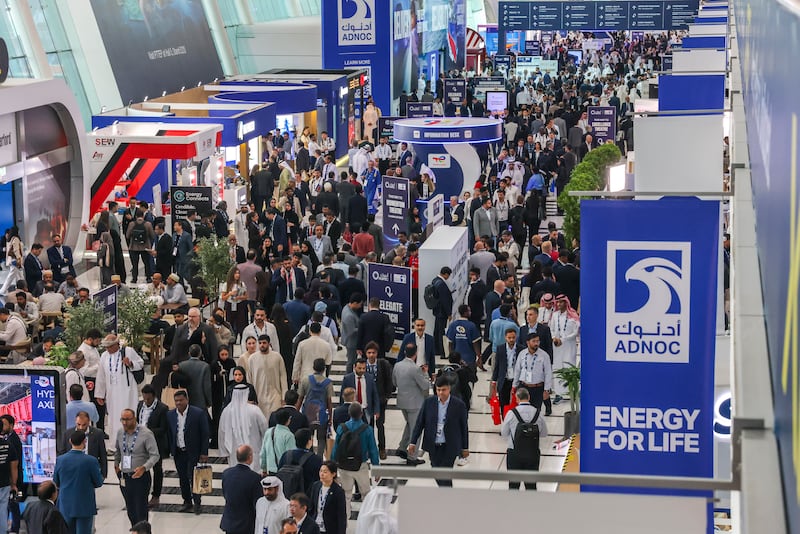
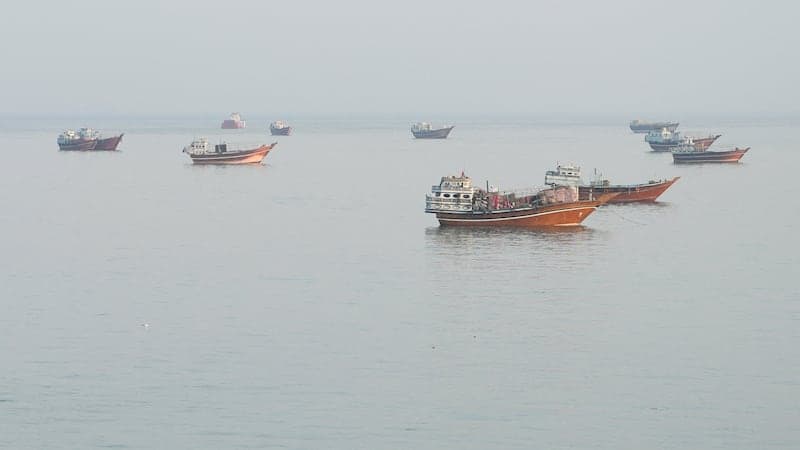
Oil and gas operators in the UAE are facing a growing threat: cybercriminals are attempting to penetrate platform systems through the internet provided to workers to keep in touch with their loved ones. Experts warned about this at the Adipec energy conference in Abu Dhabi, as reported by The National. For seafarers who spend months at sea, internet access has become an important way to stay in touch with their families, but co-locating such networks with equipment control systems creates new risks for energy companies.
What has changed in recent years
In the past, communications on offshore platforms were geared almost exclusively to operational needs, and workers relied on satellite phones with limited allowances. According to Alla Alsadi, vice president of the energy group and Middle East managing director at IEC Telecom, over the past five to six years companies have begun providing crews with internet as part of a 'welfare system'. He stressed that such networks must be separated from the control systems of critical operations, and that companies are stepping up cybersecurity training for staff: 'The more connected you are, the more vulnerable you are.'
The context of attacks and the cost of incidents
The risks to the sector in the UAE became apparent during the Iranian war this year: in September the country faced 640,000 attacks in a single day, and the UAE's head of cybersecurity, Dr Mohamed Al-Kuwaiti, called Iran 'one of the main players' in that offensive, amplified by the spread of AI. In August, the UAE Cybersecurity Council reported repelling coordinated attacks on the energy, aviation and education sectors. The scale of the problem beyond the country is also noticeable: in September Positive Technologies reported the compromise of a company serving Saudi Arabia's oil and gas industry by a ransomware group, while Palo Alto Networks identified four waves of attacks on a Middle Eastern energy and marine services company between August 2025 and February 2026. According to IBM, the average cost of a data breach in the Middle East's energy and industrial sectors reached about $8.5 million in 2025, and 26% of malicious breaches in the region are linked to the use of AI.
Why crew internet access has become the norm
The requirement to provide seafarers with communications is also enshrined at the international level: amendments to the ILO Maritime Labour Convention, which entered into force in December 2024, introduced provisions on access to social connectivity on board ships. The UK's Maritime and Coastguard Agency noted in its March 2026 guidance that access to messengers, email and social media helps reduce workers' loneliness on long voyages, but at the same time warned that less secure connections open up opportunities for cybercriminals to attack. Companies thus find themselves caught between two demands — social and protective — and the solution comes down to network segregation and traffic prioritisation.
Backup channels and the cost of communications
Growing digitalisation means platforms must also prepare for failures of the primary internet connection on which equipment monitoring and remote control depend. Alsadi noted that loss of communications leads to financial losses, especially at continuous-cycle facilities. IEC Telecom has spent five years developing a technology that cuts the switchover to a backup channel from minutes to seconds: the system automatically detects a failure, switches to an alternative network, prioritises critical services and throttles less important traffic. According to him, backup communications previously accounted for about 10% of the communications and managed services costs of an offshore site, and the new technology could reduce that share to roughly 5%.
AI in energy as a separate conference topic
The same article cites an estimate by Yazad Darasha, co-founder of the research firm White Paper Media Consulting: AI is 'rapidly transforming the energy sector', improving operational efficiency, optimising maintenance and balancing supply and demand. According to him, the AI market in the UAE's energy sector is expected to exceed $150 million by 2030 amid the accelerated adoption of solutions by players such as Adnoc and Dewa, and he himself considers this figure 'conservative', since actual investment could be twice as high.