The key facts
- Former SAS officer George Simm, after nearly 50 years of silence, denies the existence of 'shoot-to-kill' operations against the IRA
- He commanded a unit in the ambush at Drumnakilly near Omagh in 1988, in which three IRA members were killed; the victims' families call it a targeted operation
- He commanded the unit in the ambush at Drumnakilly near Omagh in 1988, in which three IRA gunmen were killed; the families of the dead call it a targeted operation
- Simm criticises Labour's legacy bill, which replaces the 2023 Legacy Act, and accuses the government of refusing to protect veterans
- Simm criticises the Labour Party's Troubles legacy bill, which replaces the Legacy Act 2023, and accuses the government of refusing to protect veterans
Former SAS officer speaks publicly for the first time
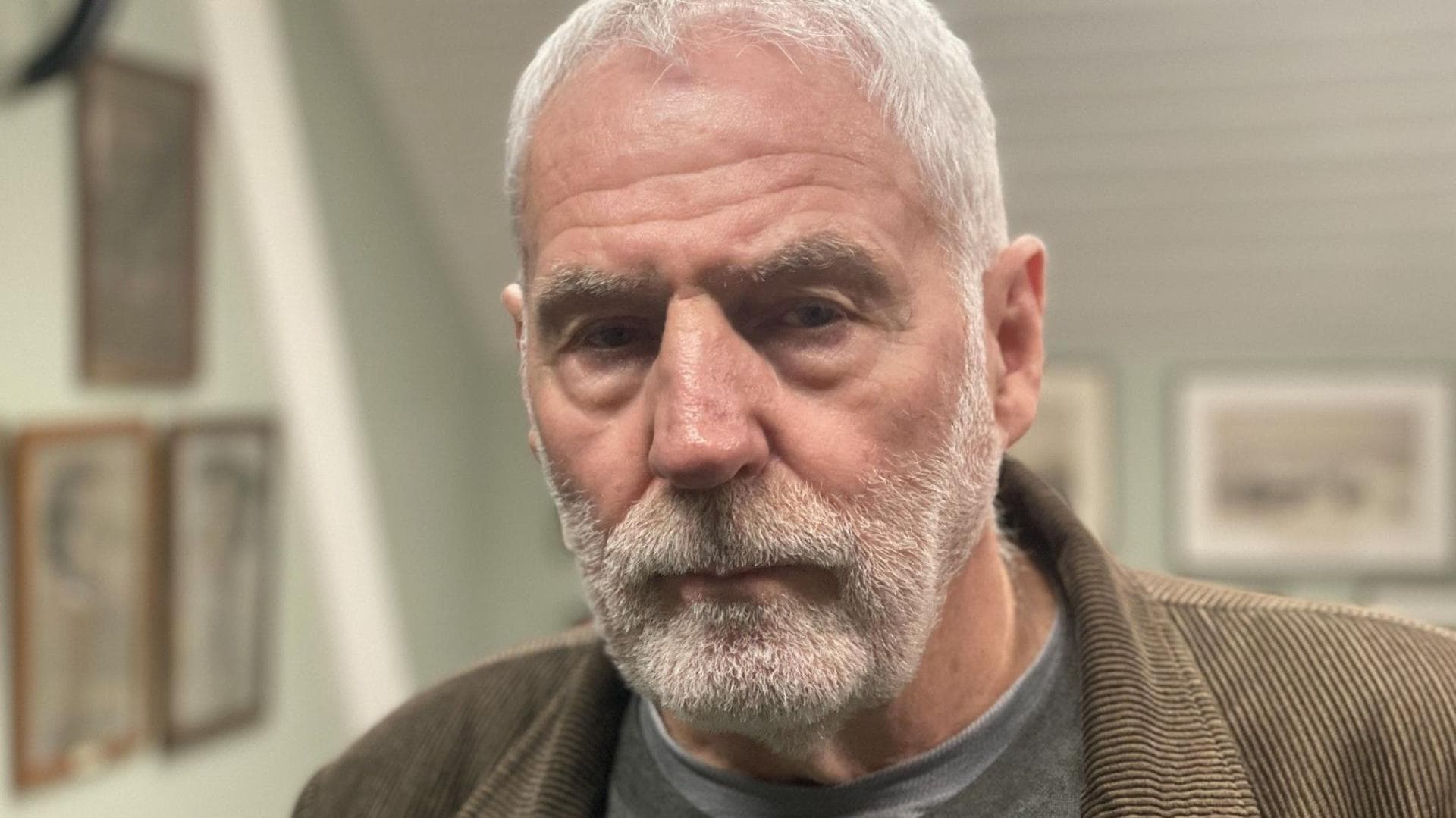
A former officer of the British Army's Special Air Service (SAS) George Simm, who served in Northern Ireland in the 1970s and 1980s, has publicly stated after nearly 50 years of silencethat the unit was not involved in 'shoot-to-kill' operations against the IRA. According to him, when a soldier fired, he fired to incapacitate, but the claim that soldiers went out on operations with the initial intention to kill is 'simply propaganda.' Simm stressed that the unit arrested more people than it killed: 'If that were the case, every one of those we arrested would be dead.'
The ambush at Drumnakilly: two versions of one event
Simm was the commander of an SAS unit in the ambush at Drumnakilly near Omagh in 1988, where three IRA members were killed: brothers Gerard Hart, 29, and Martin Hart, 23, and their brother-in-law Brian Mallon, 26. According to the BBC, the group was planning to kill a Ulster Defence Regiment (UDR) officer travelling in a coal lorry, but the SAS had been warned of the planned attack and was waiting for the gunmen; Simm posed as the driver of a broken-down lorry. He described how the gunmen opened fire from their car and said it was all over 'in three or four seconds.' The victims' families insist on a different version: Ignatius Hart, brother of two of the killed men, previously told the BBC that the army 'knew in advance that the men were armed', had access to the weapons and 'could have arrested them at any moment,' and that the gunmen were 'lured into an ambush and shot without warning.' Asked whether it was a 'shoot-to-kill' operation, Simm replied: 'Definitely not.'
Criticism of the bill and the government's position
Simm spoke publicly in order to challenge the legacy legislation currently passing through Westminster. He accused the government of 'abandoning' veterans, called it 'weak' and said it was 'not fit to command an army on operations.' According to him, the Ministry of Defence is simultaneously 'censoring' veterans by forbidding them to speak about operations and ordering them to give evidence in court. He also asked why only soldiers end up in the witness stand, while other participants in the chain of command are not called. The Northern Ireland Office responded to BBC News NIthat the bill has been 'strengthened' and contains 'effective safeguards' for veterans called to give information to the Legacy Commission or a coroner: it 'makes clear that there was no equivalence between the lawful actions of soldiers and the actions of terrorists,' and the operational context and orders of senior officers must be taken into account.
What changes in the legislation
The Troubles Legacy Bill, introduced by Labour, replaces the previous Conservative government's controversial Legacy Act of 2023, which introduced a ban on inquests and civil claims related to events from the conflict era. The new bill provides for a legacy commission to investigate Troubles-era killings, a separate body for information recovery, and a dedicated legacy unit within the Irish police, An Garda Síochána. The Secretary of State for Northern Ireland previously stated that the bill 'is not an amnesty for soldiers', and that serious criminal prosecutions for Troubles-era cases require the approval of the Attorney General. The Troubles was a thirty-year conflict that claimed the lives of more than 3,500 people.
Context of the appearance
Simm said he had previously given evidence at the coroner's inquest into the operation at Drumnakilly and had 'nothing to hide'. He explained his decision to speak publicly by saying that the narrative about the regiment and the British Army had been 'distorted' by politics and by 'corruption of the judicial process', and added that, in his words, 'the entire SAS union and a significant portion of senior officers' stood behind him. On the risks to his personal safety, the 72-year-old veteran said: 'I am no longer afraid.' He also addressed republicans, stating that the IRA 'continues the war by other means' — with laptops and on social media — and asked the leadership of the republican movement 'what they have achieved and for what, because it was all in vain.' Significantly, both sides of the conflict — veterans and the families of the dead — are following the debates on the bill, and their assessments of the same events, as the Drumnakilly case shows, remain diametrically opposed.
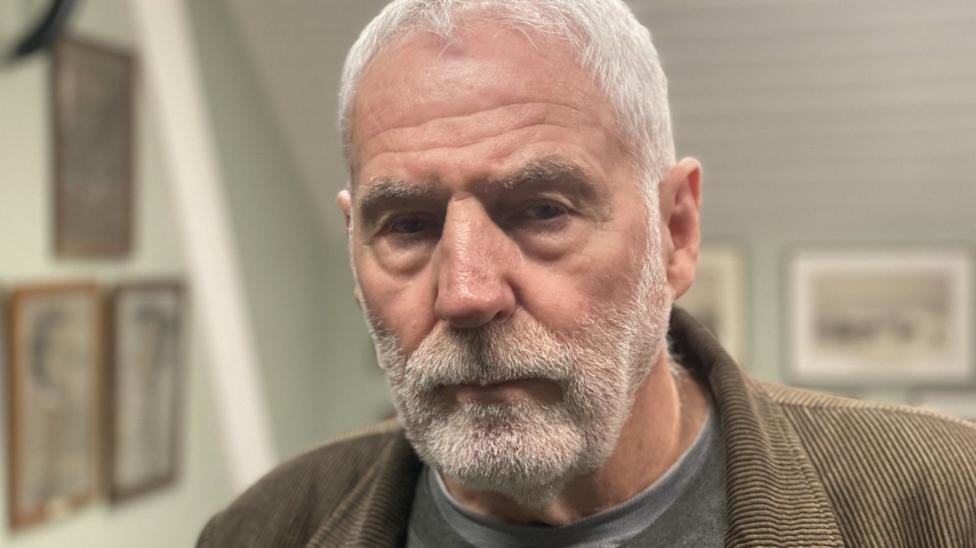
George Simm served during the 1970s and 80s at the height of the Troubles
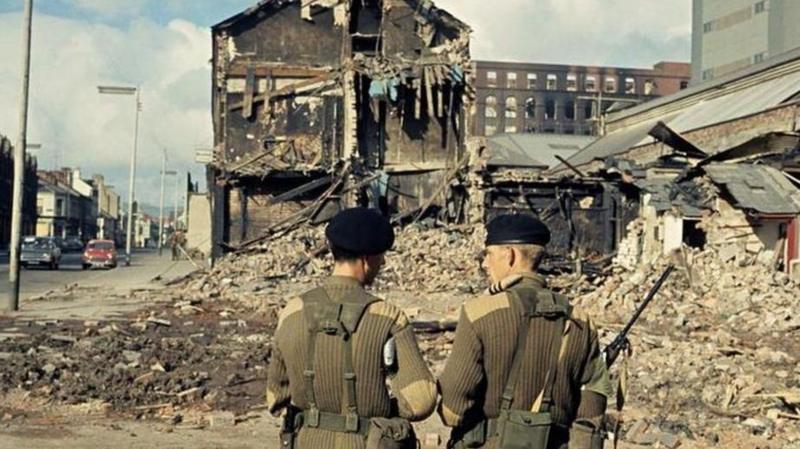
The Troubles was a period of conflict which lasted for 30 years and cost the lives of more than 3,500 people
 Image source, PA Media
Simm says the Ministry of Defence have tried to 'censor' veterans
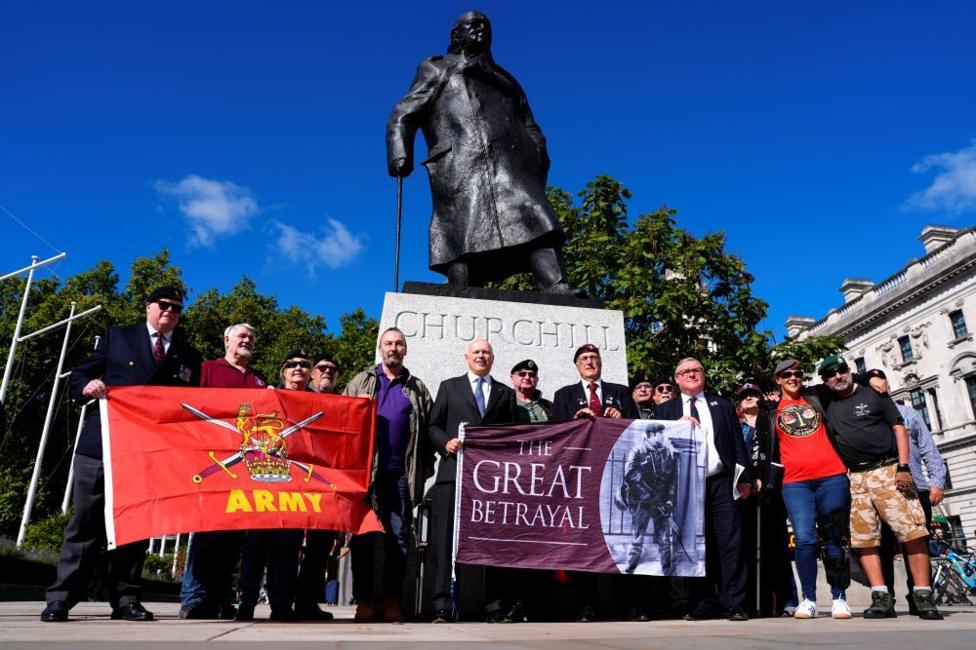 Image source, PA Media
Conservative Party politicians Sir Iain Duncan Smith (centre) and Mark Francois with Northern Ireland veterans as they protested the bill outside the Houses of Parliament in September