The key facts
- Replacing one incandescent bulb with an LED saves about 40 rubles a month at a tariff of 5 rubles per kWh, with a payback period of five to eight months
- Lowering the washing temperature from 40 to 30 degrees cuts costs by an average of 38%, according to tests by Which?
- Limescale 1–2 mm thick on heating elements increases electricity consumption by 10–15%
Saving money without spending on equipment
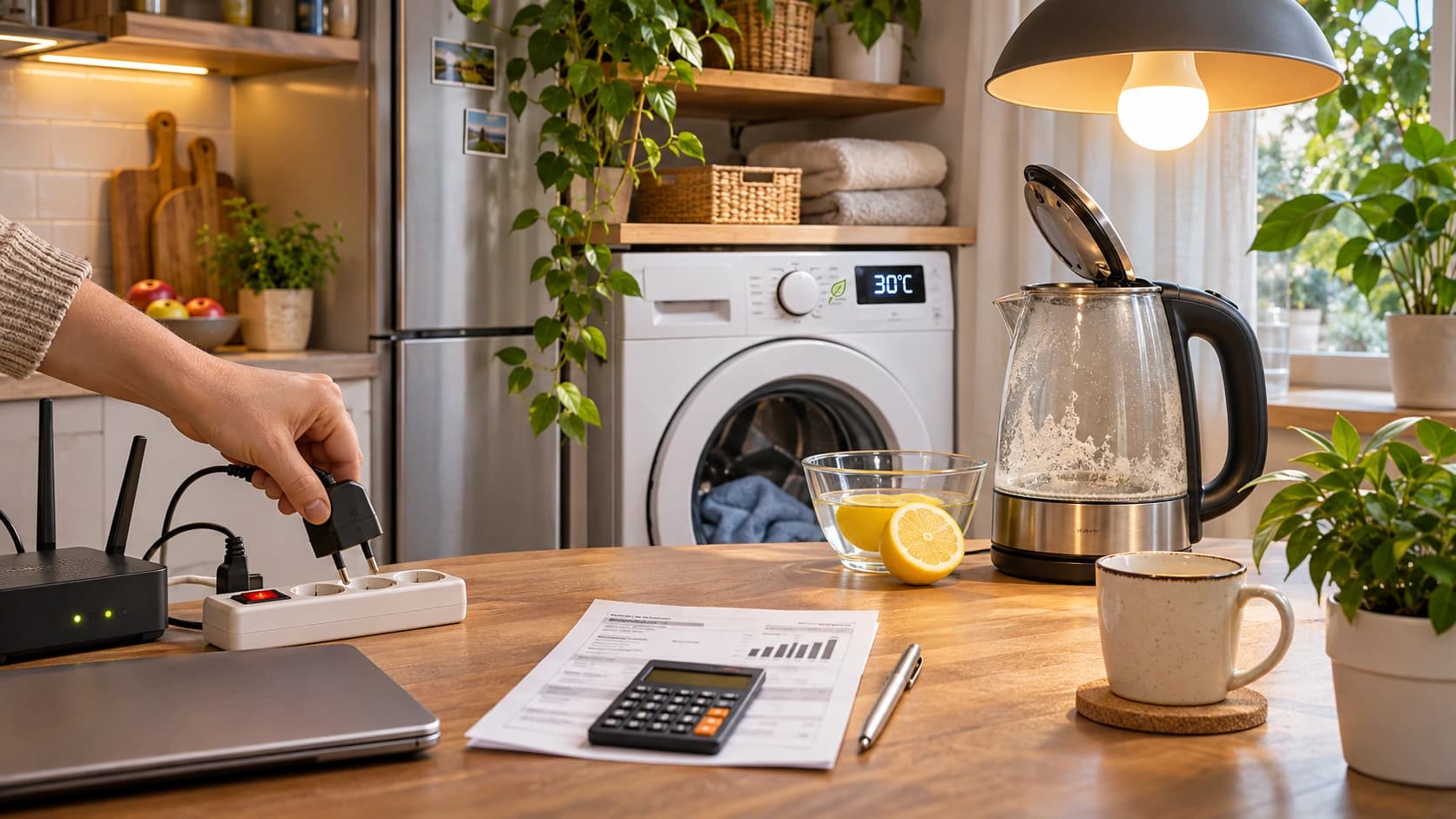
You can cut your electricity bills by changing a few everyday habits — this is what Pyotr Shcherbachenko, an associate professor at the Financial University under the Government of the Russian Federation, told Life.ru. According to him, one of the reasons for high bills is the large number of energy-hungry appliances in the home, and the greatest effect comes from four measures: replacing bulbs with LED ones, unplugging unused devices, washing at a lower temperature, and regularly removing limescale.
Light bulbs and 'hidden' consumption
The economist advises starting with lighting. A regular 60-watt bulb consumes roughly as much as eight LED bulbs of 7–8 watts each. With five hours of daily use, an incandescent bulb uses about 9 kWh per month, while an LED one uses just over 1 kWh. At a tariff of five rubles per kilowatt-hour, the savings amount to about 40 rubles per bulb monthly, so an LED bulb costing 200–300 rubles pays for itself in five to eight months; such bulbs, according to Shcherbachenko, last 10–15 times longer than traditional ones.
Unplugging devices: with caveats
The second recommendation is to unplug unused appliances, since even in standby mode they continue to consume electricity. Shcherbachenko gave approximate annual losses: a TV — 7.008 kWh, a microwave with electronic controls — 8.76 kWh, a laptop — 12.045 kWh, a router — 37.23 kWh, a washing machine with an electronic timer — 1.53 kWh. At the same time, the economist warns: you should not unplug devices indiscriminately. If security cameras or a smart home system operate through the router, switching it off will disrupt their operation, so this method is only suitable for equipment that does not need to stay on constantly.
Washing at 30 degrees and a clean kettle
The third method concerns laundry: a significant portion of electricity goes into heating water, so lowering the temperature from 40 to 30 degrees reduces costs. According to tests by the British consumer organization Which?, cited by Life.ru, the savings average 38%, although the result depends on the machine model and the program. The 30-degree setting is suitable for T-shirts, jeans, synthetics, colored laundry, and sportswear without heavy soiling, provided the garment labels allow it; cool water also helps preserve the color and shape of clothes.
Limescale increases consumption by 10–15%
The fourth recommendation is regular descaling of household appliances. Deposits on heating elements impair heat transfer and increase water heating time. According to Shcherbachenko, a limescale layer just 1–2 millimeters thick can raise electricity consumption by 10–15%. The specialist advises descaling kettles and other appliances in a timely manner, following manufacturers' instructions.