The key facts
- Agility Robotics became the first publicly traded company producing exclusively humanoid robots through a SPAC deal raising $465 million
- In the first half of 2026, the company earned only $174 thousand in revenue with a loss of $362 million
- Agility has $300 million in planned contracts with 30 customers for the new Digit 5 model, with prototypes to be shown at CES 2027
From a predicted bankruptcy to a stock market debut
Exactly about a year ago, Figure AI CEO Brett Adcock (in the TechCrunch text he is named Colby Adcock) responded to social taunting from competitor Agility with a prediction: “You will go bankrupt in less than 12 months”. Instead, Agility Robotics announced it would go public through a merger with a SPAC — a special-purpose blank-check company for public listings — which will make it the first publicly traded company producing exclusively humanoid robots and bring in $465 million in new capital from retail investors and private financing.
Real work instead of dancing robots
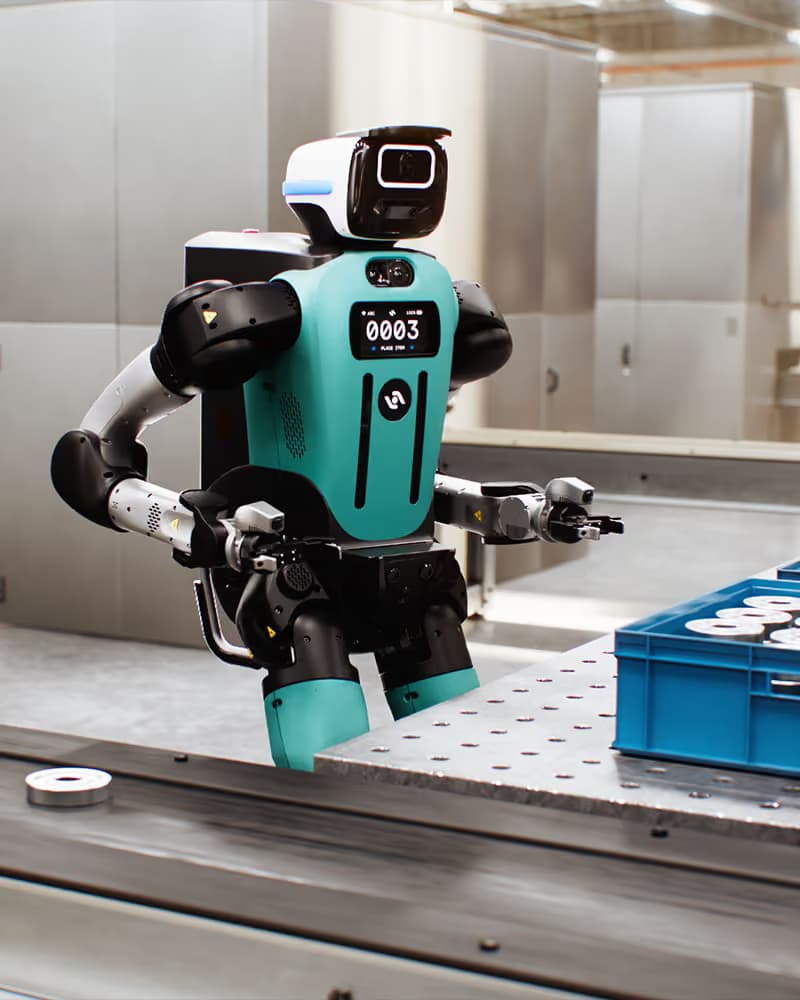
Agility's strategy differs markedly from the approaches of Figure, Tesla, 1X and Boston Dynamics. “You won't see a lot of dancing robots or backflipping robots from Agility,” said CEO Peggy Johnson in an interview with TechCrunch ahead of the stock market debut. The company, spun out of Oregon State University in 2015, has focused on monotonous manual labor: its Digit robots move heavy containers for nine customers, including Schaeffler, GXO, Toyota Motor Manufacturing Canada and Mercado Libre; at just one GXO logistics site they have moved more than 100 thousand containers.
The economics don't add up yet
Despite the real work, the financial results are modest: in the first six months of 2026, revenue was only $174 thousand, mostly from related parties, with a loss of $362 million. This means the time to make effective use of the raised capital is limited. Johnson said the funds raised will cover current needs, but declined to predict whether they will be enough to reach self-sustainability.
Betting on Digit 5
The company's main argument is $300 million in planned contracts with 30 customers for the new Digit 5 generation, which will be able to work safely alongside people rather than only in an isolated work cell, as the previous model and most humanoids do. Johnson called this deal one of the driving factors behind the decision to go public, but did not disclose the customers or clarify whether they are investors. No prototypes have been shown yet: a demonstration is scheduled for CES 2027, with broad availability at the end of the same year. To close the deals, Digit 5 must reach unnamed target metrics for throughput, uptime and placement accuracy.
What underlies the investors' bet
The offering economics are built on a robot-as-a-service model: according to Agility's calculations, a robot saves a customer $100 thousand a year, and more with a direct purchase. Validation is expensive: a pilot deployment at a customer's site costs $500 thousand, and in May 2026 four customers signed up for it. Technically, Digit lifts heavy loads and places them with 98% accuracy, but, like most modern robots, it cannot yet perform complex manipulations. Johnson noted that the company has 65 thousand hours of real operational data from customer sites, which accelerates Digit's training — against the backdrop of the fact that an “internet of physical data on robot movements” does not exist. According to TechCrunch, it is precisely putting the product into the field that puts Agility ahead of most humanoid developers, although key questions — the pace of attracting new customers and improving the robot's capabilities — remain open.