The key facts
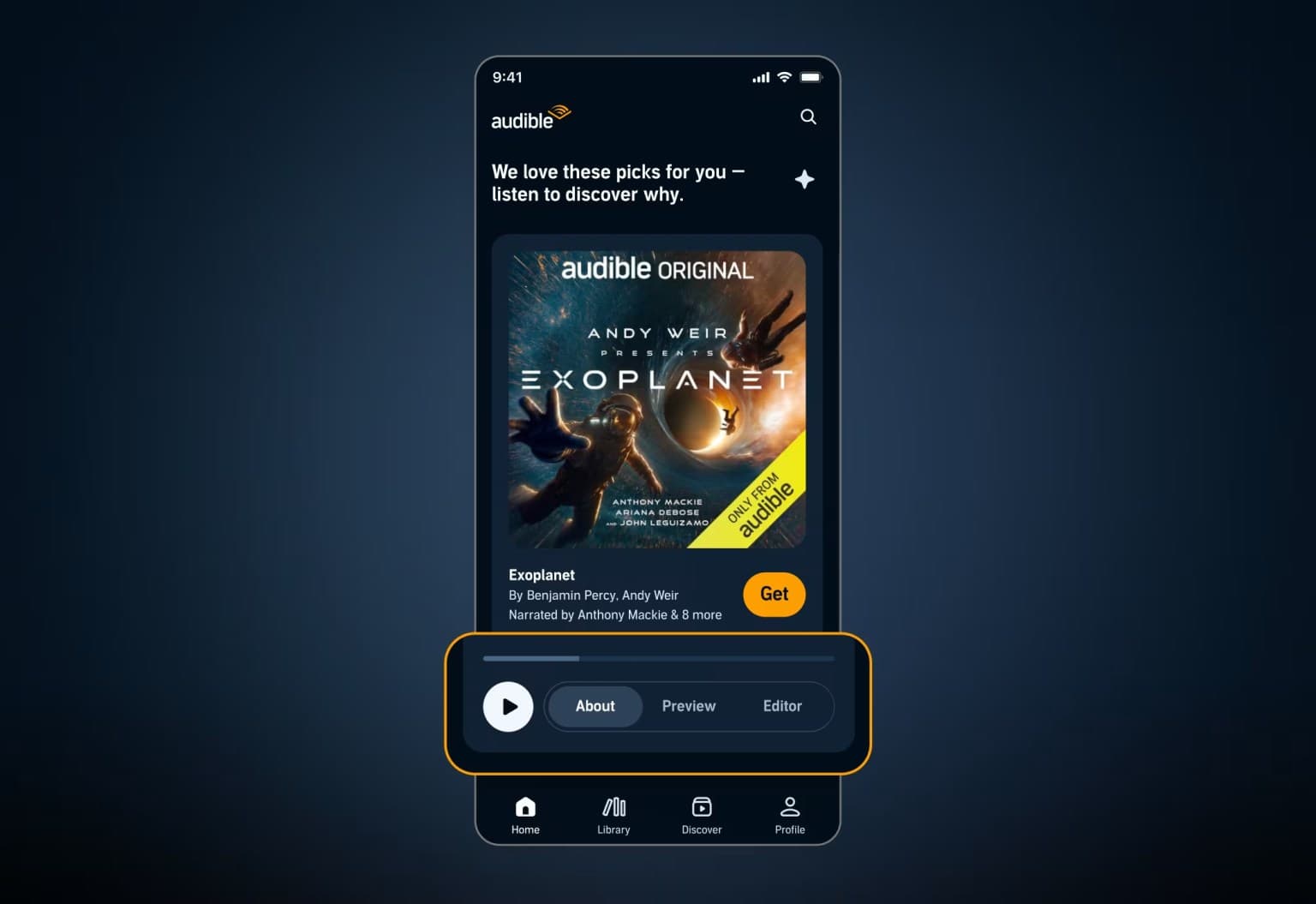
- Audible launched the audio discovery feature: an audio overview of a book with themes, listener feedback and a comment from an editor or the author
- The audio is generated by AI; comments are taken from recordings of past Audible interviews and public reviews
- The Recaps and Ask a Question features will expand to more books in the US in December
What Audible launched
Audible, the audio service owned by Amazon, has launched an 'audio discovery' feature. Along with a narrated excerpt of a book, the listener receives a short audio overview: what the book is about, what readers liked, plus a comment from an Audible editor or the author. The overview itself is generated with AI, and the comments are taken from recordings of past Audible interviews. Information about what listeners liked is drawn from publicly available reviews; the company says the overviews also rely on synopses and metadata.
Why it's needed and the context of its appearance
According to the company's idea, an extended introduction to a book will help listeners choose what to listen to next, especially on the go, when there is no time to scroll through reviews. Audible's chief product officer Andy Tsao compared it to a friend's advice: 'Some of the best listening experiences are rare finds or hidden gems, and we want such discoveries to happen more often and more easily.'
Context and limitations
The launch follows Audible's recent set of AI tools — Recaps and the interactive Ask a Question feature, which allow users to interact with characters and catch up on the plot through a brief summary. These features will become available on a larger number of books in the US in December, but only for buyers or subscribers who have the book as part of their subscription. The feature arrives amid competition with Spotify, which included hours of audiobook listening in its paid subscriptions and expanded the service to more than 180 markets last month. A side effect is also possible: if the AI draws information only from positive reviews, users may not see criticism of the book — according to TechCrunch, additional tests are needed to verify this.