The key facts
- The student list defeated the Serbian Progressive Party on October 25, ending 14 years of dominance by Vucic and the SNS
- On October 25, the student list defeated the Serbian Progressive Party, ending 14 years of dominance by Vučić and the SNS
- Those arrested include suspects in vote-buying, Alta Bank owner Davor Macura, and a number of high-ranking officials and managers
- Prosecutor Bojana Savovic believes the surge in prosecutorial activity is an attempt to please the new authorities
- Prosecutor Bojana Savovich believes the surge in prosecutorial activity is an attempt to please the new authorities
The Moscow flight incident against the backdrop of a political upheaval
Air Serbia flight JU134 from Belgrade to Moscow on November 3 was forced to return to the capital while already in Lithuanian airspace. On board were three high-ranking figures of the former regime of ex-president Aleksandar Vucic: former defense and interior minister and ex-head of the security agency BIA Aleksandar Vulin, longtime director of the state gas company Srbijagas Dusan Bajatovic, and minister without portfolio Nenad Popovic — all known for their close ties with Russia. According to unofficial reports by several media outlets, the plane was turned back due to a security violation: Vulin allegedly boarded without the mandatory screening. Since 2023, Vulin has been under US sanctions for, in Washington's wording, “corrupt and destabilizing activity that undermines the rule of law in the Western Balkans”. Vulin said he was flying to Moscow to discuss the extension of a gas agreement, but Bajatovic said he did not know why Vulin and Popovic were flying to Russia and denied their participation in planned meetings on gas supplies. The incident attracted heightened attention precisely because Serbia is undergoing a major political transformation.
A wave of arrests after the election
On October 25, the student list won a convincing victory over the Serbian Progressive Party (SNS) in the parliamentary elections, ending 14 years of political dominance by Vucic and the SNS, which maintained close ties with Moscow. The new majority has not yet gained the levers of power, but the following days brought a series of events unthinkable a few weeks earlier: arrests, new criminal cases, and the reopening of previously frozen files. Four people were arrested in Novi Sad on suspicion of vote-buying, and six more were detained in Mali Zvornik — on suspicion of helping citizens of Bosnia and Herzegovina register residence in Serbia in order to take part in the vote. The most high-profile case was that of Alta Bank owner Davor Macura, suspected of unlawfully entering the bank's vault and withdrawing funds amounting to about 383 million euros. His arrest came a few days after the National Bank of Serbia revoked the bank's license and bankruptcy proceedings began. Macura was publicly associated with the SNS, the bank had significant dealings with the state and numerous Russian clients. Also detained were senior police officials, the head of the Republic Hydrometeorological Institute, and a number of managers of state-owned companies — on suspicion of abuse of office and procurement fraud.
Documents under protection, but questions for the prosecution
After the election, reports and video recordings emerged pointing to the possible removal or destruction of official documents in government agencies and public companies. On October 29, chief prosecutor Zagorka Dolovac issued a binding order to all chief prosecutors to prevent the destruction of official and other records; the student list called on employees of government agencies and the media to report any destruction of documents. Prosecutor Bojana Savovic told DW that the picture of the Serbian prosecution's work was sad and saw the sudden activity as an attempt to please the new authorities: “With these actions they are showing what they could have done but did not want to do ten days ago.” She expressed hope that the speed would not affect the quality of the charges and would not turn out to be personal score-settling within the old regime. Incoming MP from the student list Tanja Arsic stated that “when you want the rule of law, it is possible — our norms allow it,” but, in her words, it is obvious that there were people who blocked the system and left cases unaddressed. Vucic himself said he was not afraid of arrest and that no evidence of financial wrongdoing would be found against him: “I do not sign and I do nothing when it comes to money.” Arsic warned: it would be tragic if the biggest figures were tried without sufficient evidence or on less serious charges than their actual actions.
The real test is in court
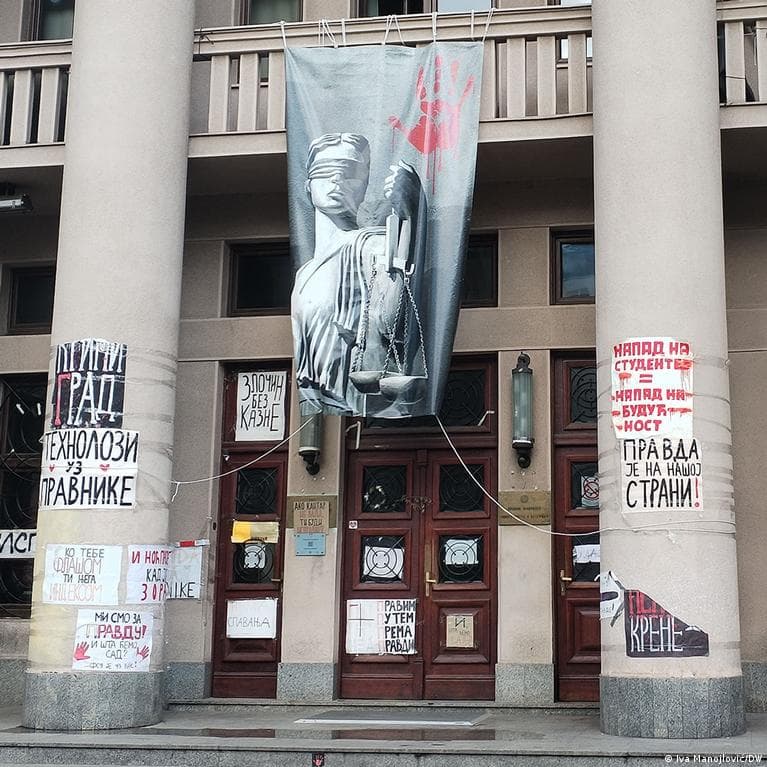
Savovich emphasizes that the success of the prosecution will be measured not by the number of politically popular arrests, but by final verdicts and the irreversible confiscation of assets acquired through crime. Arsić agrees: charges cannot be brought without sufficient evidence — hasty cases ending in acquittals of the top brass of the former government would be even worse. At the same time, Savovich doubts this is possible within the existing structures: for decades, people whose only qualifications were blind obedience, reading the political winds, and self-censorship were promoted within the prosecution and the courts; without fundamental changes in the judiciary, the police, and the security apparatus, she sees no possibility of a substantial and lasting transformation of society. DW's concluding assessment: the real test will come in the courtroom — the verdicts will show whether Serbia is breaking with the old system of power or merely replacing one set of power brokers with another.