The key facts
- Local dengue cases in Europe roughly doubled in 2026 compared with 2025: 76 in Italy and 8 in France by the end of October.
- Portugal released 30,000 sterilised male tiger mosquitoes for the second time; Brazil had previously used the Wolbachia bacterium.
- HERA is investing €10 million in new diagnostic methods and funding research into vaccines and antiviral drugs; surveillance is conducted via wastewater and airports.
Diseases are moving faster than mosquitoes
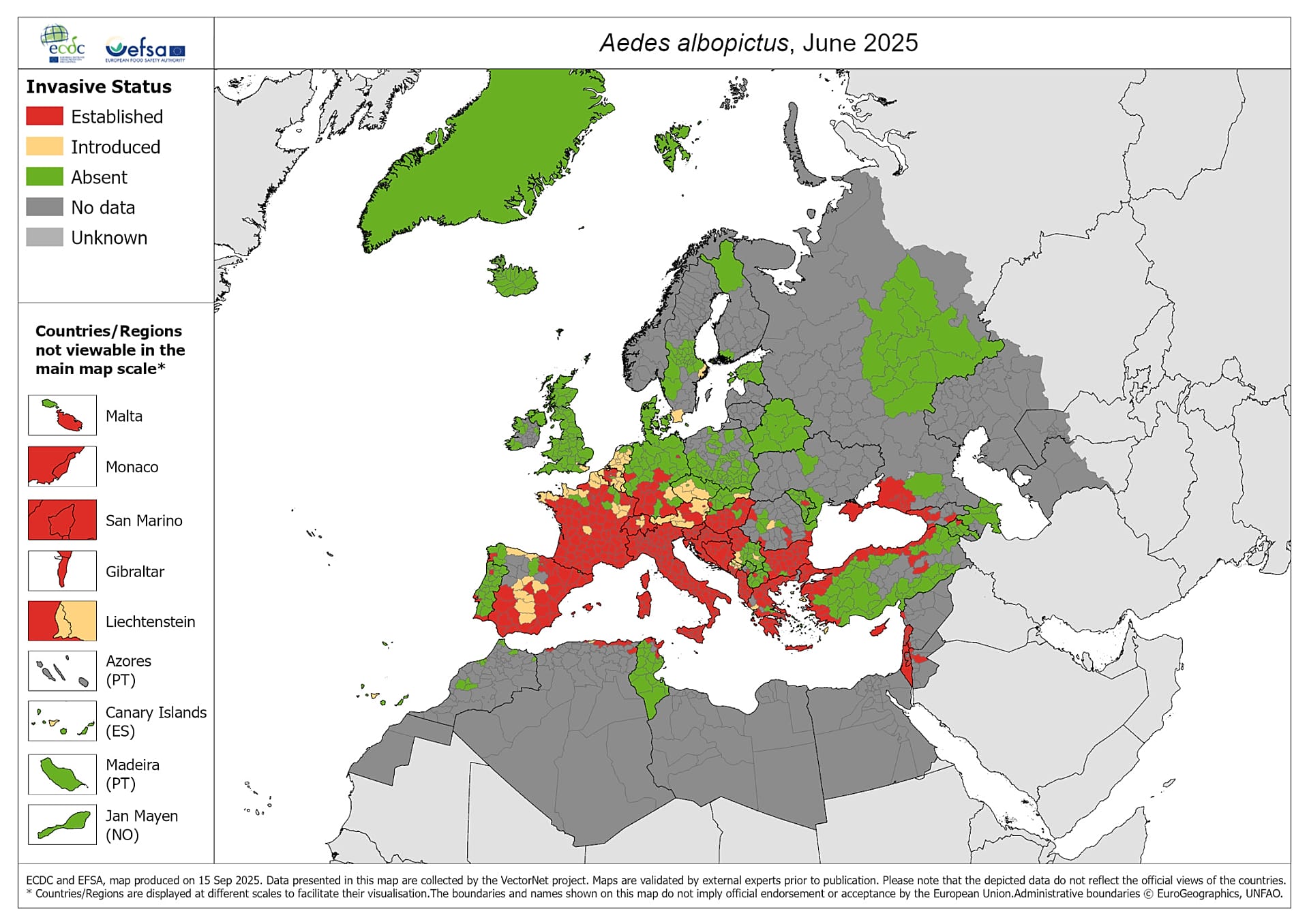
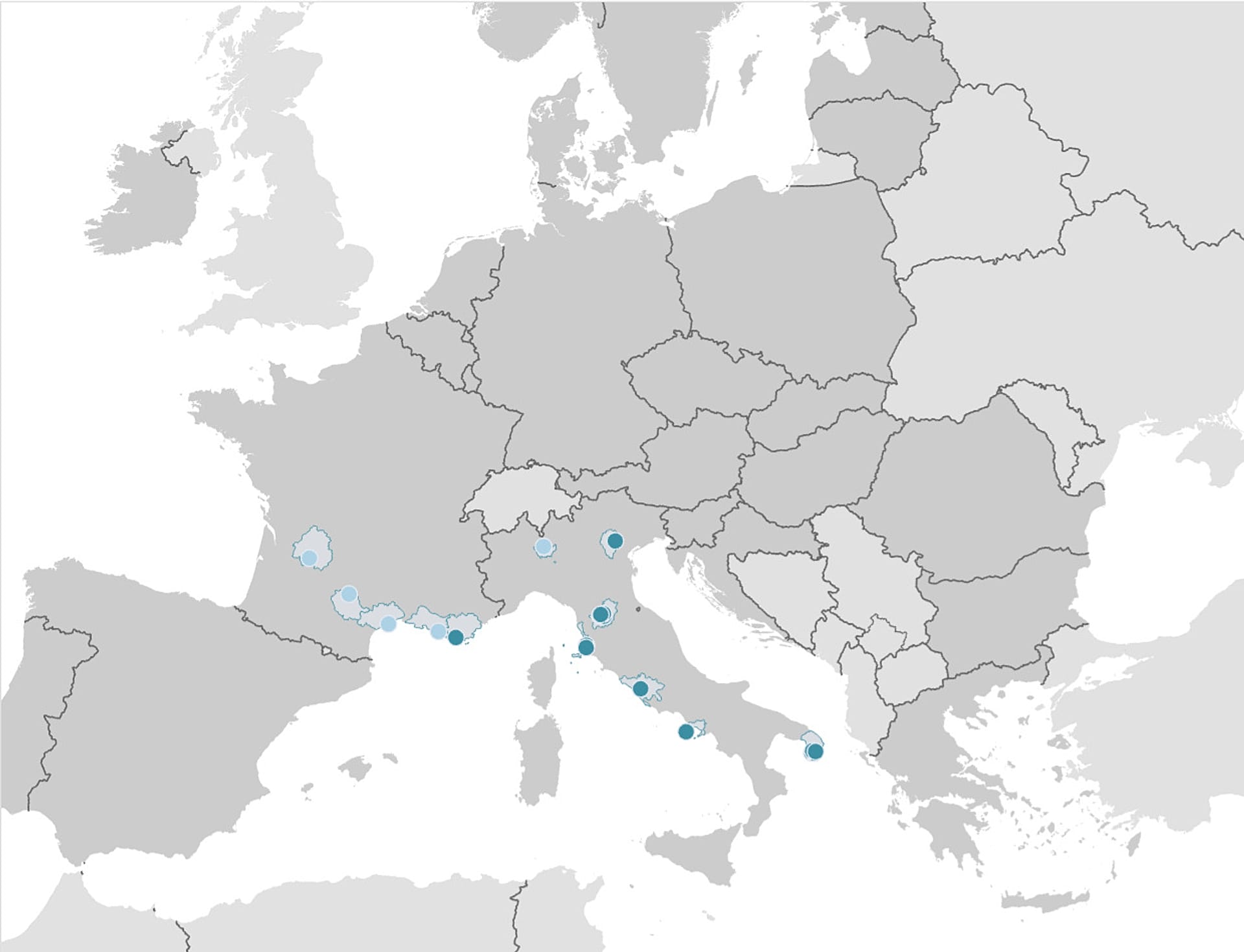
The tiger mosquito, previously found mainly in Southeast Asia, arrived in Italy in the 1990s through shipments of used tyres and has since spread to France, Spain, Germany, Switzerland and other European countries. Along with it, the viruses it carries — dengue, chikungunya and Zika — are reaching the continent. For now, cases in most European countries remain sporadic, but, according to Euronews, citing the ECDC,by the end of October 2026 Italy had registered 76 local cases of dengue fever, and France eight — roughly twice as many as in the same period of 2025.
How the virus reaches Europe
Ecological epidemiologist Jan Semenza described the mechanism of spread: tourists return from Thailand, Brazil and other tropical regions with viruses in their blood, a local mosquito bites them and then passes the virus on to other people — and this is how a local outbreak begins. In his assessment, the tiger mosquito is advancing roughly 60 kilometres further north each year, partly travelling in cars, while disease outbreaks spread even faster — about 120 kilometres a year. “The trajectory we are on does not look good,” he told Euronews, adding that the problem needs to be contained as quickly as possible.
Sterilised mosquitoes and other control methods
In September, Portugal released 30,000 male mosquitoes sterilised by irradiation — the second such attempt to curb the growing tiger mosquito population: the males mate with females but produce no offspring. André Peralta Santos, deputy head of Portugal's Directorate-General for Health, explained the task this way: “What we are fighting against is the possibility of becoming an endemic country.” Earlier, Brazil took a different approach — infecting mosquitoes with the Wolbachia bacterium, which blocks the multiplication of viruses inside the insect. Eradicating the mosquitoes entirely, however, is unrealistic: according to Semenza, “once the mosquito has established itself, it is here forever” — what remains is to prepare, combining population control, vaccines, antiviral drugs and the engagement of residents.
Surveillance: citizens, wastewater and airports
Marion Koopmans, a virologist at Erasmus Medical Centre in the Netherlands, emphasised the role of ordinary residents: apps such as Mosquito Alert are used across Europe to track the tiger mosquito's penetration into new territories, and this data is increasingly feeding into surveillance systems. At the government level, with the support of the European agency HERA, wastewater monitoring is being developed: HERA director Laurent Muschel called it “a very powerful tool” that makes it possible to see the spread of dengue before a patient reaches a doctor. Monitoring is being carried out at major European airports, as well as in Singapore, Africa and Latin America — according to Muschel, this is an attempt to build a global network for early detection of signals.
Diagnostics, medicines and vaccines
Surveillance does not prevent every infection, so HERA is investing €10 million in the development of new diagnostic tools — it is important that doctors recognise unfamiliar symptoms of tropical diseases even in patients who have never travelled abroad. Muschel noted that “we lack the right medicines” for treating new diseases, and the agency is funding research into antiviral drugs and next-generation vaccines: the existing vaccines against dengue and chikungunya “are not ideal,” and it may be necessary to vaccinate local population groups in areas where mosquitoes transmit the disease. The participants' conclusion, in Semenza's words: “The risk is already here. We need to prepare.”