The key facts
- On November 4, an operational center for public health emergencies was opened in Nukus, the second of its kind after the Termez center established in April 2026.
- The center was established by the Committee on Sanitary and Epidemiological Well-being with financial support from the US government and technical assistance from UNICEF.
- The stated goal is to create a unified national network of such centers across all 14 regions of the country.
The second regional center
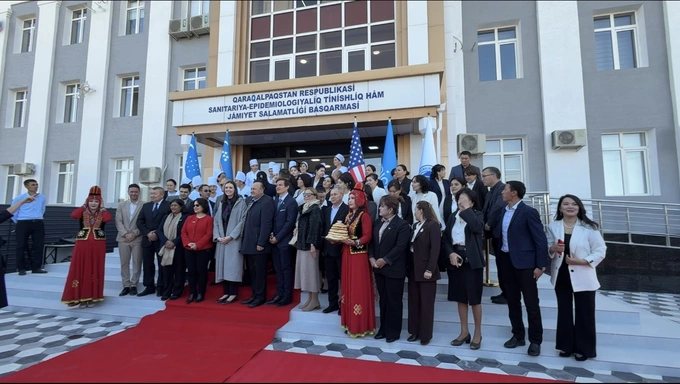
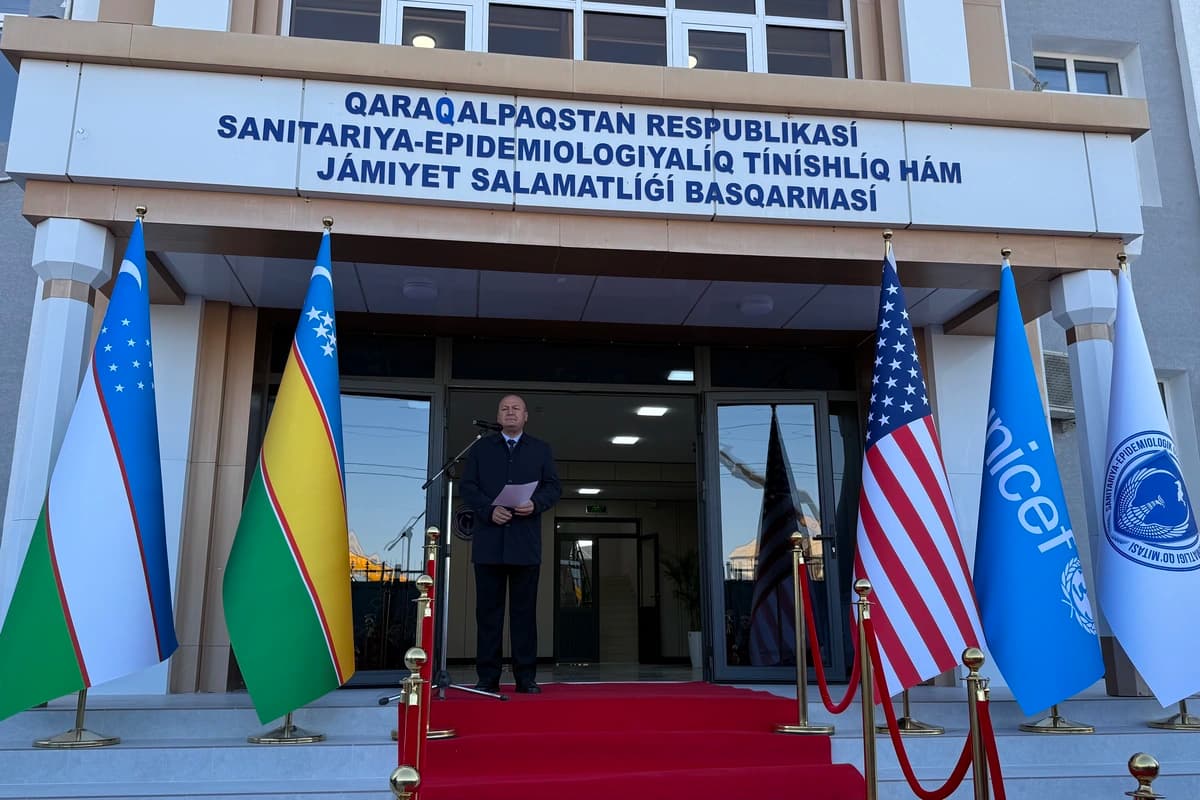
On November 4, the opening ceremony of the operational center for public health emergencies was held in Nukus. The opening was announced by a representative of UNICEF in Uzbekistan to the Gazeta publication. The center was established by the Committee on Sanitary and Epidemiological Well-being and Public Health as part of the Global Health Security Program, with financial support from the US government and technical assistance from UNICEF.
What the center will do
The center's task is to transform primary data on threats into coordinated practical actions. Its operational functions include incident management, procedures for activating response measures during emergencies, situation monitoring, and information exchange between organizations responsible for preparedness and response in public health. According to the UNICEF representative, the opening strengthens the readiness of Karakalpakstan and neighboring territories to outbreaks of infectious diseases and other emergencies.
Connection with the Termez center and plans for the network
This is already the second regional center of its kind: in April 2026, a similar center was opened in Termez. UNICEF notes that the two regional centers demonstrate progress in building an interconnected system for managing public health emergencies across the country. At the opening ceremony, the head of the UNICEF representation in Uzbekistan, Regina Maria Castillo, spoke about the long-term perspective of creating a unified national network of such centers in all 14 administrative regions of Uzbekistan.
Positions of participants
Heather Burns, Deputy Head of the US Embassy Mission, emphasized the importance of international cooperation: 'Thorough preparation for emergencies is important not only for Uzbekistan but also for the United States. Epidemics do not recognize state borders.' Botirjon Kurbonov, Deputy Chairman of the Committee on Sanitary and Epidemiological Well-being, stated that the government's priority is to ensure that institutions are equipped not only with infrastructure but also with the capacity for early threat detection and timely measures. Regina Maria Castillo, in turn, noted that the long-term effectiveness of the system depends not only on buildings and equipment but also on the involvement of local communities, reliable information, and work against misinformation.