The key facts
- 15 years ago, on November 4, 2011, the existence of the neo-Nazi terrorist group NSU became known
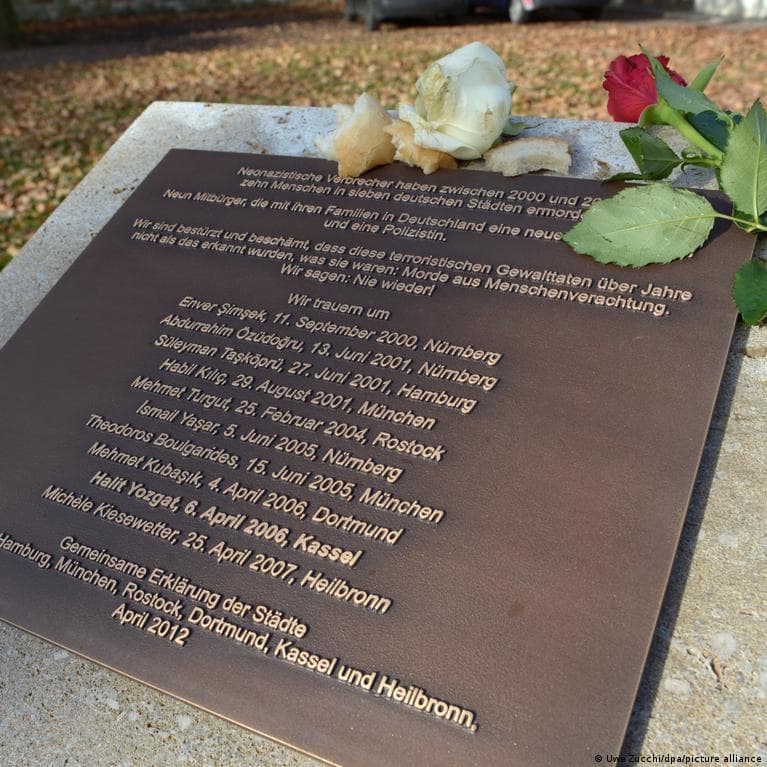
- The NSU killed eight people of Turkish origin, one Greek and a police officer between 2000 and 2007
- Barbara John demands financial compensation for about 45 relatives of those killed and around 40 injured
Anniversary of the NSU's exposure
On Wednesday, Germany marked the 15th anniversary of the exposure of the neo-Nazi terrorist group NSU. In Zwickau, where the core of the group lived underground for years, a central memorial ceremony was held with the participation of officials and civil society organizations, followed by a silent gathering with flowers, candles and paper cranes at the city's memorial. Anadolu reported this.
What is known about the group
The existence of the NSU became public on November 4, 2011, when two of its members killed themselves after a failed bank robbery in Eisenach. The third member of the group, Beate Zschäpe, set fire to their apartment in Zwickau the same day. The investigation linked the group to a seven-year series of racially motivated murders, bombings and robberies. Between 2000 and 2007, the group killed eight people of Turkish origin, one Greek citizen and a German police officer; most of the victims were small business owners. For years, police largely dismissed racist motives and treated the victims' families as suspects, examining their ties to organized crime.
Demand for compensation
The well-known politician Barbara John, appointed federal ombudswoman for the victims and their relatives, demanded financial compensation. She told RedaktionsNetzwerk Deutschland that no other group affected by terrorism in Germany had been treated by the state as poorly as the families of the NSU victims. 'For years they lived with the false accusation that the perpetrators came from the mafia; they could not live the way they wanted,' John said. According to her, the matter concerns about 45 close relatives of those killed and around 40 people injured in the bombings, which were directed mainly at Turkish shops. She proposed that the payments be made by the federal government or by the states of Saxony and Bavaria: the trio hid in Saxony, while five of the murders took place in Bavaria.
Calls for independent investigations
On the occasion of the anniversary, the human rights foundation Amadeu Antonio called for independent reviews of far-right murders across the country. The foundation's statement says that the authorities have still not drawn the key lesson from the NSU murders: far-right murders must be investigated independently, and political motives must be fully established. According to official statistics, 117 people have been killed by right-wing extremism since 1990; the foundation's own research documents 223 such cases. 'Fifteen years later, political promises alone are not enough,' said foundation board member Timo Reinfrank, adding that the states where the NSU could kill unnoticed for years bear a special responsibility. The NSU scandal triggered a nationwide debate about institutional racism and the failures of the security services: media investigations later showed that the Office for the Protection of the Constitution (BfV) and its regional branches had numerous informants with past contacts with NSU suspects. The authorities, however, claimed they had not known of the cell's existence in advance.