The key facts
- Berliner Zeitung considers three election scenarios and sees no guarantee of a return to the policy of the Biden era
- Democrat Roy Cooper has already won a Senate seat in North Carolina, defeating Trump-backed Michael Whatley
- Reuters/Ipsos poll: only 32% of Americans approve of Trump's performance
Kyiv's hopes and three election scenarios
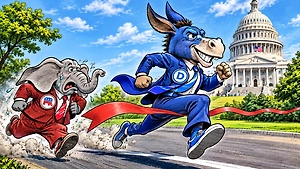
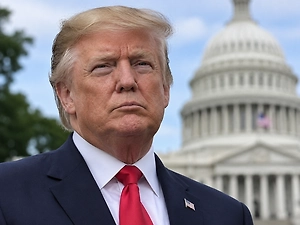
Kyiv hopes that a possible Democratic victory in the midterm congressional elections will curb Donald Trump's pressure on Volodymyr Zelensky and resume American arms deliveries, which were suspended several months ago. However, as the German outlet Berliner Zeitung (BZ) writes, none of the three possible outcomes of the vote promises Ukraine an automatic return to the previous level of support. On Tuesday, Americans are deciding the composition of all 435 seats in the House of Representatives and about a third of the Senate; according to the latest Reuters/Ipsos poll, only 32% of Americans approve of Trump's performance, which puts the Republicans in a difficult position.
What changes the balance in Congress
The first scenario — Republicans keep both chambers: then almost nothing changes for Kyiv, although the authors recall that in 2024 the polls underestimated support for Trump. In the second, Democrats take the House of Representatives, but the Senate remains with the Republicans, who will be able to block the lower chamber's initiatives. Vincent Michelot, a French expert at the Institute of Political Studies in Lyon, assessed this outcome on RFI airwaves as follows: 'Any political analyst will tell you that a divided Congress is a powerless Congress,' adding that an opposition victory in only one chamber may even become a political advantage for the president. The most difficult option for Trump is the third — losing both chambers: then the budget would have to be negotiated with opponents, and with a two-thirds majority Congress could override a presidential veto, including on military aid to Kyiv. Democrats are already pushing initiatives: Congressman Gregory Meeks, a potential chairman of the House Foreign Affairs Committee, has introduced a bipartisan bill against Trump's 'diesel deal' with Moscow.
Why even a Democratic victory does not guarantee the return of aid
According to BZ's authors, the constraints are not only political: the war with Iran, launched by Trump at the end of February without congressional approval, demonstrated the limits of American military power, and the weapons stockpiles of the US military itself, the outlet claims, are practically exhausted — a large-scale increase in aid to Kyiv is impossible under such conditions. In addition, the outlet's analysts believe that even a Democratic majority would be interested in dialogue with the Kremlin to prevent a conflict between Russia and NATO. Officials and analysts interviewed by Forbes Ukraine also assess the prospects cautiously: they do not expect major changes in foreign policy, and the new Congress will only begin work in January; until then, Trump will retain almost complete freedom of action. Moreover, the main concerns of American voters, according to Michelot, are the price of gasoline, groceries and everyday expenses, not the Ukrainian conflict; among the priorities of a possible Democratic majority, the outlet names opposition to the operation against Iran, fighting plans to increase the defense budget to $1.5 trillion, and the activities of the immigration agency ICE. BZ's conclusion: Ukraine has ceased to be a central topic of American politics, and even a serious defeat for the Republicans does not guarantee the return of large-scale aid.
The first known result
One outcome of the vote is already known: Democrat Roy Cooper won the Senate election in North Carolina, taking the seat from the Republicans — his rival was Trump-backed former chairman of the Republican National Committee Michael Whatley. Thanks to this result, the Democrats have narrowed the gap in the upper chamber, although they still need additional seats for a majority.