The key facts
- The country's first national media consumption study: 1,411 respondents, 14 regions, surveys conducted September 8–19
- The country's first national study of media consumption: 1,411 respondents, 14 regions, surveys conducted September 8–19
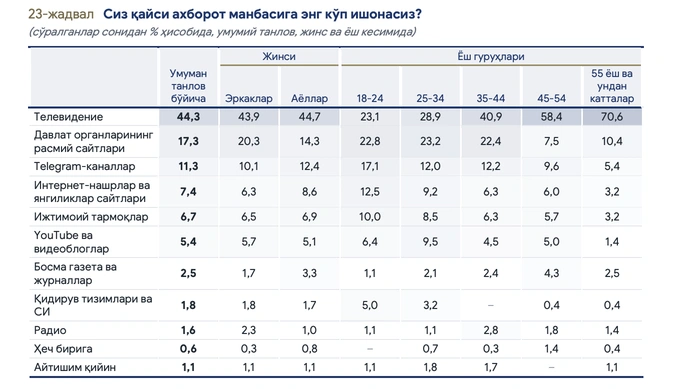
- Telegram is the main source of news (51.6%), but only 11.3% trust it; television is trusted by 44.3%
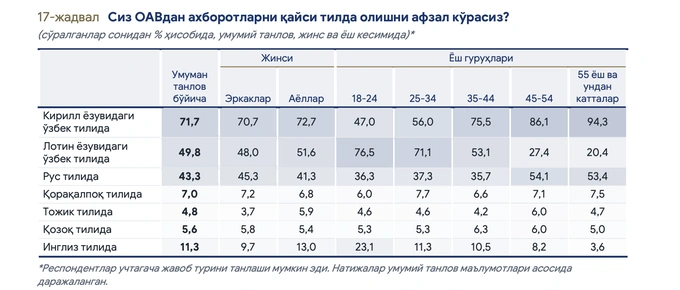
- 71.7% prefer to receive information in Uzbek in Cyrillic, but among young people aged 18–24, 76.5% choose the Latin script
- 71.7% prefer to receive information in Uzbek in the Cyrillic script, but among young people aged 18–24, 76.5% choose the Latin script
First national study of media consumption
The Public Fund for Support and Development of National Mass Media, with financial support from the European Union, has published the report 'National Media Consumption Study in Uzbekistan' — it is called the first study in the country on this topic. The fieldwork was carried out by the Center for the Study of Public Opinion: from September 8 to 19, in-person surveys were conducted at the homes of 1,411 citizens across 14 regions. The 244-page report covers television, radio, the press, social media and Telegram. The full document is available for review; the key findings are presented by Gazeta.
News comes from Telegram, trust goes to television
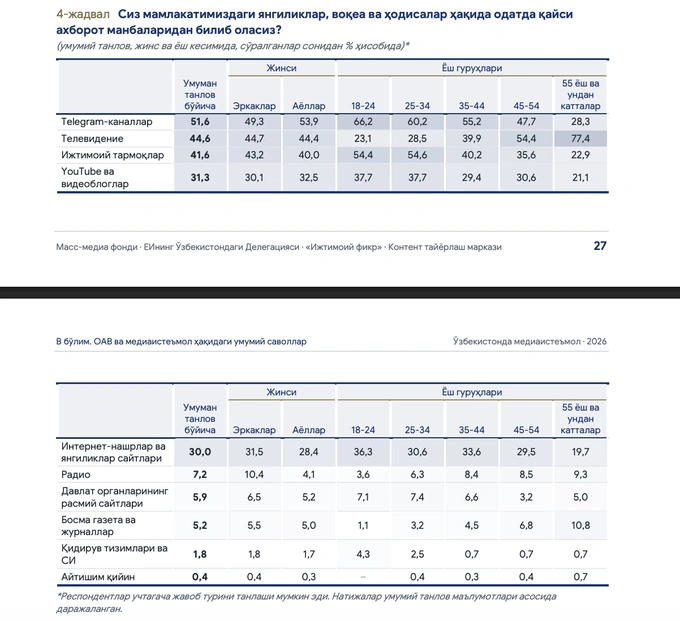
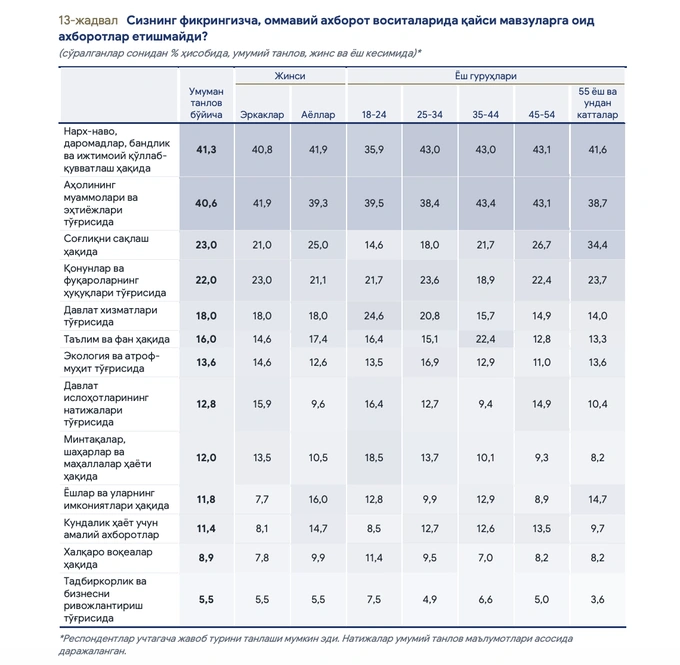
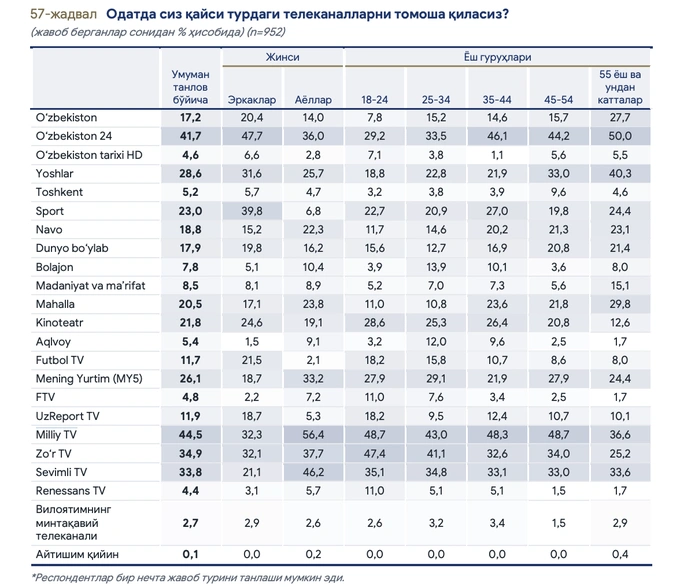
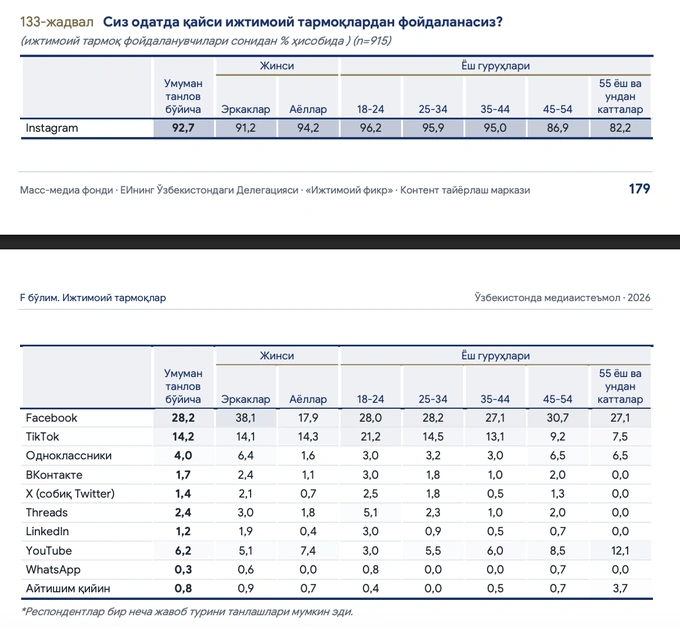
Half of respondents (50.4%) regularly follow news about the country, and another 30.4% do so from time to time. Telegram channels were named the main source of news (51.6%), followed by television (44.6%), social media (41.6%), YouTube and video blogs (31.3%), and online publications (30%). Radio (7.2%), government agency websites (5.9%) and newspapers (5.2%) lag far behind. When choosing a source, the decisive factor was timeliness — 48.6%.
The gap between use and trust
The study's main paradox: although news is most often taken from Telegram, only 11.3% of respondents trust it. Television enjoys the highest trust — 44.3%, followed by official government websites (17.3%), even though only 5.9% use them for news. The gap between use and trust is also large for other digital channels: online publications, social media and YouTube are trusted by 5.4–7.4%, while 30–42% use them for news.
The generational gap
The sharpest differences are between generations. Television is trusted by 70.6% of people over 55 and only 23.1% of young people aged 18–24; with Telegram the picture is reversed — 17.1% versus 5.4%. Notably, among the young, government websites are trusted more (22.8%) than Telegram channels, whereas among people over 45 trust in official websites drops to 7.5–10.4%. Overall, rural residents trust the media more (50.1%) than urban residents (39.7%).
Language and alphabet: Cyrillic versus Latin
71.7% prefer to receive information from the media in Uzbek in Cyrillic, 49.8% in Latin script, 43.3% chose Russian, and 11.3% chose English (multiple options could be selected). But the overall figure hides a generational gap: among those aged 18–24, 76.5% prefer the Latin script, among those 25–34 — 71.1%, whereas in the 35–44 group Cyrillic comes first (75.5%), and among people 55+ it is chosen by 94.3%. English is chosen as a language for receiving information by 23.1% of young people and only 3.6% of the older group.
Fakes and information verification
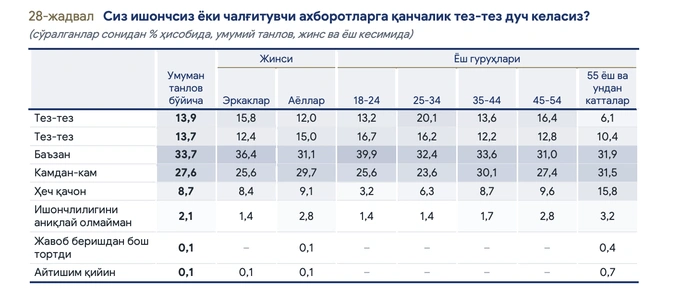
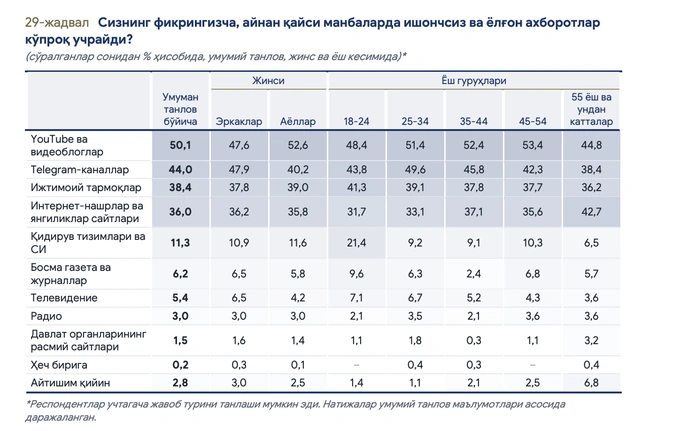
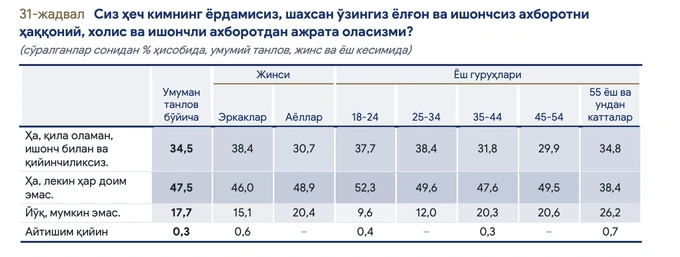
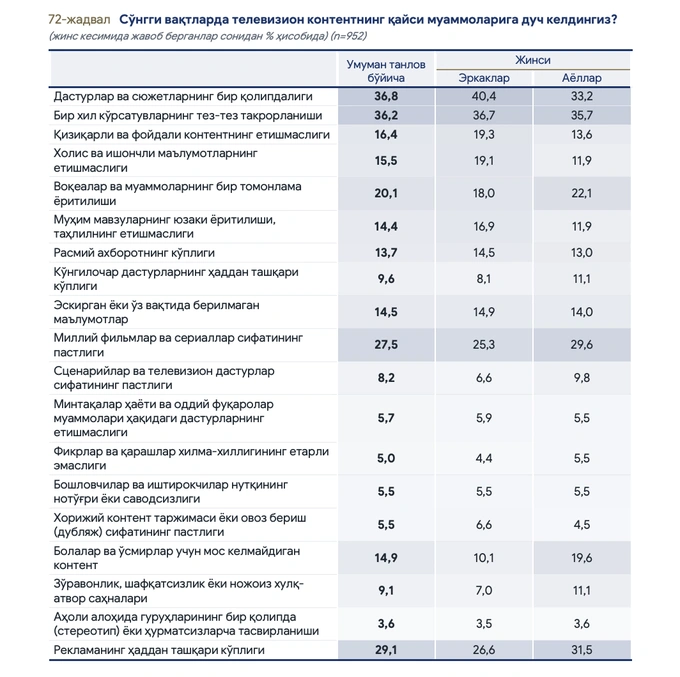
27.6% of respondents encounter false or misleading information 'very often' or 'fairly often', and 33.7% 'sometimes'. People name YouTube and video blogs (50.1%), Telegram channels (44%) and social media (38.4%) as the main sources of fakes; only 5.4% consider television a source of fakes. 25.1% always verify information, 13.3% never do, and among people over 55, 23.3% do not verify it. 17.7% admitted they cannot independently distinguish lies from truth — from 9.6% among young people to 26.2% among older respondents. On social media, 48.7% of users have encountered fake news and 34% have encountered fraud attempts.