The key facts
- Daryo took second place among Uzbekistan's online publications with an audience of 43.5% of surveyed online media readers
- The main criteria for choosing media are objective coverage of events (50.4%) and trust in the source (50.1%)
- Online publications are read mainly via mobile apps (58%) and Telegram channels (37.2%)
Second place among online publications
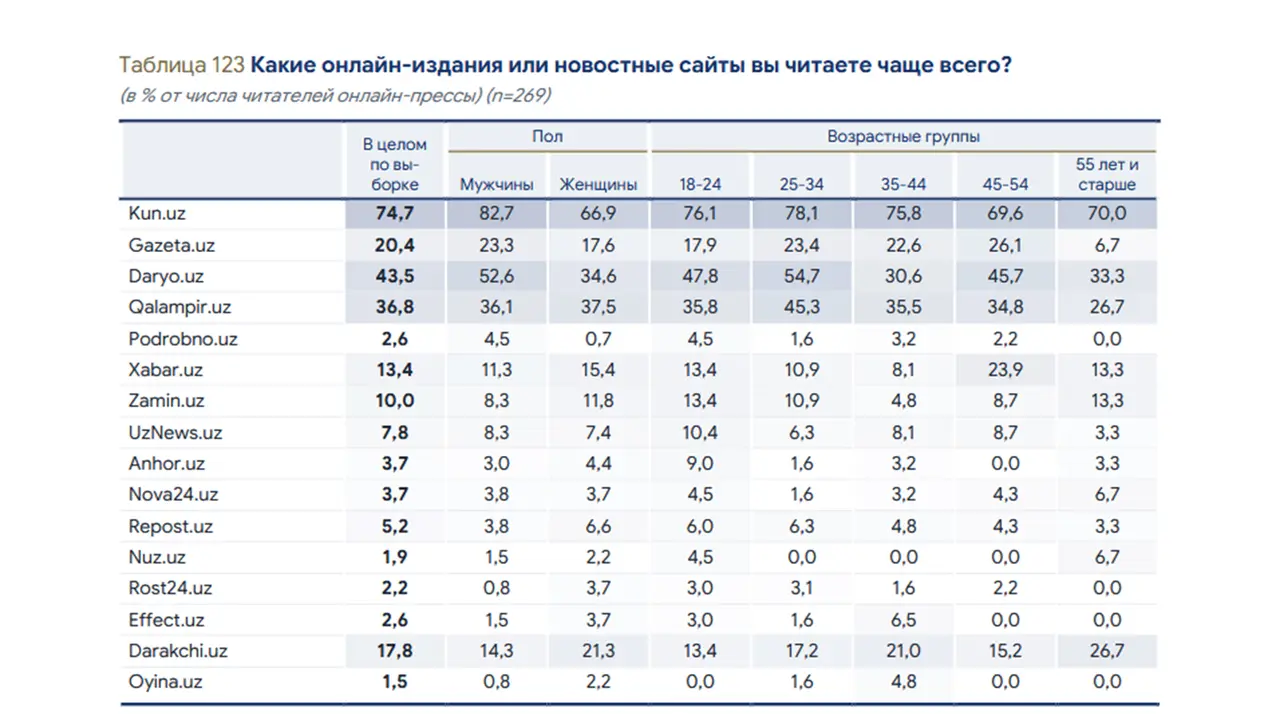
The Public Foundation for Support and Development of National Mass Media conducted the National Media Consumption Study in Uzbekistan, whose report separately examined the performance of online publications. According to the survey, the most in-demand online media were named as Kun.uz (74.7%), Daryo.uz (43.5%) and Qalampir.uz (36.8%). Thus, Daryo took second place in popularity and audience size among the country's online publications — as reported by Daryo citing the foundation's report.
Who reads Daryo and where
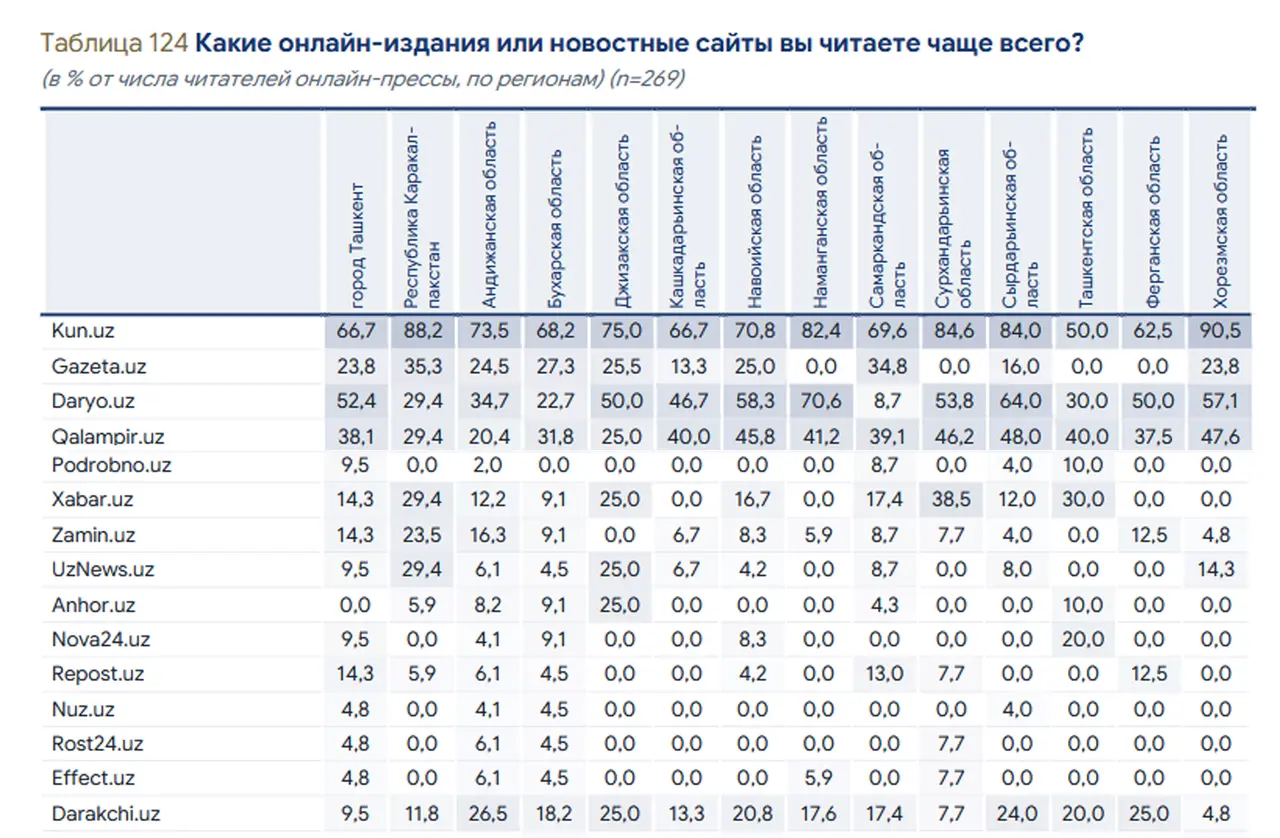
The largest share of Daryo's audience consists of people aged 25–34 — 54.7%; in the 45–54 age group, 45.7% of respondents read the publication. By region, the widest audience was recorded in Namangan (70.6%), Syrdarya (64%), Navoi (58.3%), Khorezm (57.1%) and Surkhandarya (53.8%) regions.
What readers lack and how they choose media
According to the study, readers of print and online media most lack open discussion of pressing social issues (31.8%), objective and reliable news (30.1%), in-depth analytical publications (29.1%), coverage of the problems of ordinary citizens (24.3%), journalistic investigations (20.6%) and fact-checking (20.1%). When choosing publications, the main criteria named were objective coverage of events (50.4%) and trust in the information source (50.1%); speed of publication (30.3%) and simplicity of presentation (24.6%) are also important.
How Uzbeks consume content
Residents of the country most often read online publications via mobile apps (58%), Telegram channels (37.2%), websites (31.6%) and social media (31.2%). Respondents are most interested in news about Uzbekistan (57.4%), followed by international events (43.4%), education and science (34.3%), healthcare (27.3%) and politics with the work of government bodies (24.8%). Gender differences were also identified: men are more often interested in politics and domestic news, while women are more interested in healthcare, education and family.
Context: Telegram as the main source of news
Earlier, on November 2, Daryo reported, citing the same study, that the majority of adult Uzbeks get their news via Telegram — 45.7% of respondents; followed by social media (36.9%), television (33.8%) and online publications with news websites (30.7%). The survey covered 1,411 people aged 18 and older and was conducted from September 8 to 19, 2026. These figures align with the new report's finding that Telegram channels remain one of the main channels of access to online media.