The key facts
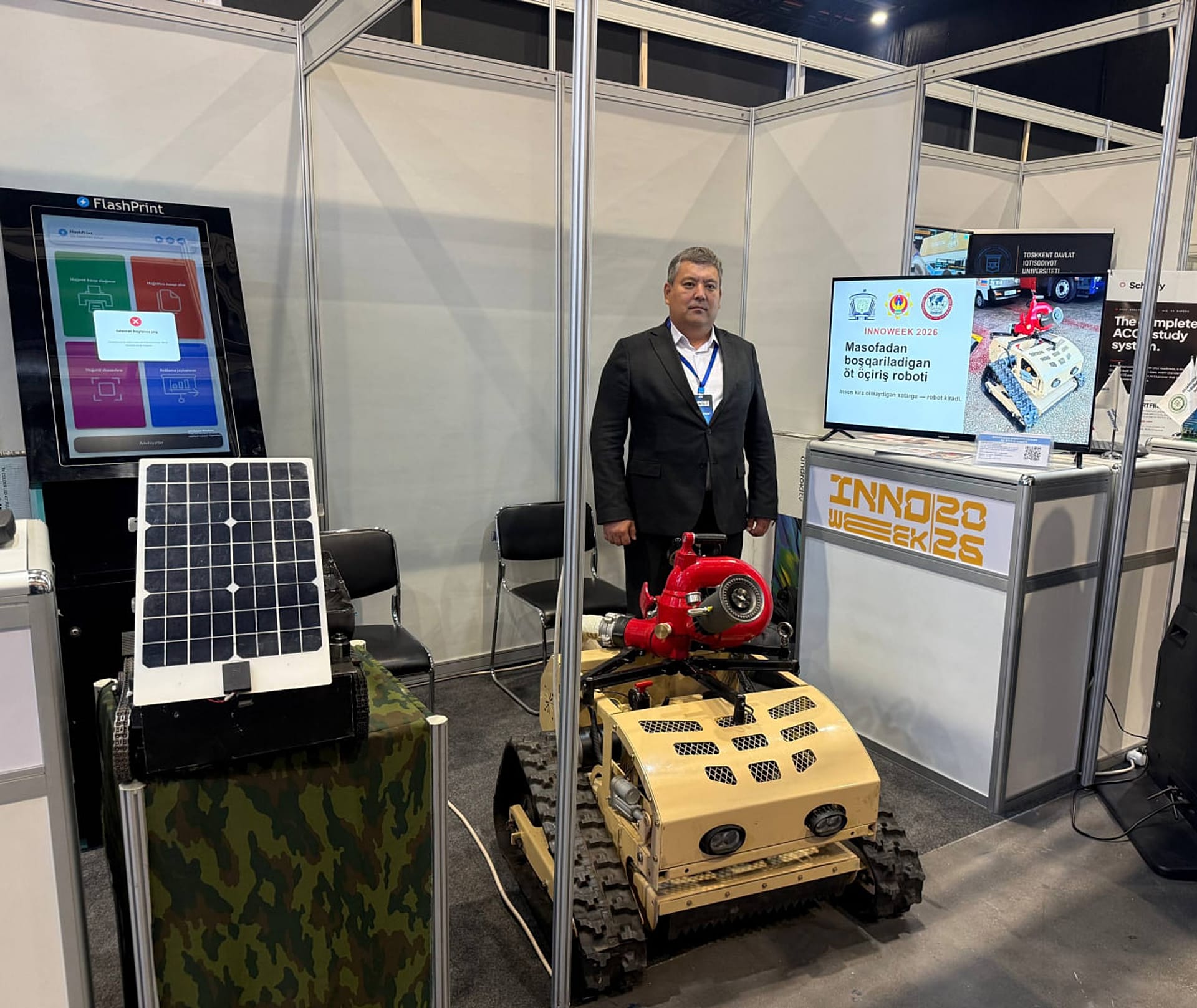
- A firefighting robot created with Uzbekistan’s Ministry of Emergency Situations is controlled at 500–800 m and, according to the developers, costs about €8,100 versus ~€15,300 for a comparable Chinese model
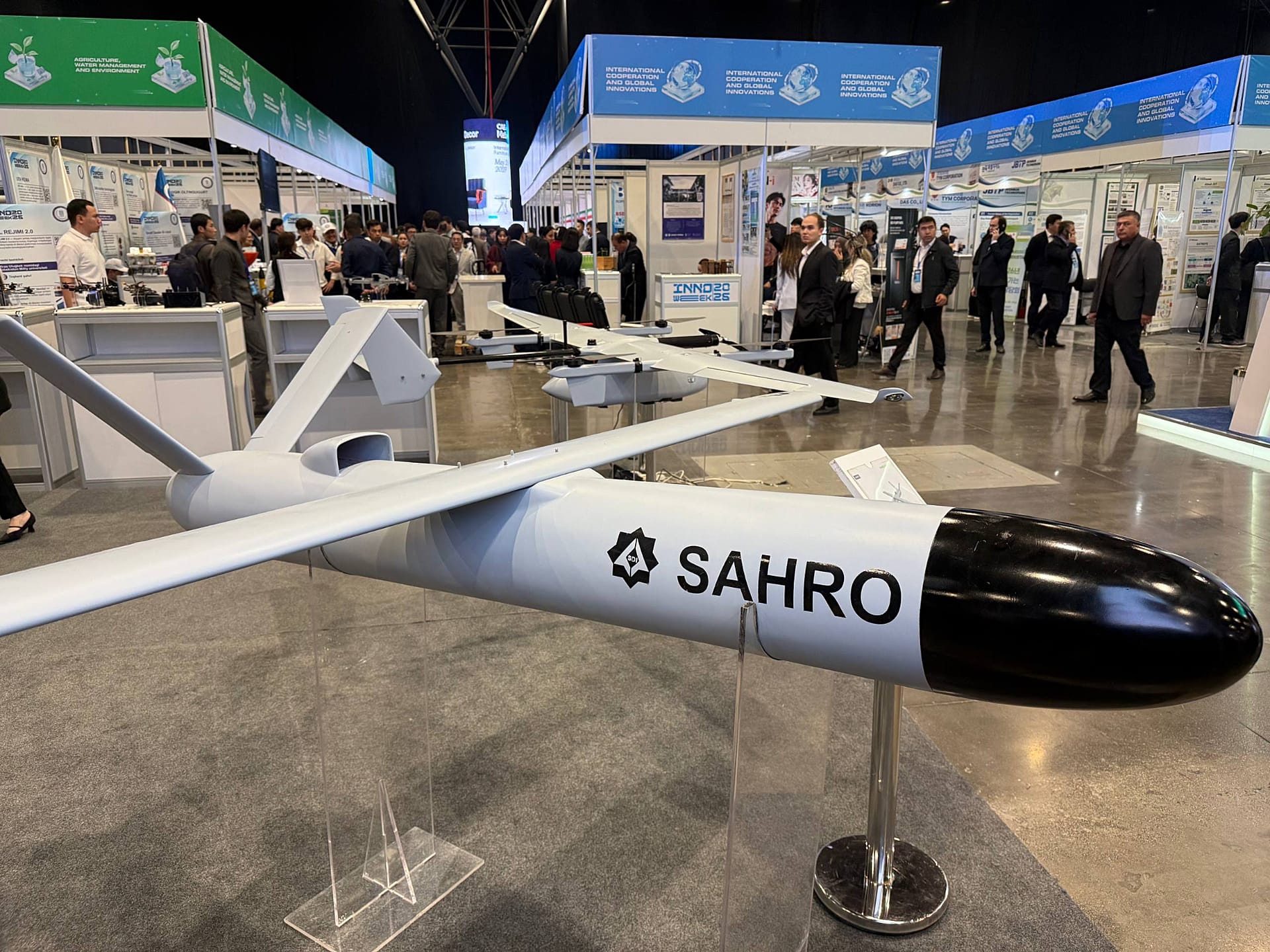
- Sahro Drone Industry: 90% of output is military drones, 14 types, ~70% of components localized; exports are planned from 2027
- 20 spin-off companies took part in InnoWeek 2026; the Agency for Innovative Development promotes co-financing of research by business and the state
A firefighting robot and drones at InnoWeek 2026
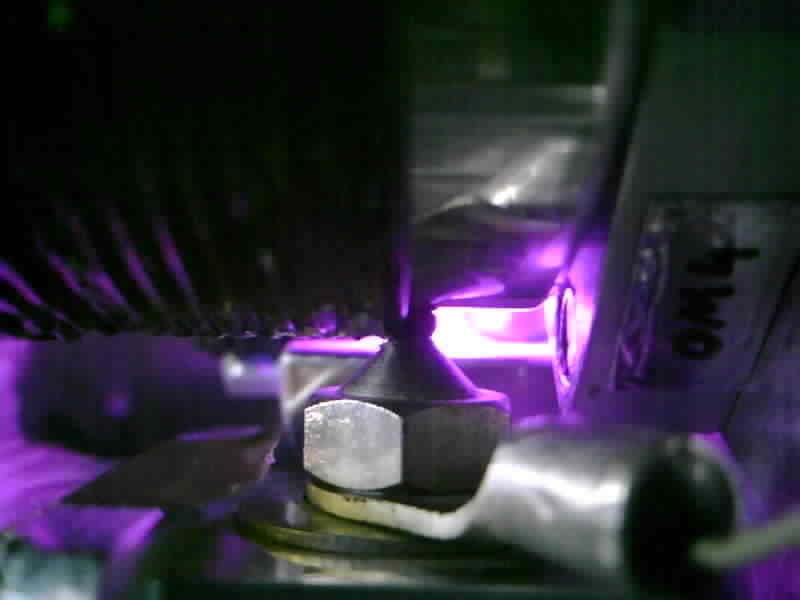
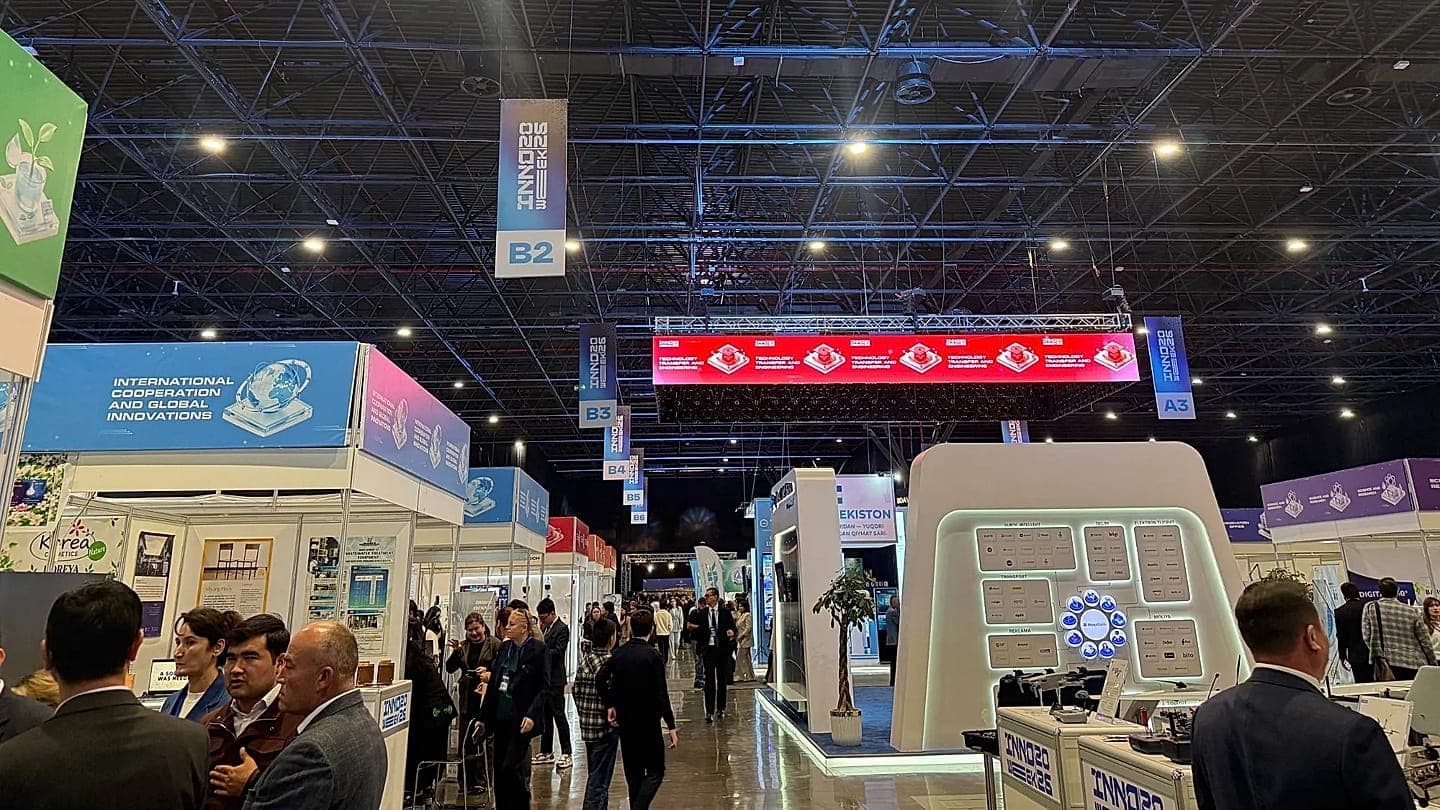
The InnoWeek 2026 exhibition was held in Tashkent, where researchers, companies and students presented developments ranging from industrial safety to agriculture and energy efficiency, Euronews reports. One of the central exhibits is a tracked firefighting robot created in cooperation with the Ministry of Emergency Situations of Uzbekistan. It can be controlled from a distance of 500–800 meters, the tracks are rated for at least 500 °C, and the version with metal tracks up to 1,000 °C; the team is working on integrating AI, including automated control of the water cannon. The project remains at the prototype stage, and a patent application has been filed.
Price as an argument
Doctor of Economic Sciences Qudratjon Yusupov, who is involved in the project, noted that similar robots exist in China, Europe and South Korea, but are expensive: by his estimate, the Uzbek prototype costs about €8,100 compared with roughly €15,300 for a comparable Chinese model. The team names filling stations and gas stations as potential customers and is exploring exports to Kyrgyzstan and Tajikistan.
Drones: military and civilian
The company Sahro Drone Industry showcased a multi-purpose drone with a payload capacity of up to 50 kg, which can be adapted for agricultural spraying or firefighting by swapping the platform and tank. Company specialist Shavkat Kuchkorov said that about 90% of the output is intended for military purposes and only 10% for agriculture, emergency situations and other civilian applications; 14 types of military drones are produced, and about 70% of components are localized. Exports are planned to begin in 2027, with potential output of about 100 large aircraft and up to 60,000 small models per year depending on demand.
Student projects and the link between science and industry
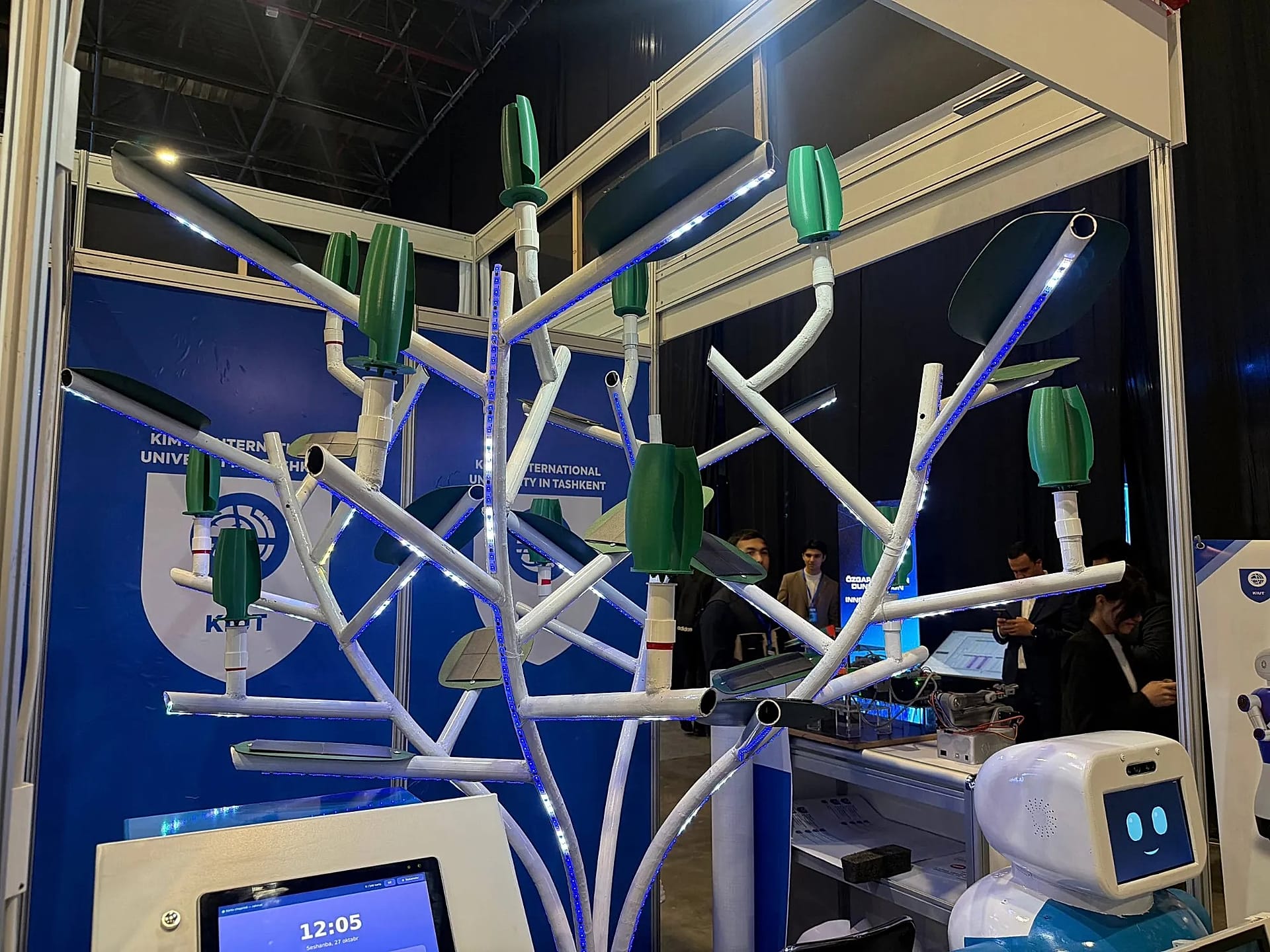
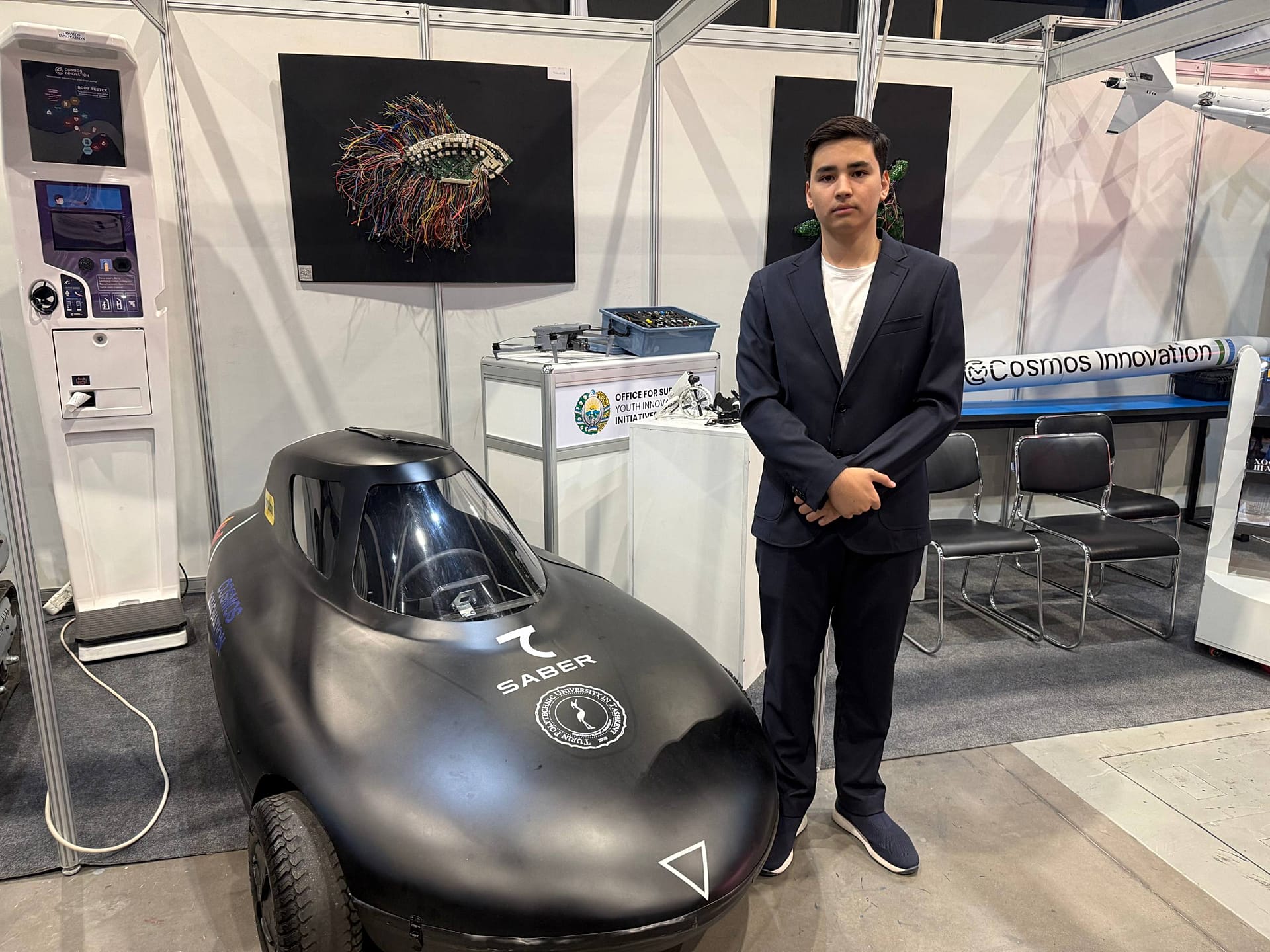
Students of the International Kimyo University developed a tree-shaped installation with solar panels and small wind turbines to power street lighting and surveillance cameras; production is estimated at about $2,000 with a possible sale price of $2,200–2,500. The university funds selected projects and acts as the first customer itself, channeling revenue from purchases back into its research and development center. The Cosmos Innovation team from Turin Polytechnic University in Tashkent presented an electric car weighing 250 kg with a claimed consumption of 0.6 kWh per 10 km and hopes to compete at the Shell Eco-marathon 2027 in the USA. Professor Georg Gugenberger of Leibniz University Hannover spoke about the problem of commercialization: in his words, scientists, innovators and business need to work together. Deputy Director of the Agency for Innovative Development Javlonbek Abdudjalilov said that 20 spin-off companies took part in the exhibition, and new funding mechanisms allow business and the state to share the costs of research projects.