The key facts
- The US midterm elections are taking place on November 3, 2026; AFP interviewed voters at polling stations in New York, Georgia, Texas, Florida, and Washington.
- According to polls, the Democratic Party may gain a majority in the House of Representatives and possibly in the Senate.
- Key voter concerns include rising gas and food prices, ICE actions, the February 28 strike on Iran, and the Senate race in Michigan.
Election day and voter sentiments
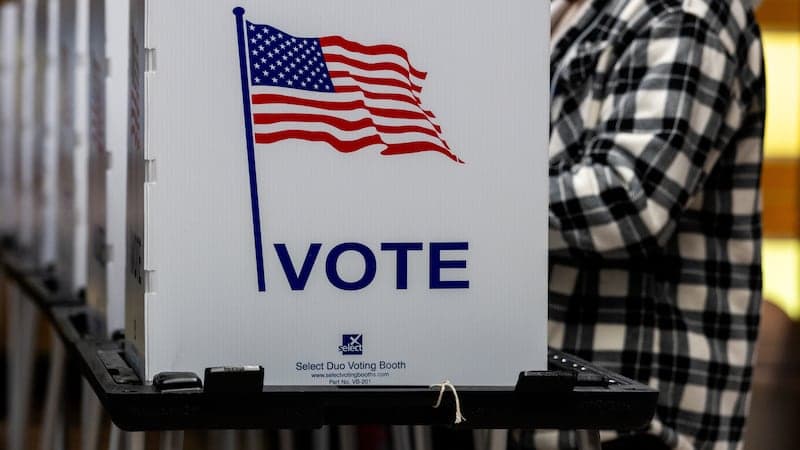
On November 3, 2026, Americans are voting in midterm elections, which are traditionally seen as a referendum on the incumbent president. AFP correspondents, photographers, and videographers are working at polling stations across the country and recorded the opinions of voters who agreed to share their reasons for voting. According to polls cited by the agency, the Democratic Party has a chance to win a majority in the House of Representatives and possibly even in the Senate.
Cost of living as the main issue
The economy of everyday life has become one of the most frequent topics in surveys. According to AFP, gas prices have risen by about one-third since last year, diesel has nearly doubled in price, and food inflation has accelerated sharply. 'It's about the cost of living, gas prices—for an ordinary person, this needs to change, and I am an ordinary person,' said Donta Comer, a 38-year-old project manager from Atlanta. He was supported by 27-year-old entrepreneur Tom, who described himself as an independent voter: according to him, his generation is frustrated by the 'affordability crisis,' fuel prices, and the situation abroad.
Polarization around Trump and immigration policy
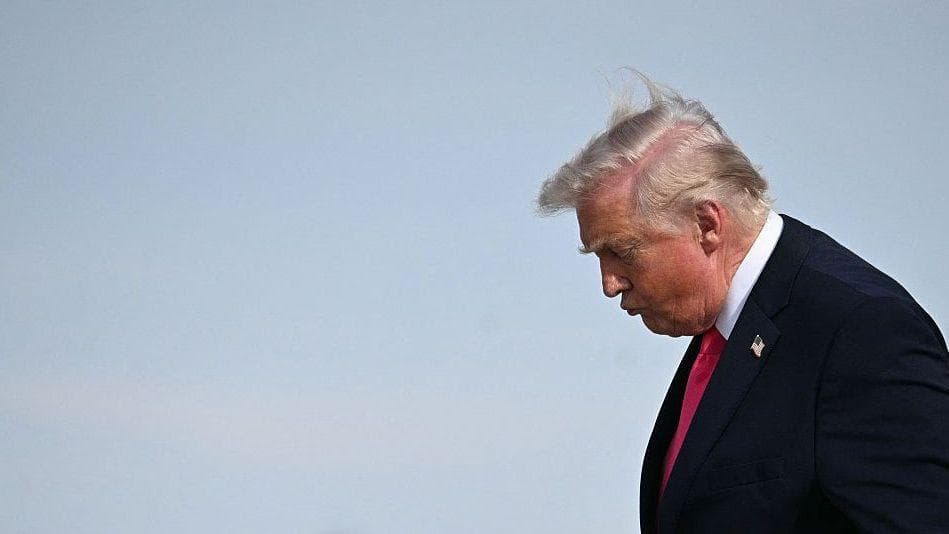
Few leaders have polarized public opinion as much as Donald Trump. In his final campaign, he emphasized reducing immigration and stopping crossings of the southern border with Mexico. His hardline stance appeals to his core supporters, but others are put off by the tactical methods of ICE immigration agents. 'I am very concerned about climate change, school violence, and the situation with people who still do not have immigration status,' said Diana Alvarez, a 38-year-old Cuban-American lawyer in Doral, Florida, adding that the current administration treats migrants 'a bit cruelly and aggressively.' In Austin, 59-year-old Jana Cardino explained her vote for Democrats as a desire to return to a 'culture of decency, honesty, and integrity.'
Foreign policy and socialism as arguments
Several voters recalled the most significant foreign policy decision of Trump's second term—the February 28 strike on Iran, carried out jointly with Israel. 'They promised 'no new wars'—that was the slogan,' said Wes Piron, a 37-year-old from Washington, noting that the goals and priorities of the operation are unclear to him. Republicans and Trump himself, according to AFP, portrayed Democrats as dangerous 'socialists intent on destroying American capitalism'; 84-year-old Austin resident Daryl Ruley called young people's sympathy for socialism a lack of historical knowledge.
Key race in Michigan
One of the most watched Senate battles is unfolding in Michigan. Democrat Abdul El-Sayed, a former medical administrator and Muslim, made free universal healthcare and ending US support for Israel key points of his platform. Trump called him a 'jihadist,' and opponents spread accusations of sympathy for the 'Muslim Brotherhood' and Hamas—these characterizations are cited by AFP as part of the campaign against the candidate. His supporter, 51-year-old former teacher Makayla Borndes, who was forced to leave her profession after falling down stairs, came to the polling station wearing El-Sayed's buttons: 'We all need help. I need help.'