The key facts
- CBAM entered into force in January 2026 and covers a range of Canadian exports to the EU
- Canada is not eligible for an exemption: it is tied to participation in the EU emissions trading system
- Canadian departments estimate the average annual value of affected exports at 28 billion Canadian dollars (2021–2024)
Ottawa's cautious position
Canada's Minister of Climate Change and Environment Julie Dabrusin has defended industrial carbon pricing as a tool for cutting emissions and shielding businesses from unfair competition, but avoided giving direct support to the European border carbon tax. 'Industrial carbon pricing is important in the low-carbon economy the world is moving toward. But those are conversations we still need to have,' she said in an interview with Euronews. The interview was published on 2 November 2026, shortly after the EU–Canada summit in Montreal on 29–30 October.
Why Canada cannot count on an exemption
The issue concerns the CBAM mechanism, which entered into force in January 2026 and imposes a carbon cost on a range of goods imported into the EU, protecting European producers from competitors from countries with weaker climate rules. According to Euronews, citing an internal document from Canada's ministries of trade and foreign affairs dated December 2025, Ottawa is in effect seeking an exemption from the mechanism: the document calls CBAM a potential obstacle to expanding exports to Europe, above all aluminium, steel, critical minerals and hydrogen. Canada does not automatically qualify for an exemption, despite having its own carbon pricing system and the CETA trade agreement with the EU: under the bloc's rules, a full exemption is tied to participation in, or linkage to, the European emissions trading system, which Canada does not yet meet. In addition, the carbon price in the EU is noticeably higher than Canada's trajectory. The legal obligation falls on importers within the EU, but critics point out that the costs are likely to be passed on to exporters through commercial agreements.
Scale and political context
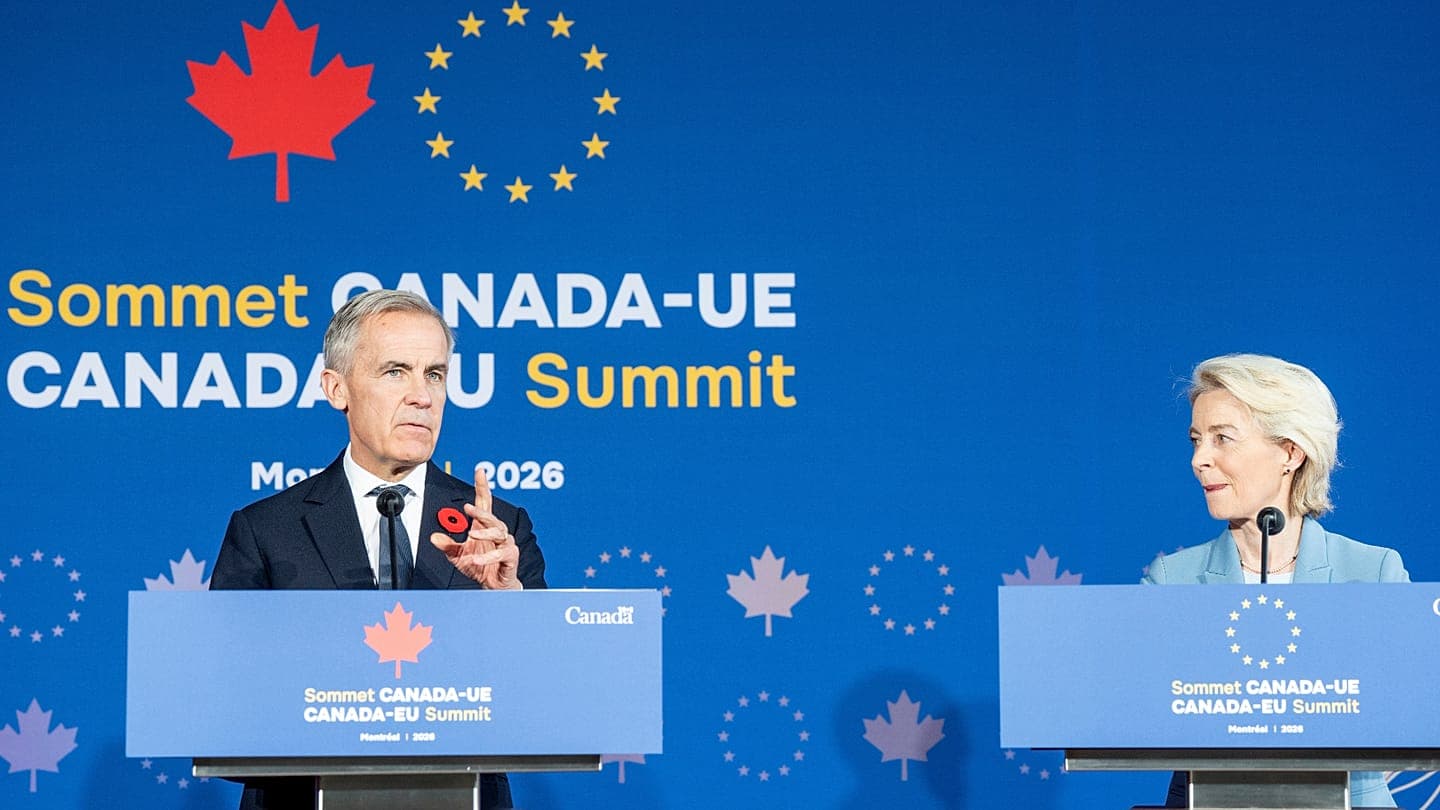
According to the document, in 2021–2024 Canadian exports of goods covered by the mechanism averaged 28 billion Canadian dollars per year — 7.4% of Canada's exports to the EU. Conservative shadow minister for international trade Stephanie Kusie said that 'the EU carbon tariff could affect 3 billion dollars' worth of Canadian exports in the coming months,' reproaching the prime minister for failing to address the problem. Prime Minister Mark Carney said at the closing press conference on 30 October only that 'a series of trade issues that had long been smouldering' had been discussed, adding: 'We are working together to find common solutions (on CBAM and other trade issues).' Carney is seeking to diversify Canadian trade away from heavy dependence on Washington, so access to the EU market is growing in importance for Ottawa. At the summit he announced the goal of becoming an associate member of the EU by June 2027, but a number of countries led by Germany expressed differences over the very definition of associate membership; EU leaders agreed to define the concept by the 2027 summit. Dabrusin herself stressed that for Canada what matters more is 'substance, not semantics.'