The key facts
- Astroscale says it is ready to launch an 'escort' satellite in less than three years
- The idea is based on the experience of the ADRAS-J (2024) and ELSA-d (2021–2024) missions
- The proposal came amid reports of a Russian satellite maneuvering near an ICEYE spacecraft
Bodyguard satellites: Astroscale's proposal
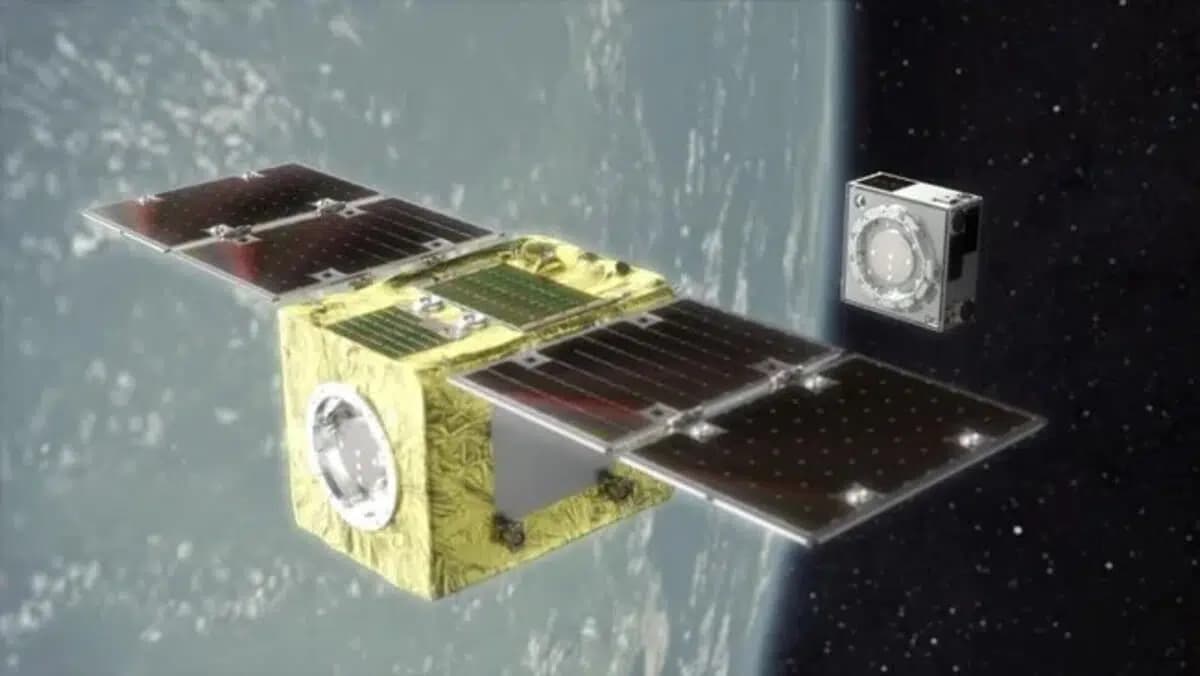
Astroscale, a company specializing in spacecraft servicing, has proposed creating 'escort' satellites that would guard valuable objects in orbit. According to Alex Godfrey, head of the company's defense division, such a 'bodyguard' satellite could be readied for launch in less than three years. This is reported by Kun.uz citing statements by a company representative.
What the idea is based on
The concept builds on the experience Astroscale has already accumulated in approaching objects in orbit. In 2024, as part of the ADRAS-J mission, the company's spacecraft closely inspected a spent stage of a Japanese rocket in low Earth orbit. And in the ELSA-d mission, which ran from 2021 to 2024, the company demonstrated docking technology with space objects in a commercial project. These capabilities are now proposed to be adapted for protecting other satellites.
How it is supposed to work
Godfrey explained that orbital servicing spacecraft must have very high maneuverability: refueling a satellite or deorbiting a failed object requires approach up to direct contact. It is precisely such maneuvering capabilities, in the company representative's view, that could also prove useful for guarding important objects in orbit. The task of a 'bodyguard' satellite is to prevent other spacecraft from dangerously approaching the protected object. Godfrey himself compared the idea to an aircraft carrier's escort system: a carrier does not go to sea alone — it is accompanied and protected by smaller and cheaper warships; similarly, relatively compact spacecraft could guard expensive satellites.
Context: growing security concerns
The proposal came amid rising concerns about the safety of spacecraft. According to Space.com, cited by Kun.uz, a Russian satellite maneuvered near a spacecraft of ICEYE, which conducts radar observation of the Earth's surface; the incident raised alarm about possible damage to the satellite.
Who could fund it
According to Godfrey, building such a guard spacecraft is within the reach of an individual state such as the United Kingdom, given its technical and financial capabilities. At the same time, he proposed forming a pan-European group of 'bodyguard' satellites: such spacecraft could patrol areas where important space objects are located and jointly protect the satellites of several allied countries. It is noted that this remains a company proposal, not an adopted decision: the publication does not report the start of any specific program or funding.