The key facts
- 42AI emerged from stealth with a $62.5 million seed round from its founders and Infinity Group raised over three years
- The model is used by 10 major brokerage firms for liquidity management, margin and hedging
- The claimed 98% accuracy refers to trading flows falling within the predicted range, not to individual trades
Behavior-predicting startup emerges from stealth
Israeli startup 42AI has come out of stealth with a $62.5 million seed round and a claim that it has built a 'behavioral world model' capable of estimating the probability of a person's decisions, including in situations new to them. TechCrunch reports. The system is already deployed at ten major brokerage firms, where it is used to manage liquidity, margin requirements and hedging exposure.
How the model works
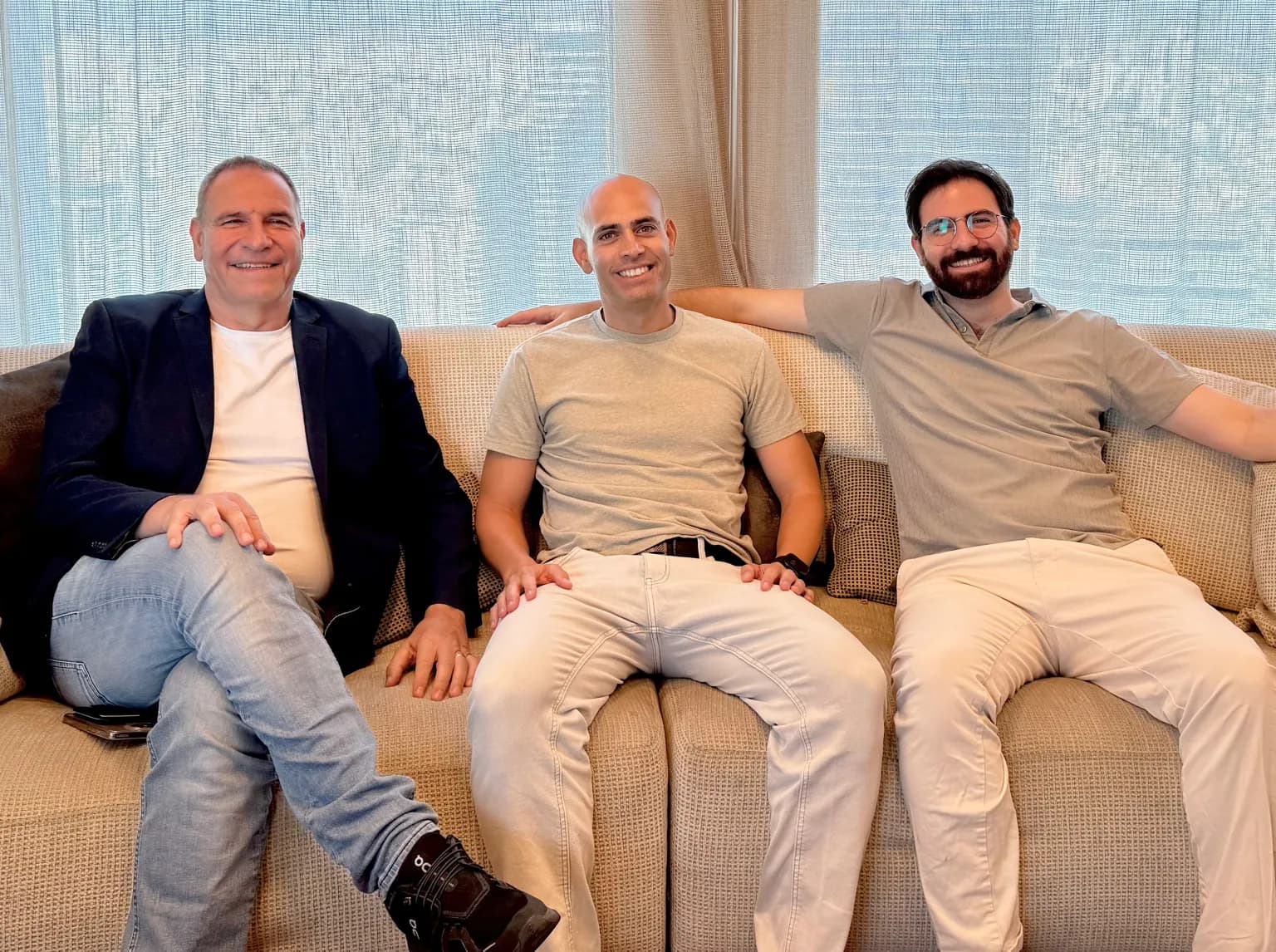
According to CEO and co-founder Amit Gal-Or, human behavior is not deterministic but probabilistic: people have stable psychological tendencies that manifest even when circumstances change. CTO and co-founder Ehud Ezra added that the model seeks to uncover internal motivations rather than extrapolate patterns of past actions. To do this, the system analyzes reactions to outwardly unrelated events — KYC checks, onboarding, support calls, fund transfers, stock transactions — including tone of voice and speech in conversations. The observations are converted into mathematical representations of traits, which feed into a transformer-based world model that outputs decision probabilities under different circumstances; a separate language model is used to generate explanations. Training is structured so as to preserve a person's tendencies in simulations: if a normally cautious investor is suddenly modeled as a risk-taker, 'the objective is off,' Ezra explained.
Data, accuracy and limitations
The company spent three years developing the approach, combining psychological research with neuroscience and genetics; among its advisors are experts in psychology and PTSD, as well as 2011 Nobel Prize in Chemistry laureate Dan Shechtman. First, the team studied thousands of people through psychometric assessments and behavioral scenarios, then incorporated government and biobank datasets covering more than 2 million people; client data now covers nearly 30 million people. Gal-Or claimed 98% accuracy in predicting market trades, but clarified that this is a measure of how often trading flows fall within the predicted range, not the correctness of each individual trade. For predicting trade direction and volume, the model consistently achieves an F1 score of 0.8–0.85. The founders acknowledge a natural ceiling: the system has no access to a person's entire life experience, and accuracy drops when important context is missing — for example, if a trader changes decisions on a friend's advice.
Business and funding
Clients pay a fixed fee or a percentage of the value the platform delivers. According to Gal-Or, one broker gained about $30 million in additional value thanks to dynamic hedging, and the company's revenue exceeds a 'seven-figure' dollar sum, though he did not give an exact figure. The $62.5 million round was raised over three years from the founders and Infinity Group and was not fully sourced from external investors; Infinity was founded by Gal-Or's father Amir Gal-Or, who is chairman and co-founder of 42AI. The company plans to raise more funds and is exploring applications in gaming, fraud prevention and cybersecurity, and in the longer term in robots and AI agents, although Ezra acknowledged that the model needs to be trained on the rules and context of each new domain.
The ethical question
TechCrunch points to a potentially troubling side of the technology: if a broker can anticipate clients' actions, what would stop it from using that knowledge to its own advantage. Ezra called this 'a legitimate concern'; the founders cited regulation, monitoring and an internal ethics committee, but did not explain what exactly would prevent clients from using the technology against the people being profiled. Gal-Or expressed confidence that the technology itself helps address such risks: 'We are very proud to be part of the solution; we are the solution to this problem.' He also noted separately that, in his words, the system does not need personal data and 'never knows who this person is,' although, as the publication points out, the company nonetheless builds individual behavioral profiles based on clients' linked activity.