The key facts
- Donald Blome said at the Manama Dialogue that Syria and Lebanon have “turned the corner”
- Trump's lifting of sanctions was named a catalyst: in September, more than 50 American companies visited Damascus
- The World Bank estimates Syria's reconstruction at approximately $216 billion; the US–Israel talks on Hezbollah are viewed ambiguously
A new phase after the war
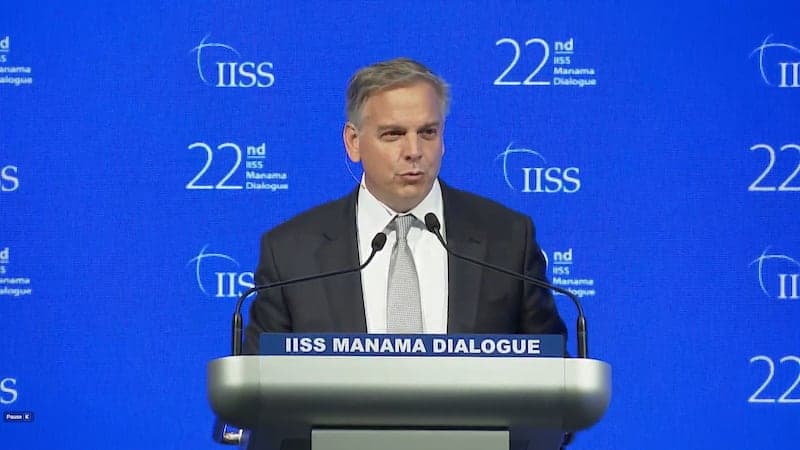
Syria and Lebanon are entering a new phase in which attention is shifting from the question of whether reconstruction is possible at all to the question of how, and on what basis, it should be carried out. This is how US Assistant Secretary of State for Near Eastern Affairs Donald Blome assessed the situation, speaking on Sunday at a Manama Dialogue panel in Bahrain: “Both have turned the corner, and the question is no longer whether they can be rebuilt, but how and on what foundation,” The National quotes him as saying.
Syria: sanctions lifted, investors arriving
According to Blome, President Donald Trump's lifting of American sanctions on Syria has acted as a catalyst for renewed economic interest and has already helped attract investment. President Ahmad al-Sharaa's government is seeking to expand business ties with the United States: in September, a delegation of more than 50 American companies visited Damascus. The scale of the task is illustrated by a World Bank estimate that Syria's reconstruction will cost approximately $216 billion.
Lebanon: reconstruction in question
Lebanon, unlike Syria, is only beginning to recover from the devastating war with Israel, which began after Hezbollah's October 7 attacks in support of Hamas, and the prospects for reconstruction remain threatened by possible escalation in the region. Blome separately noted the trilateral talks between the United States and Israel on the “dismantling of infrastructure”
Differing assessments of the talks
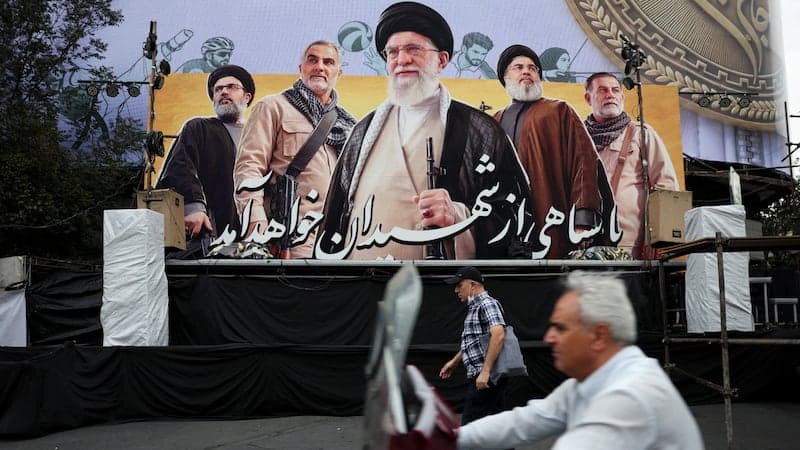
Attitudes toward these talks are mixed, the outlet acknowledges: some officials call them productive, while others see them as a way to allow Israel to consolidate its occupation of southern Lebanon — a position previously voiced by Druze leader Walid Jumblatt, as also noted in a separate National article about his views. Asked how one can speak of economic growth against the backdrop of the threat of a new war — Trump has repeatedly threatened to resume strikes on Iran, and Tehran has promised to respond to any attack on a larger scale — Blome replied that the United States “must talk about an alternative vision for a region that has been torn apart for too long by Iran's use of proxies.” According to him, diplomatic channels remain “open and active,” but he did not rule out war: if necessary, the United States is ready to go “in a different direction.”
Regional context
The conference organizers emphasized the need to diversify regional economies and strengthen ties between countries after the upheavals caused by the war with Iran, including the impact on shipping through the Strait of Hormuz, which normally accounts for 20% of global energy trade. Blome pointed to opportunities for trade and investment in the Gulf and Iraq, stating: “We believe the future of this region is bright in many ways.”