The key facts
- The Monsoon Wind Power Project (600 MW, $700 million) is the first cross-border wind project in Asia and the largest wind farm in Southeast Asia, operating since August 2025
- The electricity is sold exclusively to Vietnam; according to one expert's estimate, at about six cents per kWh, which is cheaper than Vietnam's domestic rates
- Local residents received roads, water and medical care, but not electricity: outages persist in their village, and Laos's state power company is burdened with debt
A wind farm powering a neighboring economy
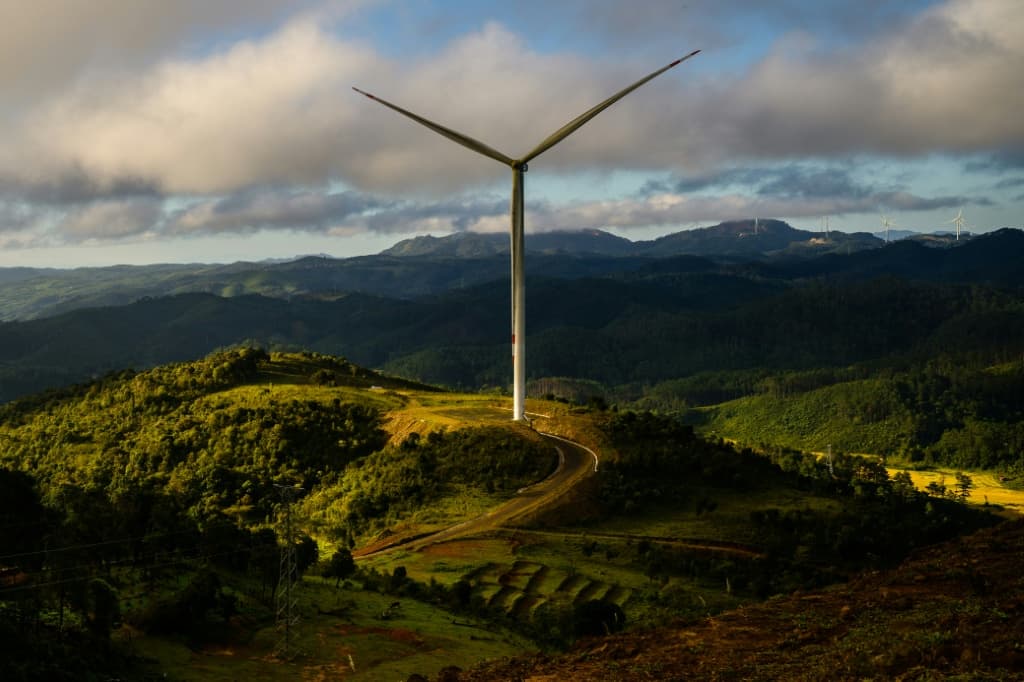
On the ridges of southern Laos, 133 wind turbines built by a Chinese state-owned company are in operation. The 600-megawatt Monsoon Wind Power Project, covering an area the size of Singapore, cost $700 million, is owned by a consortium led by Thai investors, and is the first cross-border wind project in Asia and the largest wind farm in Southeast Asia. It began operating in August 2025 and sells electricity exclusively to Vietnam's national grid via dedicated transmission lines, AFP reports.
Why the demand from Vietnam
Vietnam — Southeast Asia's fastest-growing economy and a manufacturing hub — had previously imported hydropower from its poorer neighbor. In 2023, drought hit hydro generation and caused serious blackouts, and in September the Vietnamese government warned of a risk of electricity shortages from the following year due to delays in planned energy projects and growing demand. According to Thomas Jacobsen of Indochina Energy Partners, EVN pays Monsoon about six cents per kilowatt-hour — two to four cents less than Vietnam's domestic rate; representatives of Monsoon, EVN and the Asian Development Bank, the project's financial arranger, declined to disclose the rate during a press tour. EVN official Ninh Xuan Hiep stated that by 2030 imports from Laos will account for nearly 10% of Vietnam's installed capacity, and that the project is important for Vietnam to reach carbon neutrality by 2050.
A shift in the regional energy trend
Hydro dams have been built en masse across the region in recent years, but their output falls during the dry season, and critics point to environmental damage. Laos already has 90 hydroelectric plants in operation, and there are almost no optimal sites left for new ones. Tristan Bellingham of the nonprofit EnergyLab Asia noted that 'the economics are moving in favor of wind' and that, like hydropower 20–30 years ago, there is now a race for concessions and development rights for new wind projects; according to one Lao official, 10–15 such projects are being developed in the country, 'following in Monsoon's footsteps.' The project's general manager, Narut Boakajorn, said Monsoon plans to add 1,000 megawatts of capacity and is seeking to have part of this additional energy used within Laos. According to him, the state will receive $180 million over the 25-year contract term, including taxes and community development and environmental protection funds; he also stated that no one was forcibly resettled and that the 1,600 registered complaints — mostly from farmers about compensation for crop damage during construction — were resolved. AFP notes, however, that public dissent in communist Laos is tightly restricted.
What the project gave — and didn't give — to locals
For Tukta Phonsaaly, a resident of the village of Dak Vai, and her 18 family members, as well as for neighboring rice- and coffee-growing farms, the project brought new roads, improved access to clean water and medical care. It did not bring electricity: residents report outages during severe storms, as Laos's own power grid is outdated and the state power company is burdened with debt. Nevertheless, Tukta herself is glad the energy is exported: 'It is better for development and can bring prosperity,' she told AFP.