The key facts
- 223,000 Kazakhstani Germans live in Kazakhstan; their ancestors were deported in 1941
- More than a million people were deported, of whom at least 200,000 died
- Almost a million people passed through Karlag in 1931–1959; about 10,000 died in the 1940s–1950s
The young generation of Kazakhstan's Germans keeps alive the memory of the deportations
22-year-old student Yunna Kineraysh from Astana calls herself a Kazakhstani German and is a member of the society 'Wiedergeburt' (Revival), which unites the Germans of Kazakhstan — there are 223,000 of them in the country today. She acts in a play by the society's youth theater about the fate of the Russian Germans and makes films: in 2025 she made a film about German women imprisoned in the ALZhIR camp (Akmola camp for wives of traitors to the homeland). 'My ancestors survived the camp system in Kazakhstan, so it is important that we do not forget our roots,' she says Deutsche Welle.
The history of deportations and camps on Kazakhstani soil
From the 18th century, Germans were encouraged to resettle in the Russian Empire, including the Black Sea region. After Nazi Germany invaded the USSR in 1941, Stalin began the deportations of hundreds of thousands of Germans from Russia and Ukraine to Siberia and Kazakhstan: people who had nothing to do with the war were collectively accused of espionage and collaboration. In total, more than a million people were deported, of whom at least 200,000 died from exile, hunger and forced labor. Kineraysh's family was expelled from the Ukrainian German village of Kleinwerther.
ALZhIR and Karlag: museums with few visitors
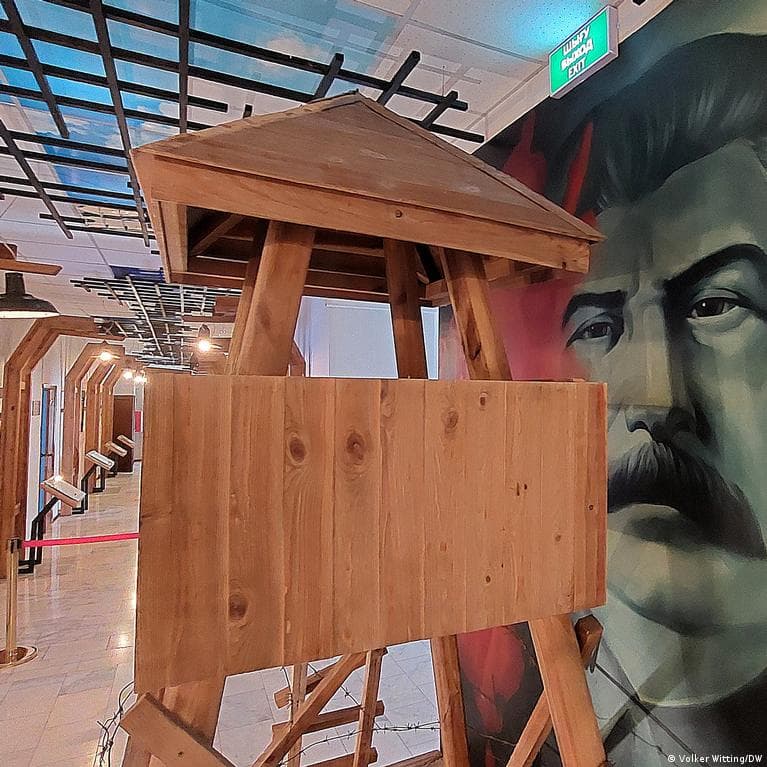
The House of Friendship in Astana, funded mainly by the German government, runs language courses, social work and remembrance work on the deportations and repressions. The ALZhIR camp held 18,000 women imprisoned only because their husbands had been convicted as 'traitors to the homeland'; among them were 167 German women. The memorial is located not far from Astana, which became the capital only in 1997. Among the prisoners was Gertruda Platais, convicted in 1938 as a 'relative of a traitor to the homeland': she worked as an embroiderer until 1946, then was exiled for life to Karlag and rehabilitated only in 1956. Karlag, the largest camp system, covering an area roughly 22 times the size of New York, processed almost a million people between 1931 and 1959; according to available data, about 10,000 prisoners died there in the 1940s and 1950s alone.
Researchers face indifference
American anthropologist Catherine M. Erdman from Nazarbayev University has been researching the camp system for about ten years using drones and fieldwork, and shares her findings with local residents and administrations. 'Often we encounter nothing but apathy or outright rejection,' she says, noting that in Kazakhstan many people, including some politicians, show little interest in coming to terms with the country's brutal history, and there is no state funding for her further teaching activities. The Karlag museum in a former administrative building near Karaganda has been criticized by German historians who visited it: torture cells have been reconstructed there, and melodramatic music blaring from loudspeakers creates a staged rather than authentic impression.