The key facts
- Tens of thousands gathered at the INDIA bloc rally in Delhi demanding the resignation of ECI chief Gyanesh Kumar
- The cause is the roll revision (SIR), under which 130 million names were removed from the draft electoral rolls; the ECI calls it data updating, while the opposition accuses it of 'vote theft'
- The trigger was the electoral roll revision (SIR), under which 130 million names were removed from the draft voter lists; the ECI calls it a data update, while the opposition accuses it of 'vote theft'
- The day before, the opposition held a symbolic impeachment of Kumar, which has no legal force
The Delhi rally and its cause
Tens of thousands of people gathered on Sunday at Ramlila Maidan in central Delhi for a rally organised by the opposition INDIA coalition, led by Rahul Gandhi's Congress party. The main demand was the resignation of Chief Election Commissioner (CEC) Gyanesh Kumar. This was reported by BBC News. The venue has been cordoned off: thousands of police officers and paramilitary units are deployed. The authorities' permission for the rally was granted with conditions — according to media reports, the event must end by 17:00, CCTV cameras must be installed at the site, and marches outside the designated area are prohibited.
The essence of the conflict over the electoral roll revision
The trigger for the protests was the Special Intensive Revision (SIR) of electoral rolls, during which 130 million names were removed from the draft lists. The Election Commission of India (ECI) explains this as data updating — the removal of deceased voters and those who have changed their address. The opposition argues that the revision could benefit Narendra Modi's ruling BJP by excluding legitimate voters, and accuses the ECI chief and the party of 'vote theft' (vote chori); both the BJP and the commission reject these accusations. The conflict was intensified by an investigation by The Indian Express newspaper, according to which Kumar made key decisions on the revision without the consent of the two other commissioners, who objected more than a dozen times; the ECI responded that differences of opinion in any institution are normal and do not affect its work.
The symbolic impeachment and the authorities' reaction
On Saturday, INDIA bloc leaders held a symbolic impeachment of Kumar outside the residence of Congress party president Mallikarjun Kharge — a 'parliamentary session' chaired by former Lok Sabha Speaker Meira Kumar, at which he was accused of 'conspiring to steal the election' and deliberately removing 130 million voters from the rolls. Kharge tabled a symbolic removal resolution, accusing the ECI chief of undermining the electoral process and of 'treason against the nation and the Constitution of India'. The action has no legal force: under Indian law, a commissioner can only be removed through a formal parliamentary procedure. Prime Minister Modi did not directly comment on the impeachment, but at rallies on Friday and Saturday he said that 'certain people' want to sow chaos in order to discredit him, and accused the opposition of 'tearing apart the dignity and boundaries of the constitution'.
The context of the protest wave
The rally was a continuation of a series of actions: last month Gandhi led tens of thousands of participants in a march from Connaught Place to the Supreme Court with the same demand for his resignation, and a party representative called that march 'just the trailer' for Sunday's event. Pressure on the protesters has intensified: on 10 October the authorities blocked large parts of the city against actions by the Cockroach Janta Party (CJP) movement, all of its leading figures were detained, and BBC correspondents saw police dragging away demonstrators and using batons. The CJP publicly supported Sunday's rally, but the presence of its senior leaders remained in question. Preparations for the rally also sharpened internal contradictions: traders at the Chandni Chowk market were divided — some feared losses ahead of Diwali, while others supported the action and criticised the BJP's march through the market on Thursday as a greater disruption to the festive season.
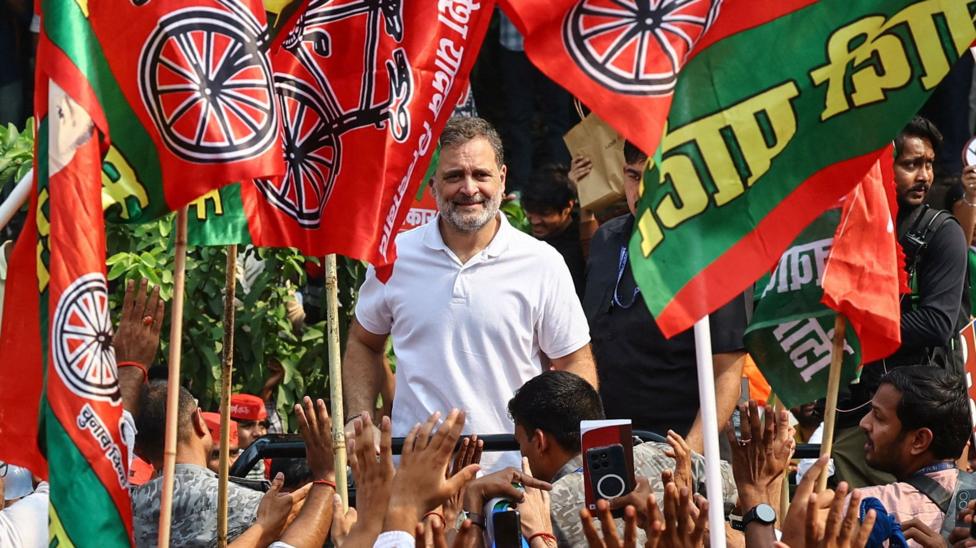 Image source, Reuters
Opposition leader Rahul Gandhi is leading Sunday's protest rally
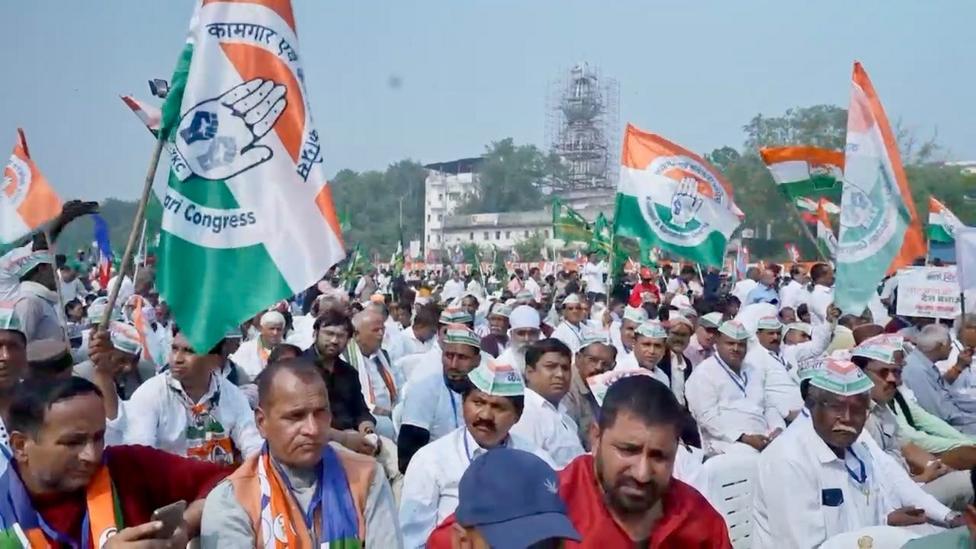
Congress party supporters have gathered at the protest site in large numbers
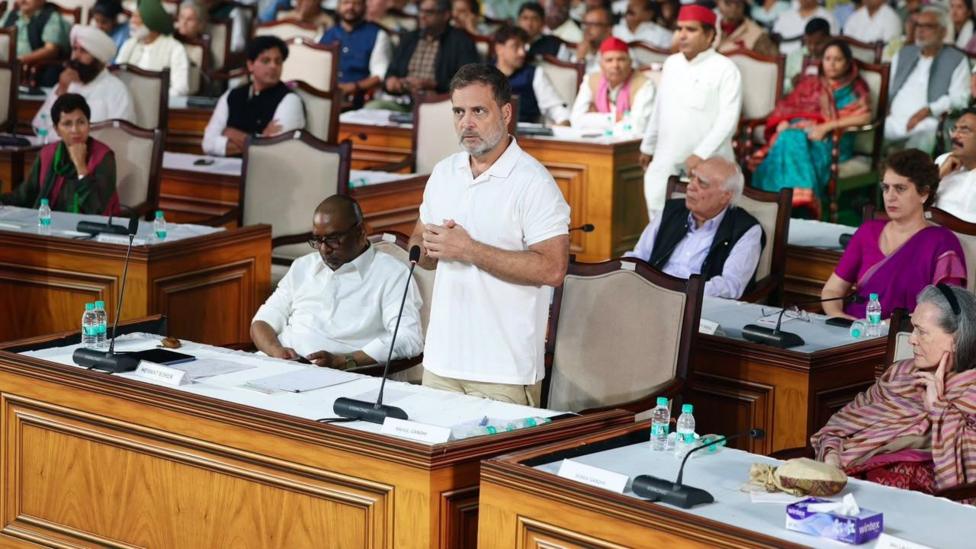 Image source, Congress/X
Opposition alliance held a mock impeachment of CEC Kumar on Saturday
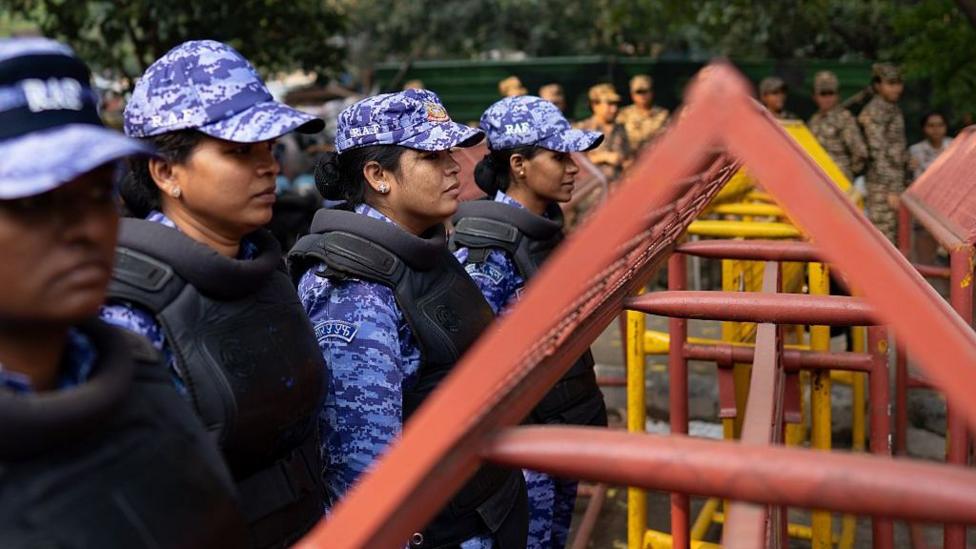 Image source, Bloomberg via Getty Images
Security has been tightened across parts of central Delhi and around the protest site
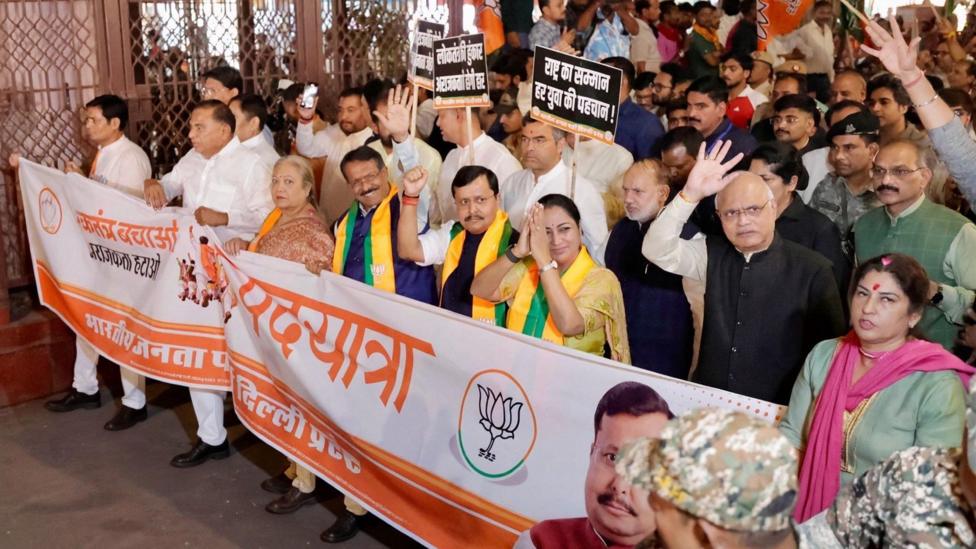 Image source, Rekha Gupta/X
Leaders of the ruling BJP party also carried out a march in Chandni Chowk market on Thursday