The key facts
- The AQI has exceeded 100 in a number of cities in the region; the cause is an anticyclone, weak winds, lack of precipitation, and a temperature inversion
- According to experts, the inversion in Tashkent may persist for about another 10 days
- The Ministry of Health recommended reducing time outdoors, humidifying indoor spaces, and seeing a doctor if symptoms appear; emergency care is available by dialing 103
What is happening with the air
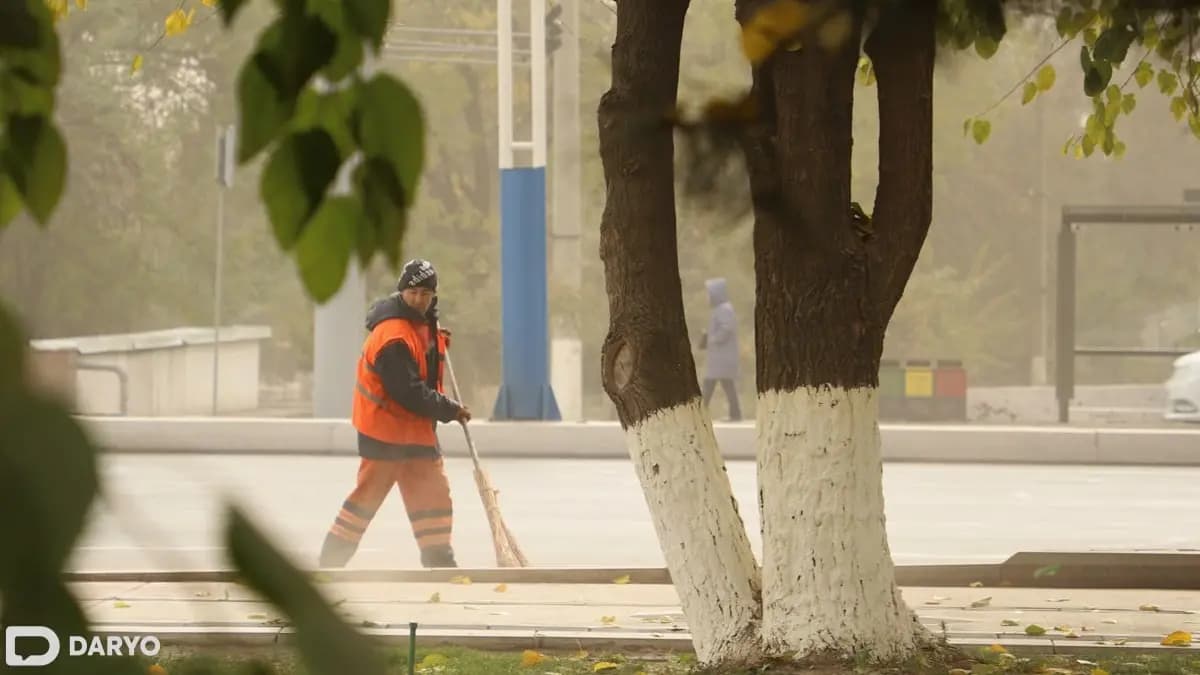
The Ministry of Health of Uzbekistan has issued recommendations for the public against the backdrop of deteriorating air quality in Tashkent and other major cities of Central Asia in recent days. According to an analysis by the Scientific Research Hydrometeorological Institute, the air quality index (AQI) has exceeded 100 in a number of cities in the region. The cause was an anticyclone that formed in late October, weak winds, the absence of precipitation, and a temperature inversion — because of it, harmful substances from transport, industry and energy, as well as natural dust, accumulated in the lower layers of the atmosphere. According to experts, the inversion in Tashkent may persist for about another 10 days.
Who is affected the most
Ilmira Razikova, director of the Republican Specialized Scientific and Practical Medical Center of Allergology and Clinical Immunology, emphasized that during such periods people should minimize time spent outdoors. According to the agency, people with chronic respiratory conditions should especially avoid going outside — those with bronchial asthma, allergic rhinitis and conjunctivitis, bronchitis, bronchial hyperreactivity, as well as those experiencing a cough with a scratchy throat. Citizens with such conditions are advised to take antihistamines as prescribed by a doctor.
What the Ministry of Health advises
In conditions of dusty air, the ministry advises keeping windows closed, doing wet cleaning, placing containers of water indoors and hanging damp towels, using air conditioners and air purification systems, drinking more water, taking showers, and rinsing the mouth and nasal cavity with saline solution. If shortness of breath, nasal congestion, sneezing, a runny nose, itching or redness of the eyes and throat, or a cough occurs when exposed to dust, people are advised to consult a family doctor. If necessary, an ambulance can be called by dialing 103 — emergency assistance is available around the clock. According to the ministry, the Republican Scientific Center of Emergency Medical Care, its 13 regional branches, as well as district and city departments, are supplied with the necessary medicines.