The key facts
- The pulp and paper mill in Temiskaming (Quebec) was shut down 'for an indefinite period' by the American company RYAM in early October due to US tariffs of up to 50% on Canadian lumber and paper
- The pulp and paper mill in Témiscaming (Quebec) was shut down 'indefinitely' by the American company RYAM in early October due to US tariffs of up to 50% on Canadian lumber and paper
- Most of the 360 employees are not working, receiving partial payments from government tariff-relief funds
- Locals are trying to organise a buyout of the mill on the model of 1973, but say it is impossible without help from Ottawa and Quebec
- Locals are trying to organize a buyout of the mill, following the example of 1973, but say it is impossible without help from Ottawa and Quebec
The mill has shut down, and the town is losing its anchor
The pulp and paper mill in Temiskaming, a small town on the Ottawa River in Quebec, was for more than a century the main employer and economic pillar of the town that grew up around it. In early October, its American owner RYAM announced an 'economic shutdown' of the facility 'for an indefinite period' after the collapse of trade talks between Canada and the US and Trump's imposition of new tariffs. Most of the mill's 360 employees are not working and are being supported for now by partial payments from government tariff-relief funds. This is reported by BBC News in a dispatch from the town.
What exactly hit the plant
In August, after the talks failed, the US imposed 50% tariffs on Canadian goods worth about C$28 billion, including lumber and paper products — pulp, stationery, packaging. Canada responded 'dollar for dollar' with its own counter-tariffs. The Temiskaming mill produces cardboard for packaging frozen food in North America and for scratch-off lottery tickets, and about 75% of its output goes to the US. Trump argues that such import tariffs stimulate American production and jobs.
Consequences for the town and an attempt to repeat 1973
Property values in Temiskaming fell almost instantly, and 'for sale' signs appeared in yards; residents fear that along with the mill, workers in essential services will leave too — from shop assistants to doctors at the local hospital. Mayor Alain Gauthier calls the American tariffs a 'bomb' aimed at Canadian industry and is demanding that Ottawa impose counter-tariffs on US cardboard products, which currently enter duty-free. Workers and the union are trying to assemble a coalition to buy the mill from RYAM (which acquired it in 2017) — on the model of 1973, when employees and managers bought the plant from its previous American owner and created the company Tembec. Union leader Stephane Lefebvre acknowledges that without substantial support from Prime Minister Mark Carney and the Quebec government — in the form of tariff relief or financial aid — a buyout is impossible. RYAM declined to comment on a possible sale in response to the BBC.
Forestry versus steel and autos
Residents feel that the forestry industry has been pushed to the back burner compared with steel and the auto sector: nationally, unemployment in Canada hovers around 6.5%, but industries directly hit by tariffs of up to 50% are suffering sharp, concentrated losses. This week, Industry Minister Melanie Joly threatened the steelmaker Stelco with financial sanctions or a forced sale of assets over planned layoffs of about 500 people, while Carney and Ontario Premier Doug Ford announced nearly C$9 billion in support for Ontario's steel and auto industries. A representative of Joly's ministry told the BBC that C$400 million has been allocated for the forestry sector and a programme launched to support companies restructuring their cash flows to exit the US market; according to the ministry, the government is 'actively working with all parties' on the mill situation. Bloc Quebecois MP Sebastien Lemire said he is 'very concerned' about the Carney government's inaction regarding Quebec's forestry industry.
A small reprieve, but not for Temiskaming
Last week the Trump administration lifted some tariffs on certain Canadian goods after lobbying by Republican Susan Collins, a senator from Maine who is running for re-election in November; the BBC links this move to the approaching midterm elections. These changes, however, do not extend to the products of the Temiskaming mill. Residents are hoping for a quick resolution before winter: freezing temperatures could damage the equipment of the idle plant and make restarting it difficult.
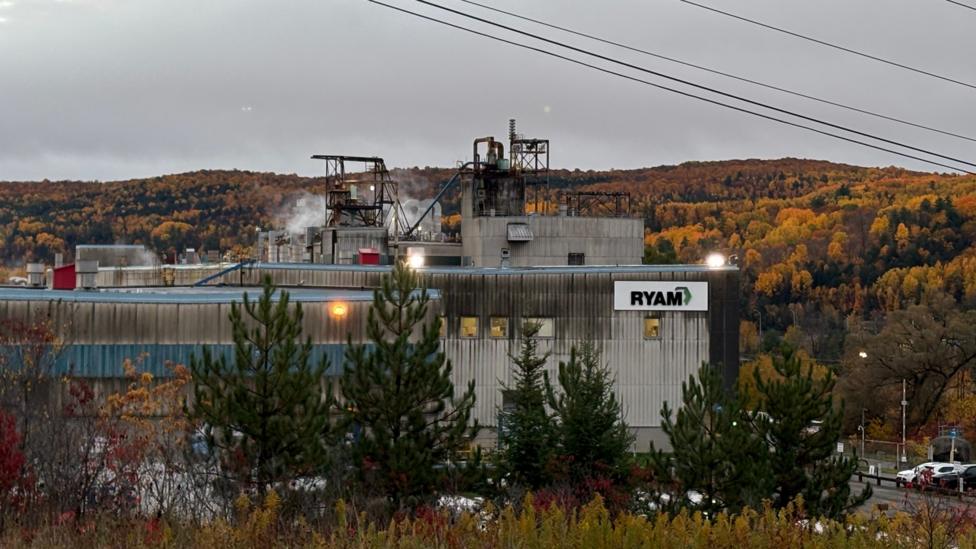 Image source, BBC/Jessica Murphy
The paper mill has served as the economic engine of Témiscaming for over a century.
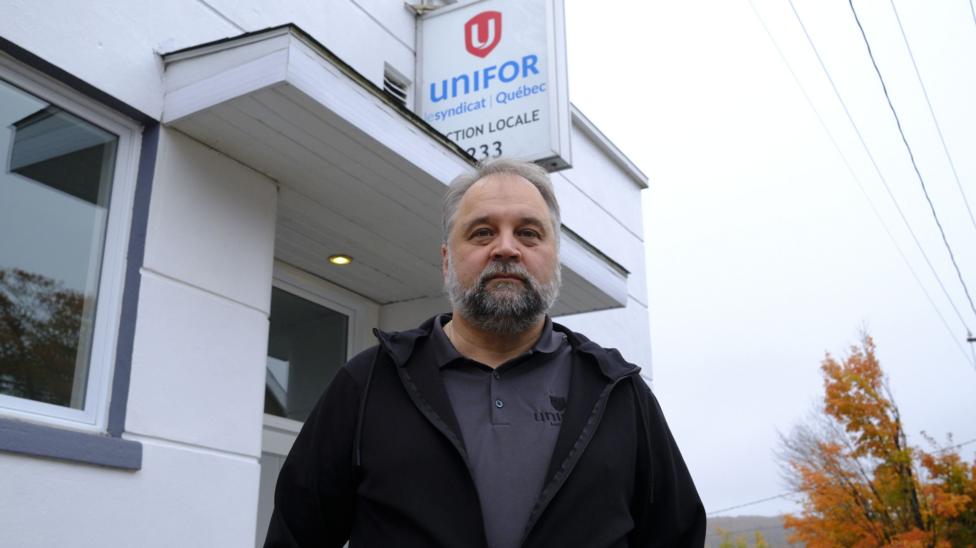 Image source, BBC/Nadine Yousif
Stéphane Lefebvre, his father and grandfather all worked at the paper mill in Témiscaming.
 Image source, Supplied/Stéphane Lefebvre
Témiscaming residents gathered for a Union-led rally to support the mill's workers and draw attention to the woes of the lumber industry.
 Image source, BBC/Nadine Yousif
Frank Dottori led the effort to buy the Témiscaming mill in the 1970s during a period of economic hardship