The key facts
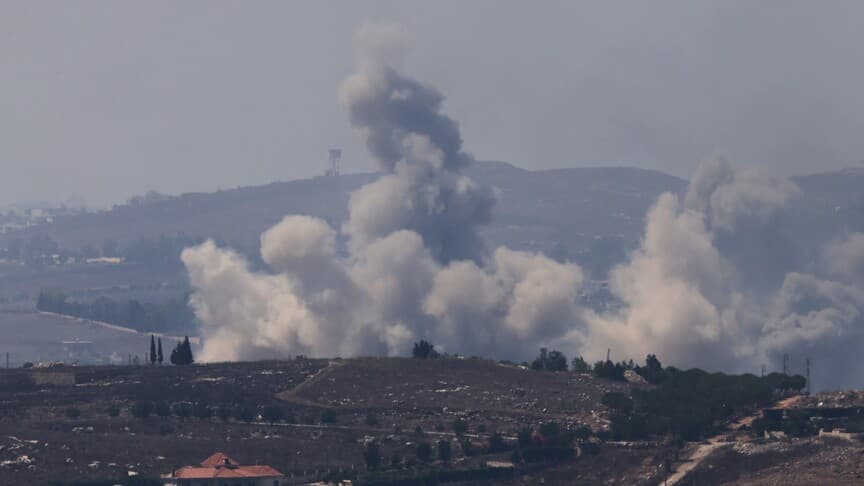
- Israeli forces blew up houses in Teiri and Kfar Shouba and shelled Khiyam, Kantara, the Houjeir Valley and other areas of southern Lebanon
- Talks in Tampa on October 20–21 ended without a joint statement; disagreements persist over troop withdrawal and the disarmament of Hezbollah
- According to NNA, since March 2 at least 4,386 people have been killed and more than 1 million displaced; more than 50 towns remain under Israeli occupation
Shelling and house explosions in several areas
Israeli forces intensified attacks in southern Lebanon on Friday, October 30: they blew up houses and other buildings, carried out artillery shelling and machine-gun fire, Lebanon's National News Agency (NNA) reports, citing Anadolu. Extensive machine-gun fire was directed at the towns of Khiyam and Kantara, and houses were also set on fire in Kantara. In the town of Teiri in the Bint Jbeil district, an explosion was carried out by the Israeli army; artillery fired 155-millimeter shells from the Houjeir Valley toward Touline.
Affected areas and individual incidents
According to NNA, artillery shelling hit the vicinity of Kfar Shouba in the Arkoub region, the outskirts of Hadata in the Bint Jbeil district, and the Zibkin Valley in the Tyre district. The area between Mafadoun and Zawtar ech-Charkieh was also subjected to periodic shelling. In a separate incident, Israeli forces blew up the house of Kfar Shouba resident Hassan Nabaa on the Kfar Shouba — Sedan Hill — Shebaa road, destroying its contents. The agency also reported, without details, the explosion of an interceptor missile over the town of Taybeh, and the loss of contact with a young man from Rub Talatin: he stopped his car in the Houjeir Valley and continued on foot toward Kantara.
Context: negotiations and the framework agreement
The escalation came after technical military meetings between Beirut and Tel Aviv on October 20 and 21 in Tampa (Florida) under American auspices. They ended without an announced breakthrough or a joint statement; according to reports, the sides agreed to continue negotiations while retaining disagreements over the withdrawal of Israeli troops from Lebanese territory and the disarmament of Hezbollah. On June 26, Beirut and Tel Aviv reached a framework agreement on a gradual Israeli withdrawal from occupied Lebanese territories in exchange for the deployment of the Lebanese army and the disarmament of armed groups. It provides for 'pilot zones,' but so far it has been applied in only three towns, while more than 50 towns remain under Israeli occupation. Despite the agreement, Israel continued military operations: according to NNA, since March 2 at least 4,386 people have been killed and 12,407 wounded, and more than 1 million people have been displaced. Israel occupies parts of southern Lebanon — some for decades, others since the 2023–2024 war, during which its troops advanced roughly 10 km deep into Lebanese territory.