The key facts
- The range of tasks for agricultural drones in China is expanding: from spraying to crop monitoring, transporting materials and the harvested crop
- According to industry data, drones raise labor productivity more than 20-fold, saving over 50% of water and 20–40% of pesticides
- Professor Zhou Li links the demand to rising labor costs and cheaper drones from local manufacturers
From spraying fields to delivering the harvest
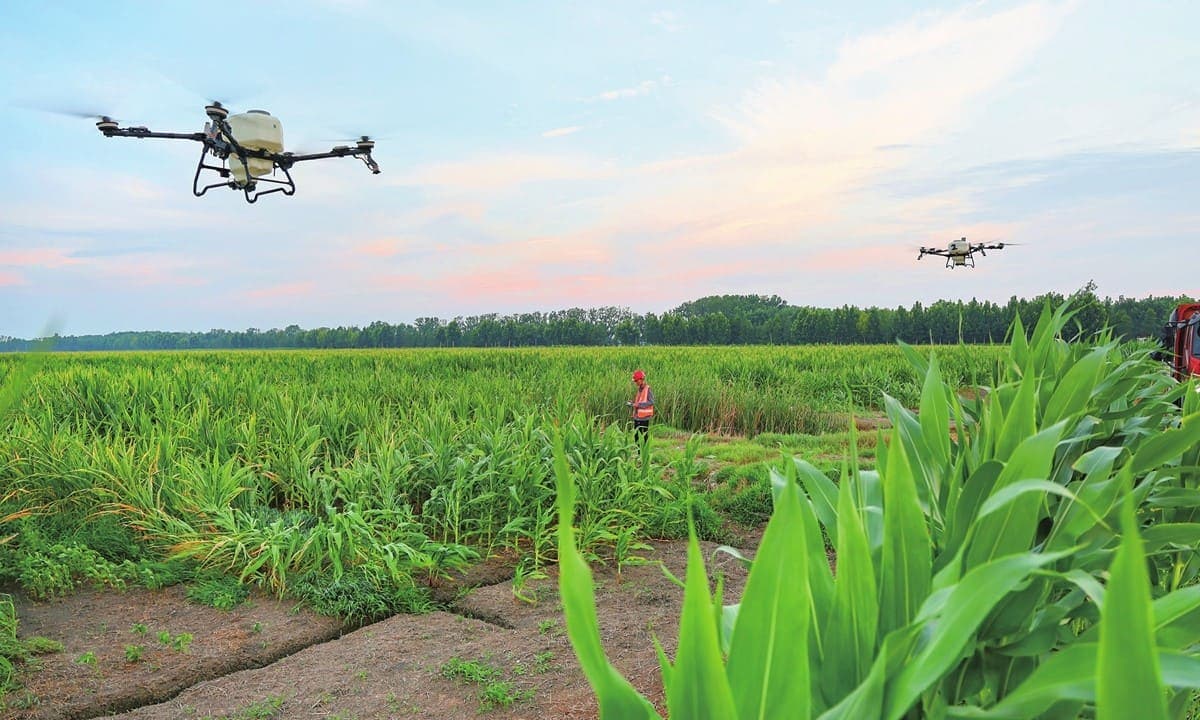
The range of tasks performed by agricultural drones in China is expanding noticeably. Whereas they were previously used mainly for spraying crop protection products, drones are now also used to monitor the condition of crops, transport agricultural materials, and move the harvested crop. Global Times reports this, citing data from the CCTV television channel; its article is retold by Kun.uz.
Efficiency figures
According to industry data, using drones for crop protection can raise labor productivity more than 20-fold compared with manual labor. Water consumption for treatment falls by more than 50%, and pesticide use by 20–40%. As a result, drones have become one of the main technical means of protecting crops from pests and diseases in China.
Oranges from mountain slopes
Drones are also being given tasks that used to be done by hand: irrigating crops, inspecting fields and, in particular, bringing oranges down from mountain orchards. Unmanned aerial vehicles are especially convenient in places that are hard for large machinery to reach. Alongside drones, Chinese agriculture is expanding the use of robots and other 'smart' equipment that automates tasks and helps keep work on schedule.
Why demand is growing
Zhou Li, a professor at Renmin University of China, explains the process by several factors: rising labor costs in rural areas are increasing demand for machinery, while local manufacturers are improving drones and lowering their prices. As a result, the machines are becoming more affordable for small farmers and cooperatives. Industry experts note that low-flying drones are gradually turning from an experimental novelty into an ordinary working tool: specialized service organizations offer them to farmers, which cuts costs and promotes the modernization of the agricultural sector.