The key facts
- The Big Iron rocket, 86 m tall and 4.7 m in diameter, will be equipped with Clydesdale engines: nine on the first stage and one on the second
- The upper stage will remain in orbit as a data center satellite weighing about 15 tons with five GPU server racks
- The first stage is reusable and, by design, returns to an offshore platform, similar to the Falcon 9
The rocket that becomes a data center
Cowboy Space, a California company founded by Robinhood co-founder Baiju Bhatt, plans to independently develop both space data centers and the rockets to launch them into orbit. Bhatt announced the new rocket, called Big Iron, at the Big Sky Rising event; the orbiting data center will also carry the same name — the company is designing the rocket and the satellite as a single system. Kun.uz reports on this.
How the system works
According to the core concept, after reaching orbit the rocket's upper stage continues operating as a satellite carrying computing hardware. The company emphasizes that this approach makes it possible to cut redundant structural elements and reduce mass. According to Space.com, which published materials from the presentation, the stainless steel rocket will stand 86 meters tall with a diameter of 4.7 meters, and it will be equipped with Clydesdale engines developed in-house by Cowboy Space: nine engines on the first stage and one on the second — in engine count this layout matches SpaceX's Falcon 9 rocket.
Reusability and the orbital vehicle
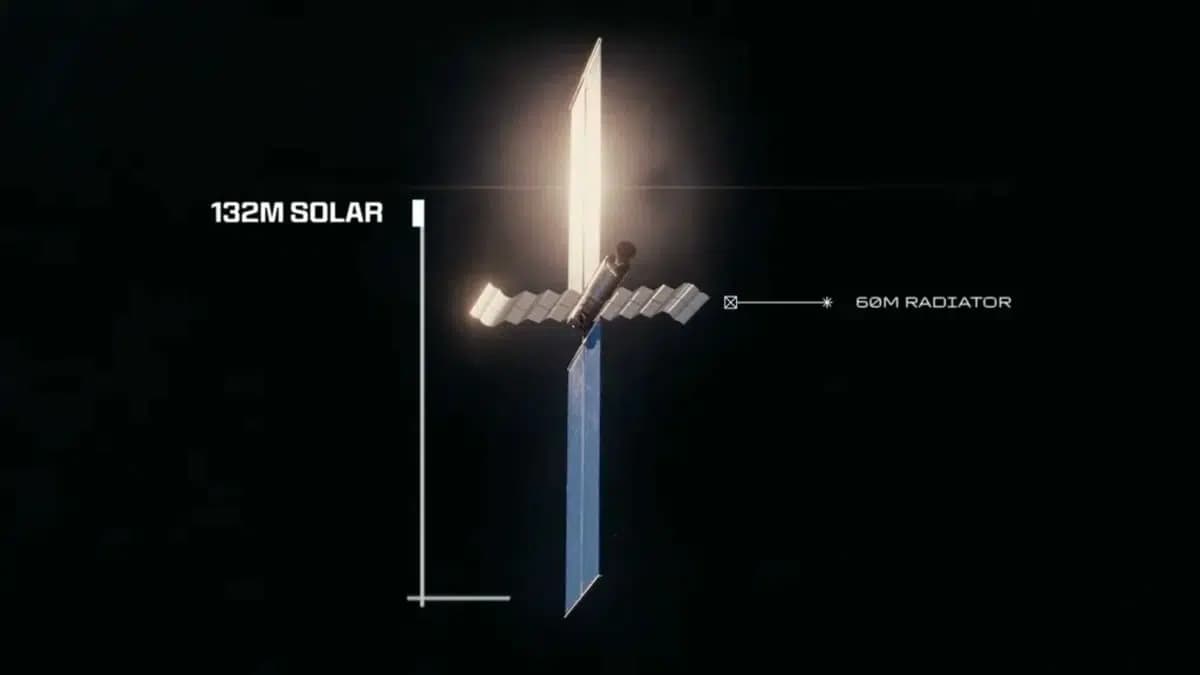
The Big Iron first stage is designed to be reusable: in the computer animation shown at the presentation, it returns to Earth and lands on an offshore platform — a method similar to the recovery of Falcon 9 first stages. The upper stage meanwhile remains in orbit and becomes the Big Iron satellite. According to the presented data, the vehicle will weigh about 15 tons, and after its solar panels deploy it will reach 132 meters in length.
The role of the skin and the power output
The rocket's outer skin also takes on a new function in orbit — it becomes the data center's radiator, dissipating the heat generated by the graphics processors by radiating it into space. Each vehicle is planned to carry five GPU server racks; the company describes each orbital data center as a system with a capacity of about one megawatt, referring to electrical power.