The key facts
- Novaya Gazeta will cease operations on November 9, switching off its servers after 30 years of existence
- The announcement followed the questioning of editor-in-chief Sergei Sokolov and the case against Oleg Roldugin
- In parallel, an evacuation began in occupied Oleshky amid a local ceasefire announced by Melania Trump
The editorial office announced it was ceasing operations
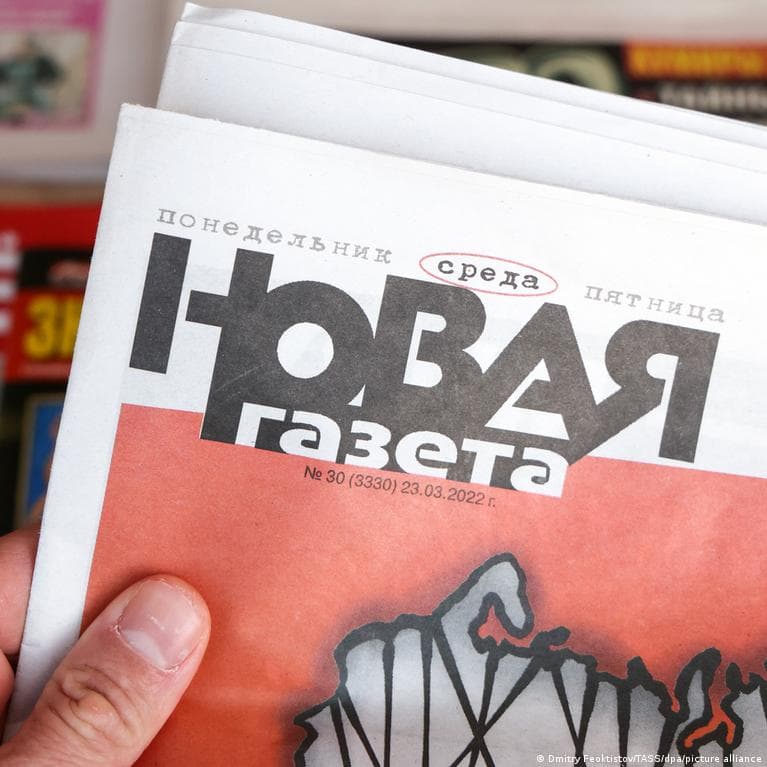
The independent Russian newspaper Novaya Gazeta announced its closure, citing pressure from state authorities, who recently raided its senior editor. 'They have killed us,' read a statement on the outlet's website on Friday morning. Editor-in-chief Sergei Sokolov said in a video address that the editorial office's work had been forcibly shut down by 'the Russian authorities — the Russian security services,' adding: 'On November 9 we will turn off the lights in our home, where we have lived for 30 years. We will switch off the servers and leave.' Deutsche Welle reported this.
What is known about the outlet and the circumstances of its closure
The newspaper was founded in 1993 after the collapse of the USSR and remained one of the few critical media outlets in Russia, known for its corruption investigations. After the full-scale invasion of Ukraine in February 2022 working conditions deteriorated sharply: according to DW, censorship at a level close to Soviet-era censorship was in force in the country, most independent journalists were forced to go into exile, and those who stayed were designated 'foreign agents.' Former editor-in-chief Dmitry Muratov dedicated the 2021 Nobel Peace Prize to six slain colleagues, including Anna Politkovskaya, found dead in October 2006.
The criminal case and the reaction
The closure announcement came two weeks after veteran editor-in-chief Sokolov was questioned in Moscow in a case of 'unlawful use of personal data' connected to the criminal prosecution of his colleague Oleg Roldugin. Roldugin was detained and charged with 'unlawful access to computer information' — an offense punishable by up to 10 years in prison; he pleaded not guilty, and no further details were disclosed. International press freedom organizations condemned the pressure on the outlet: Reporters Without Borders called on the Kremlin to 'put an end to the prosecution' of its journalists. In an editorial column, the newspaper described its closure as a reflection of the state of today's Russia: 'This is not only our personal story; it is the story of a country and a society being pursued in exactly the same way.'
In parallel: evacuation from Oleshky amid a local ceasefire
The same DW report covers events in Ukraine: on Friday, the evacuation of stranded residents began from the Russian-occupied city of Oleshky, amid a local ceasefire now in its fourth day, announced by US First Lady Melania Trump. Residents told the AFP agency that for months they had suffered shortages of food, water and medicine, and some had to hunt pigeons. The city's population has shrunk from 24,000 to about 2,000 people; Ukrainian negotiator Davyd Arakhamia confirmed the start of the evacuation and the distribution of humanitarian aid. The ceasefire — the longest pause in hostilities since 2022 — is due to end on Sunday evening. This is a separate storyline, unrelated to the newspaper's closure.