The key facts
- Azerbaijan took control of part of the Shikahogh reserve in 2021–2022; according to an Armenian official, more than 2,700 hectares of the reserve and several hundred hectares of farmland are occupied
- A satellite imagery expert estimated the earthworks at about 90 hectares and the timber cut at 14,000–16,000 cubic metres
- Armenia raised the issue at the COP17 biodiversity conference in Yerevan; Azerbaijan denies occupying the territory, citing the undelimited border
A forest on the conflict line
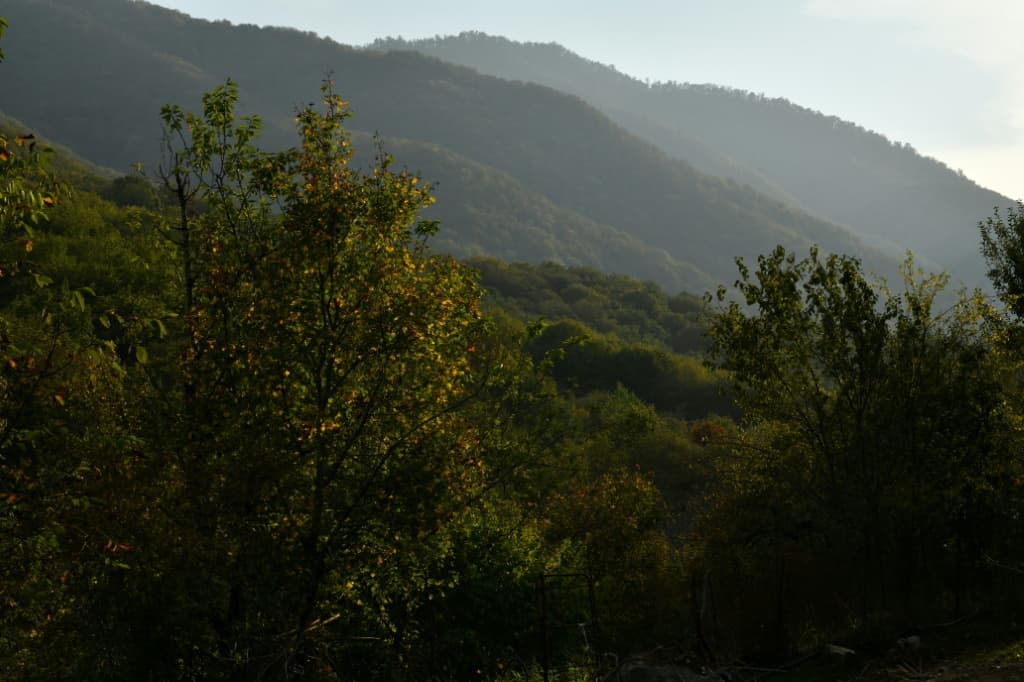
Logging near the Shikahogh State Reserve in southern Armenia has become a new source of friction between Yerevan and Baku, which, after three decades of hostility and several wars, are trying to conclude a durable peace agreement, AFP reports. In 2021–2022, Azerbaijan took control of part of the reserve, which lies along the shared border, and in 2023 it brought Karabakh back under its control, after which the entire Armenian population — about 100,000 people — left the area. Last year, the two sides initialled a peace agreement in Washington, which is seen as an important step toward its ratification.
What is happening in the reserve
After seizing part of the territory, the Azerbaijani army has been cutting wide forest roads to improve access and supply lines. Armenian official Marat Harutyunyan said the troops 'occupy more than 2,700 hectares of the reserve and several hundred hectares of agricultural land', and that logging is carried out without regard to the Red Book of Armenia. Forestry expert Aysor Ghazaryan, using satellite imagery, estimated the earthworks at about 90 hectares, of which roughly 60 hectares are forest, and the volume of timber cut at 14,000–16,000 cubic metres. Assessing the damage on the ground is impossible due to the military presence and mines: 'No one knows the true scale of the damage,' he said. Harutyunyan fears that logging and engineering works could trigger landslides, mudflows and rockfalls.
The positions of the two sides and life on the border
Armenia has raised the issue on the international agenda by hosting the UN COP17 biodiversity summit in Yerevan. Azerbaijan rejects accusations of occupying Armenian territory, pointing out that the border in this area has not been formally delimited. Founded in 1958, the Shikahogh Reserve covers about 12,400 hectares of oak and beech forests, groves of plane trees and yew — an endangered species; it is home to Persian leopards, brown bears and bezoar goats. For residents of Syunik, the situation remains tense: neighbouring Azerbaijani positions and mines pose a threat, and the flags of the two countries on the hills are sometimes separated by only a few hundred metres. The village of Nerkin Hand found itself surrounded on three sides. Biologist Arut Aghatelyan has repeatedly found animals with limbs torn off by mine blasts. Residents are losing their livelihoods due to the loss of arable land and pastures; the school in the village of Shikahogh has a single pupil left, and the municipality is launching free bus services in the hope that those who left will return.