The key facts
- The Suncatcher prototype made contact after launch on a Falcon 9 together with more than 100 other spacecraft
- On board are one TPU and the Gemma 4 model, which wrote a haiku about space; due to the power limit, the chip switches on for about 20 minutes
- The tests will check the effect of radiation on the chips; in 2027, two satellites with more powerful power supply and optical inter-satellite links are planned
The satellite has made contact
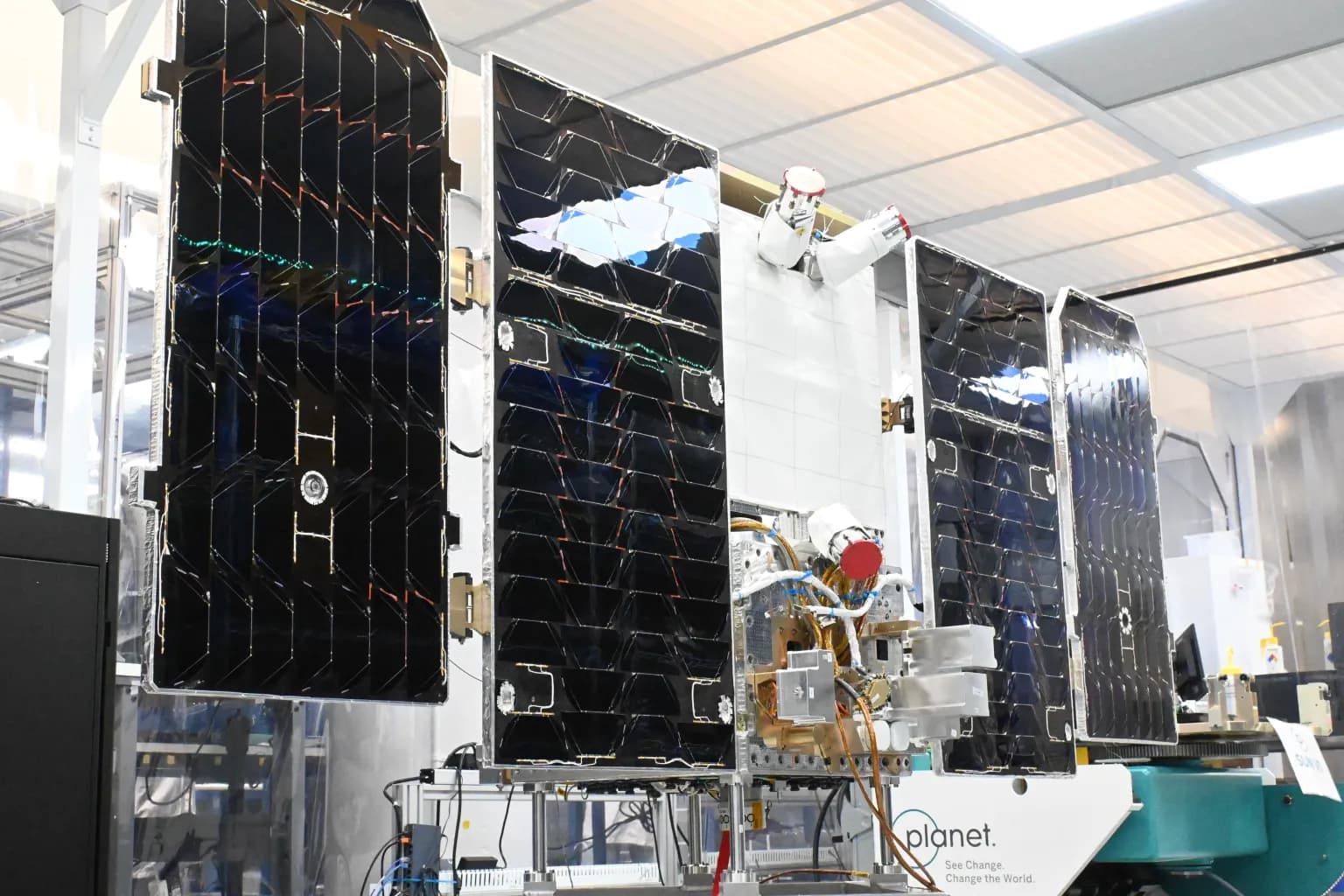
Google's prototype orbital data center, part of the Suncatcher project, has made contact with Earth after launching in early October aboard a SpaceX Falcon 9 rocket together with more than 100 other spacecraft. TechCrunch reports. After roughly three weeks of introductory subsystem testing, the satellite was ready for operation: engineers sent the first prompt to the Gemma 4 model from Google DeepMind, preloaded on board, and asked it to write a haiku about being in space. The company also tested the model with themed limericks and, more importantly, requested a report from the spacecraft on the orbital conditions around it. According to a Google representative, the satellite is operating normally.
Power constraints and the main tests still ahead
The satellite carries a single Google tensor processor (TPU) and generates up to 1 kW of electricity. Due to its power consumption, the chip can only be switched on for about twenty minutes at a time, which further complicates the already difficult link between space and Earth. The spacecraft is conceived as a step toward future networks of closely flying satellites for large inference workloads in orbit. The main goal of the current test campaign is to check how the chips behave under thermal stress and in a radiation environment. Google has previously extensively tested TPUs in particle accelerators on Earth, but now it will assess real radiation exposure: radiation can cause
What comes next and how the project is structured
If the TPU on board proves its suitability, the next step will be the launch in 2027 of two more satellites with more advanced chips: they will have higher power generation and will demonstrate inter-satellite optical communication links. In this respect, Suncatcher differs noticeably from its competitors: Google plans high-speed links between satellites for coordinated distributed workloads, whereas, according to TechCrunch, SpaceX's data centers are expected to use laser links but orbit too far apart for effective sharing of compute, while companies like Starcloud and Cowboy Space plan to run inference on individual satellites. The Google and SpaceX projects are closely intertwined: Alphabet owns a significant stake in SpaceX, and both companies need a fully and rapidly reusable Starship to launch orbital data centers. In a peer-reviewed analysis published in early October, Suncatcher researchers estimatedthat SpaceX would need to perform 1,800 Starship flightsto achieve the same cost reductions from accumulated experience that its earlier rockets had. Suncatcher is described as a classic Google