The key facts
- On October 27, finds at Metsamor were announced: gold earrings, a button, a bronze dagger, and a coin
- The coin is linked to Octavian Augustus; the denomination, mint, and year of minting are not named
- Excavations have been carried out as part of an Armenian-Polish project since 2013
What was found at Metsamor
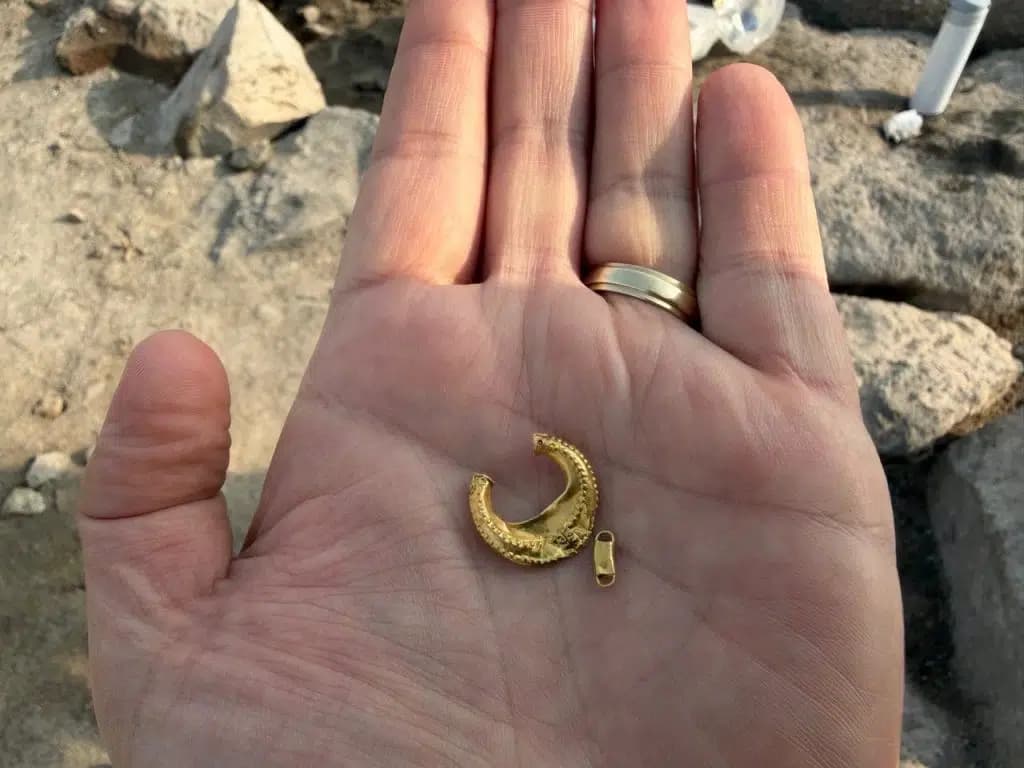
On October 27 The Service for the Protection of the Historical Environment and Historical-Cultural Museum-Reserves of Armenia announced new finds on the territory adjacent to the Metsamor historical-archaeological museum-reserve. Among the discovered items are gold earrings, a round button, a bronze dagger, and a coin that the agency's statement links to Octavian Augustus, the first Roman emperor. Photographs of the finds have been published: the images show large open gold earrings with a convex ornament, a button, and a long blade in the soil next to small objects covered with greenish patina.
What is known and what remains unclear
The coin depicts a man in profile, with an inscription running along the edge. According to the British Museum, on which the Kun.uz publication relies, Octavian took the name Augustus in 27 BC and died in AD 14. However, the key attributes of the find have not yet been disclosed: the coin's denomination, mint, and exact year of minting are not named, and the dating of each of the ornaments and the dagger individually has not been explained. Thus, the link to Augustus remains an attribution by the service itself, not an established fact.
Context of the excavations
Metsamor is located in the Araks valley near the village of Taronik, about 35 km southwest of Yerevan; its fortress stands on a natural rocky hill surrounded by stone walls, with the lower city to the north — this layout is described in the scientific report of the expedition for 2013–2021. Research has been conducted for a long time: the joint project of Armenian and Polish archaeologists began in 2013. According to the University of Warsaw, in just the first three seasons scientists collected ceramics spanning almost three thousand years — from the 3rd millennium BC to the 1st century AD; among the finds of that period were obsidian arrowheads, bone awls and piercers, beads, bronze rings, and parts of horse harness. The new items, including the coin presumably linked to the Roman era, fit within this broad chronological range, but their exact dating remains a matter for future clarification.