The key facts
- On October 28, 2025, during Operation “Contenção” in the Complexo do Alemão and Complexo da Penha favelas, 117 suspected Comando Vermelho members and 5 police officers were killed
- HRW: only about a quarter of the 2,500 police officers wore cameras, not a single fatal shootout was recorded; 40% of the dead were shot in the head, 75% in the back
- The “anti-gang law” has been in force since March 2026: it expands asset-tracking tools but provides for automatic detention and the abolition of prison allowances, raising constitutional questions
The deadliest police operation in Brazil's history
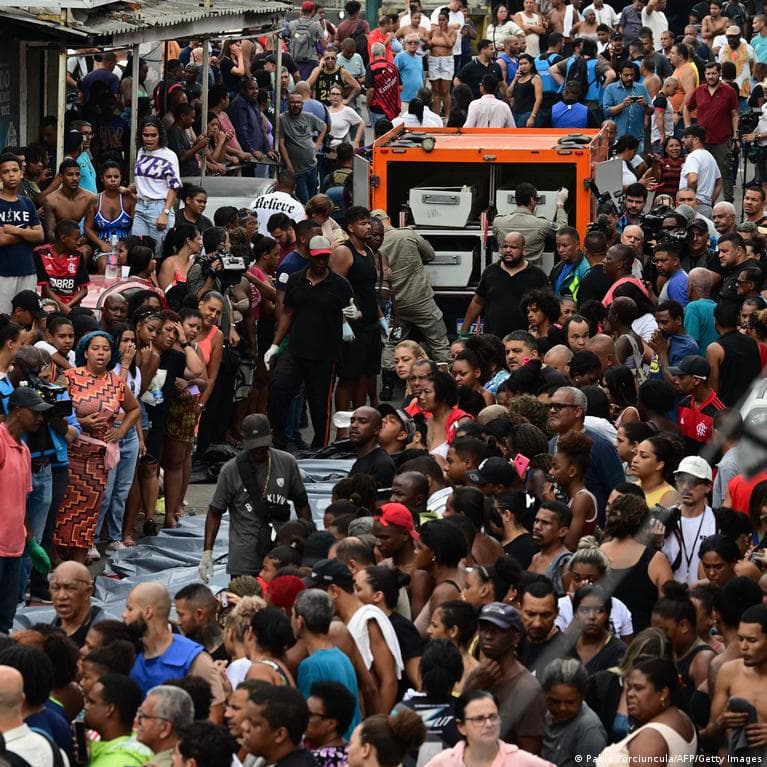
On October 28, 2025, around 2,500 police officers were sent into the Complexo do Alemão and Complexo da Penha favelas in Rio de Janeiro to execute dozens of arrest warrants against members of the Comando Vermelho drug cartel. During hours-long shootouts, 117 suspected gang members and five police officers were killed. It became the deadliest police raid in the country's history. Operation “Contenção” (“Containment”) was carried out under the leadership of the Rio de Janeiro state government and shook all of Brazil, yet public reaction quickly shifted toward calls to intensify the fight against organized crime, writes Deutsche Welle.
HRW report: cameras turned off, signs of executions
Exactly one year later, on October 28, 2026, Human Rights Watch presented a report in Rio de Janeiro based on an analysis of more than 4,000 hours of video footage. According to the organization, only about a quarter of the officers involved wore cameras, and some recordings had been altered; not a single fatal shot was captured on camera. César Muñoz, HRW's director in Brazil, said that the Supreme Court ruling requiring Rio's police to wear cameras had been violated. An analysis of autopsy results, HRW concluded, points to signs of executions — killings of people who were no longer capable of resisting: 40% of the dead were shot in the head, 75% in the back. According to Muñoz, there are grounds to believe that the operation “was clearly designed to be lethal.”
What the “anti-gang law” changed
The response to the operation was the “Law Against Factions” (Lei Antifacção), which came into force in March 2026. It targets gangs such as São Paulo's PCC and the Comando Vermelho that dominates Rio, as well as militias — gangs of corrupt police officers and military personnel, which are supposed to be dismantled, including economically. Rodrigo Ghiringhelli de Azevedo, an expert with the Brazilian Forum on Public Security (FBSP), called positive the expansion of asset and financial tracking tools, institutional cooperation, and the cutting off of the gangs' capital. César Muñoz also noted the strengthening of coordination between security forces: the federal police are supposed to play a larger role, whereas the military and civil police answer to state governments — as was the case during the raid a year earlier.
Criticism: prisons, the constitution, and inmates' families
At the same time, the law raises constitutional concerns. It provides for automatic pretrial detention of suspects, expands the grounds for arrests, restricts sentence mitigation — furloughs and suspension of the remaining term — and increases the length of imprisonment. Azevedo warns that this could accelerate the growth of what is already one of the world's largest prison populations, and that overcrowded prisons without proper oversight make it easier for the very same PCC and Comando Vermelho, which the law is meant to fight, to recruit new members. A separate complaint is the abolition of the prison allowance that the state paid to inmates' dependents: in Azevedo's view, this is an economic punishment for people who committed no crimes, including children, which contradicts the constitutional principle that punishment must not extend beyond the convicted person. Muñoz added that it is important to prevent gangs from recruiting young people and to offer those who have committed crimes new life prospects.