The key facts
- Judge David Carter called the administration's allegations 'not credible' and denied the temporary restraining order.
- The ruling was the second rejection in a week: earlier, the Ninth Circuit appellate panel also denied the emergency motion.
- The court noted that states constitutionally control their own elections, and federal laws already exist to punish unlawful voting.
Court rejects emergency motion
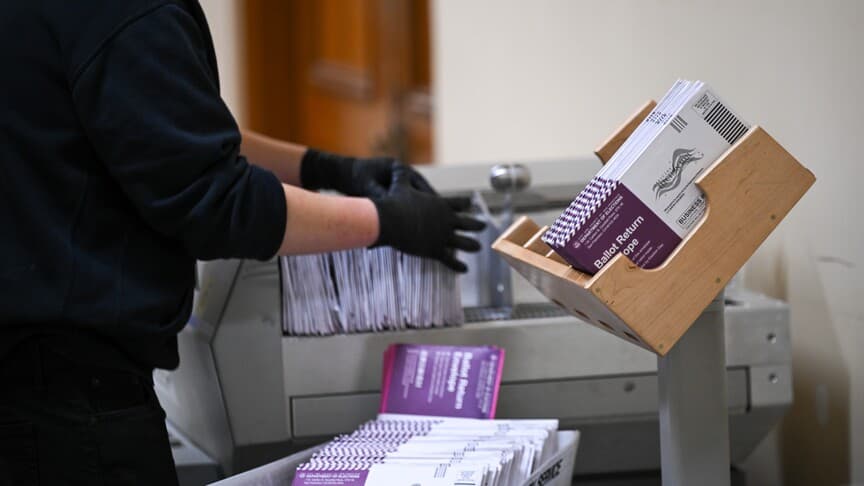
Federal Judge David Carter on Wednesday rejected the Trump administration's demand to block about 20,000 ballots cast in California by voters whose U.S. citizenship has been called into question. Anadolu reported the news. The motion for a temporary restraining order was filed days before the November 3 midterm elections.
The court's reasoning
In his ruling, Carter wrote that 'never before in American history has the federal government, on the eve of an election, attempted to force a state and local authorities to abandon their own constitutionally established election procedures.' According to him, the government's demand to 'identify and remove' more than 20,000 ballots violates the constitutional principle under which states control their own elections. The judge found the administration's allegations 'not credible' and noted that interference days before an election would violate federal election laws and create chaos: 'If this last-minute motion were granted, either party could create chaos for its own political purposes and disrupt the electoral process.' He added that more than 20,000 registered Californians could lose their right to vote because of 'unsubstantiated allegations' stemming from a process 'riddled with uncertainty and error.'
Why the court found the measure excessive
Carter explained that federal laws already provide for criminal prosecution of unlawful voting, and that California has established procedures for deregistering individuals whose inability to vote has been proven. 'The Executive Branch cannot replace a remedy carefully crafted by Congress with its own unlawful and unconstitutional decision,' the judge said, adding that 'damaged trust in democracy is irreparable: once a ballot is set aside, the harm is already done.' He also warned that granting the motion would set a precedent for future political interference in elections.
Second rejection in a week
Carter's ruling was the second rejection in a week of the administration's emergency measures against California and Los Angeles County: on Monday, a three-judge panel of the U.S. Court of Appeals for the Ninth Circuit also denied a similar emergency motion by the government, Anadolu reports citing media reports. Thus, both instances — the district court and the appellate panel — have so far declined to support the federal government's attempt to interfere with the state's voting procedures on the eve of the election.