The key facts
- On October 29, Turkey celebrates Republic Day: on that day in 1923, the Grand National Assembly proclaimed the republican form of government
- Gazeta.uz has published a translation of Atatürk’s 1925 “Kastamonu Speech”
- The speech preceded the hat law, the closure of tekkes and zaviyes, and the Civil Code of 1926
A speech delivered months before the key reforms
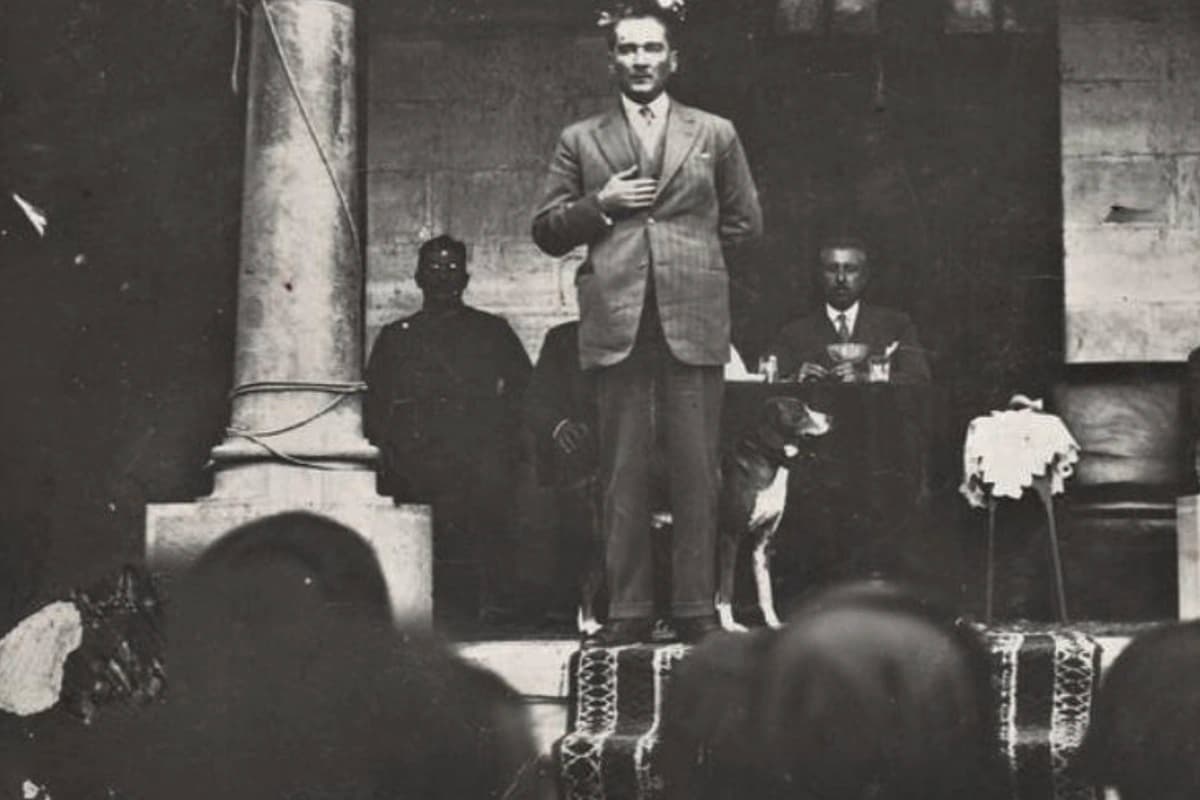
For the Republic Day of Turkey, the publication Gazeta.uz has published, in its “Historic Speech” section, a translation of the address by Mustafa Kemal Atatürk known as the “Kastamonu Speech.” It was delivered in August 1925 during Atatürk’s trip to Kastamonu and İnebolu; the translation from Turkish was made by Elshod Salimov. In the speech itself, presented here in the fragments available in the sources, the founder of the republic spoke about the state of society, customs, and the appearance of citizens.
What Atatürk spoke about
In his address, Atatürk declared that “the Turkish Republic cannot be a country of sheikhs, dervishes, murids and mansabs,” and called “the most correct and true tariqah — the tariqah of civilization.” He criticized people without official authority who wore the garments of religious figures, and insisted on regulating clothing: in his words, a modern civilized dress should be chosen “from the standpoint of science, health and convenience.” A separate part of the speech is devoted to the status of women: Atatürk asked whether society could progress if one half of it “remains chained to the ground,” and demanded the immediate correction of the situation in which women cover their faces and turn away when a man appears.
How the speech played out in law
As Gazeta.uz notes, the address became the basis for a number of decisions that covered the legal and public life of Turkey. On November 25, 1925, the “Hat Law”was adopted, establishing uniform rules of civil dress for civil servants and the population; the text of the law is published in the archive of the Grand National Assembly of Turkey. By a decision of November 30, 1925, the activities of traditional tekkes, zaviyes and hanekahs were terminated, and the administration of the religious sphere was transferred to official state institutions. The views on the status of women expressed in the speech, according to the publication, prepared the ground for the Civil Code of 1926,which granted women equal rights in family and socio-political spheres.
Context of the publication
The publication is timed to October 29 — the day when, in 1923, the Grand National Assembly of Turkey proclaimed the republican form of government. The publication clarifies that it presents “the part of the speech available in the sources and widely circulated,” dated August 30, 1925,— that is, what the reader sees is not the full archival text, but its accessible version in translation.