The key facts
- Mircea Cărtărescu, the most translated contemporary Romanian writer, presented in Romania a collection of aphorisms about writing
- He compared the present times to the period before the Second World War and called AI 'the greatest threat to humanity'
- The writer stated that he never uses AI in literature and would not read a book written with its help
'A Bandage on a Wound': a Writer on the Role of Literature
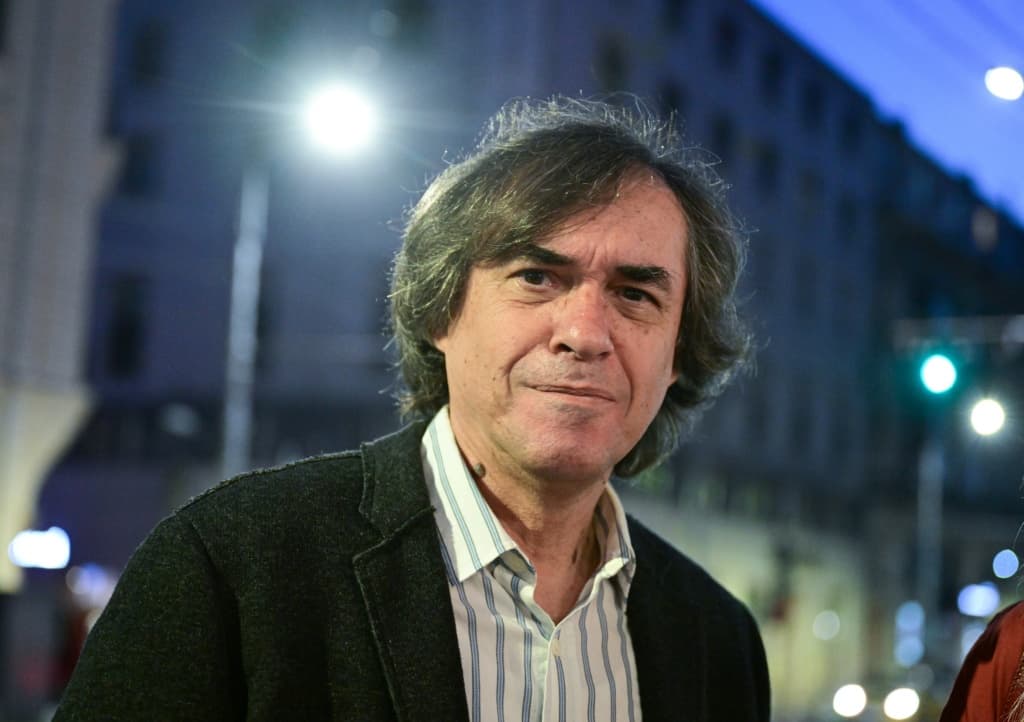
Romanian novelist Mircea Cărtărescu in an interview with the AFP news agency, given at the presentation of his new book — a collection of aphorisms about writing — called the present day 'frightening' times and compared literature to 'a bandage on a wound.' According to him, threats now come 'from so many sides that we no longer know what to defend ourselves against': he listed wars, social unrest, global warming and 'ideological confusion.' In an era of 'pervasive evil' and 'universal lies,' as the writer described it, he stakes on writing as a form of resistance.
The New Book and Work on a 'Non-Novel'
Cărtărescu, who turned 70 this year, is the most translated contemporary Romanian writer; among his awards is the 2024 International Dublin Literary Award. His most recently published novel is the 632-page 'Theodoros' (2022), set in the 19th century and telling the story of a servant's son who became an emperor. About it, the writer said: 'I have never written literature in order to publish books, but in order to live in them.' He is in no hurry with a new novel, but has already begun work — according to him, it is 'not a novel in the strict sense,' 'something I have never written, and I think no one else has either,' without further details. In October, dozens of readers gathered in a Bucharest bookshop, where they listened to the author in 'church-like silence'; he told them: 'We gather around a book to protest against a world that is not like us.'
Biography, Trauma and His Attitude Toward AI
Cărtărescu was born in Bucharest in 1956, in a period he himself described as 'marked by poverty and terrible hunger.' His childhood, he said, was marked by trauma — the death of his twin brother at 18 months, which he linked to the 'terrible conditions' of the family, which had just moved into one dirty room in a working-class district of Bucharest. 'Almost everything I write is connected with this. I have always felt that something is missing, as if I were looking into a mirror and seeing no one,' he said in an interview with the newspaper Adevarul. He called the overthrow of Nicolae Ceaușescu's regime on 22 December 1989 'the happiest day for all Romanians'; later he advocated for the independence of the judiciary and took part in protests, but over time, especially after the pandemic, he admitted, he lost hope and prefers to remain in literature. In his published diary, he called the rise in popularity of the far-right candidate in Romania's 2024 presidential election 'collective madness.' He compares the current times in the world to the period before the Second World War, but with an additional risk — artificial intelligence, 'the greatest threat to humanity.' The writer told AFP that he would never use AI in his literature and would not read a book created with its help: 'Why would I read a work by an insectoid or an alien?'