The key facts
- Poppy cultivation grew from 10,000 to 43,000 hectares, and opium production from 300 to 1,500 tonnes
- The price of opium remains around $500 per kilogram — many times higher than the pre-war level of less than $100
- UNODC estimates the alternative livelihoods programme at about $500 million, of which only about 10% has been funded
The ban did not stop farmers
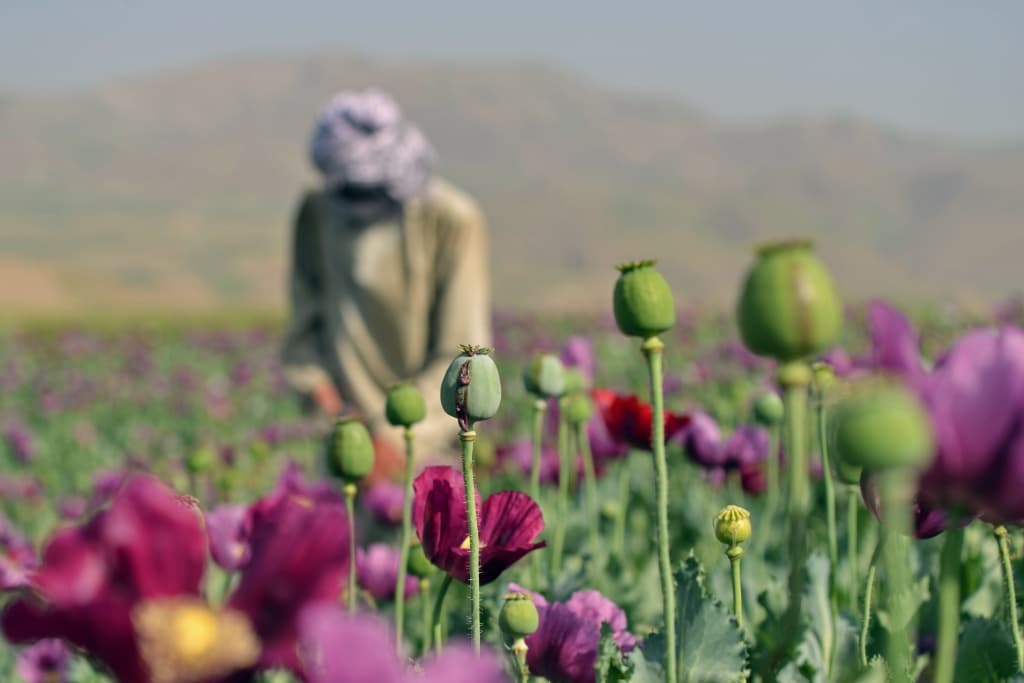
Opium poppy cultivation in Afghanistan grew more than fourfold in 2026, despite the ban imposed by the Taliban authorities in 2022, the United Nations Office on Drugs and Crime (UNODC) reported. According to the report cited by AFP, poppy fields reached 43,000 hectares, up from 10,000 in 2025, while estimated opium production grew fivefold — from 300 to 1,500 tonnes.
The economics of the ban
The 2022 ban had previously devastated the sector: cultivation fell from more than 200,000 hectares to 10,000, and Afghanistan, long the world's leading poppy producer, lost first place to Myanmar, which planted 53,000 hectares in 2025 (no data for Myanmar in 2026 is available). However, prices made poppy disproportionately profitable: according to UNODC, a hectare of wheat yielded just over $770 in 2023, while a hectare of poppy brought in about $10,000. The price of opium fell from $570 per kilogram in 2025 to $500 in 2026, but remains many times higher than the pre-war level of less than $100.
Farmers and alternatives
Farmers interviewed by AFP attribute their return to poppy to poverty. «Without opium we cannot even afford basic food,» said a 22-year-old resident of Badakhshan, which has become the country's main poppy-growing province. Another farmer noted that wheat is «not enough to feed the family». According to them, the Taliban authorities threaten and destroy crops; in May, two people were killed in clashes around the destruction of fields in Badakhshan. The Taliban themselves claim to have destroyed more than 22,000 hectares, but UNODC points out that many plots are hidden among grain crops or behind walls, making them difficult to detect.
What the UN proposes
UNODC Executive Director Ghada Waly... actually, the report names Monica Juma: she called the fourfold growth evidence that the reduction of illegal cultivation cannot be sustained when poor farmers have no alternatives to feed their families. The Taliban government itself has acknowledged that a ban without alternative sources of income and economic support for farmers is not a «sustainable long-term solution». With support from Japan and the EU, UNODC funds programmes for farmers: one participant, Zikrullah, a resident of Badakhshan who received improved wheat seeds and fertilizers through the NGO Afghan Aid, told AFP he was satisfied — «less effort than with opium, and more peaceful». UNODC representative in Afghanistan Polak Ok Serei stressed that alternative crops alone are not enough: farmers need access to markets, roads, irrigation and storage facilities. According to the office's 2025 estimate, such an approach requires about $500 million, of which only about 10% has been funded. He also noted that the solution takes time: Thailand invested in alternative livelihoods for 15 years before starting eradication. The problem, he said, is international: Afghan opium remains the main source of heroin in the EU, where about 850,000 people used opioids in 2024.