The key facts
- The UAE Ministry of Climate Change and Environment confirmed an oil spill from a tanker off the coast of Umm Al Quwain
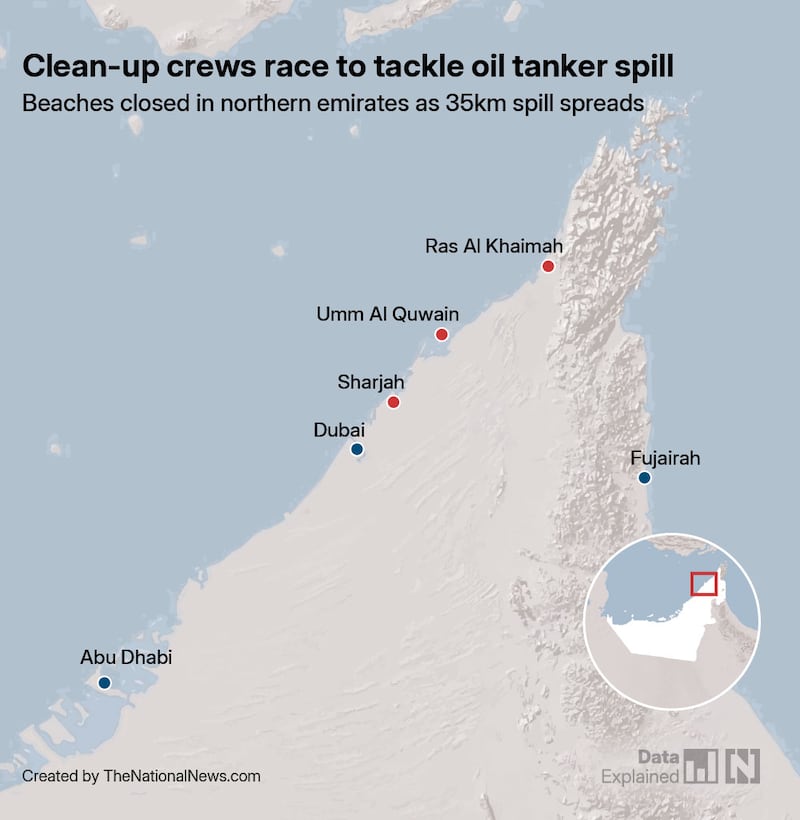
- Beaches are closed in Umm Al Quwain, Ras Al Khaimah and Sharjah
- According to international maritime agencies, the tanker Gem No 2 was damaged in an alleged Iranian drone attack on 9–10 October
What happened
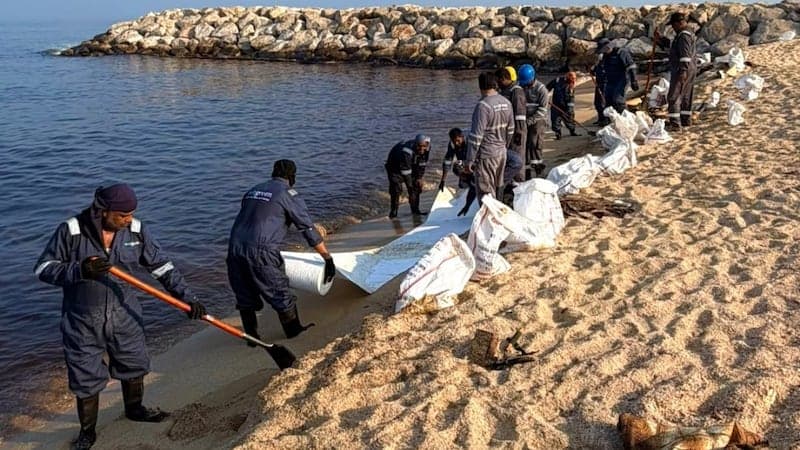
The UAE Ministry of Climate Change and Environment confirmed on Friday that its technical monitoring and environmental assessment system had detected an oil spill from a tanker that affected beaches in Umm Al Quwain. The incident was the cause of the strong fuel smell reported in several emirates; the ministry assured that the smell poses no health risk. This was reported by The National.
The vessel and the scale of the pollution
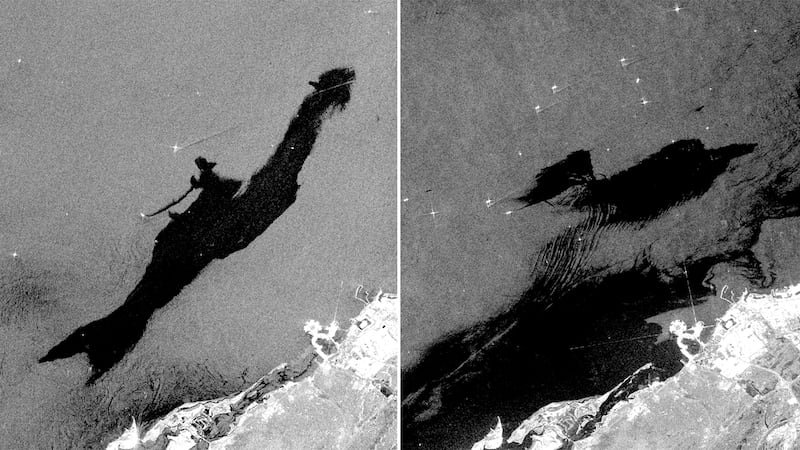
The ministry did not name the vessel, however, according to international maritime agencies cited by The National, the 330-metre tanker Gem No 2 was damaged in an alleged Iranian drone attack on 9 or 10 October; 22 Indian sailors were rescued from the vessel at the time. Oil reached about 30km of coastline from Umm Al Quwain to Al Marjan Island, with possible traces detected along up to 75km to northern Ras Al Khaimah.
Beach closures and restrictions
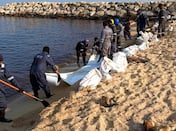
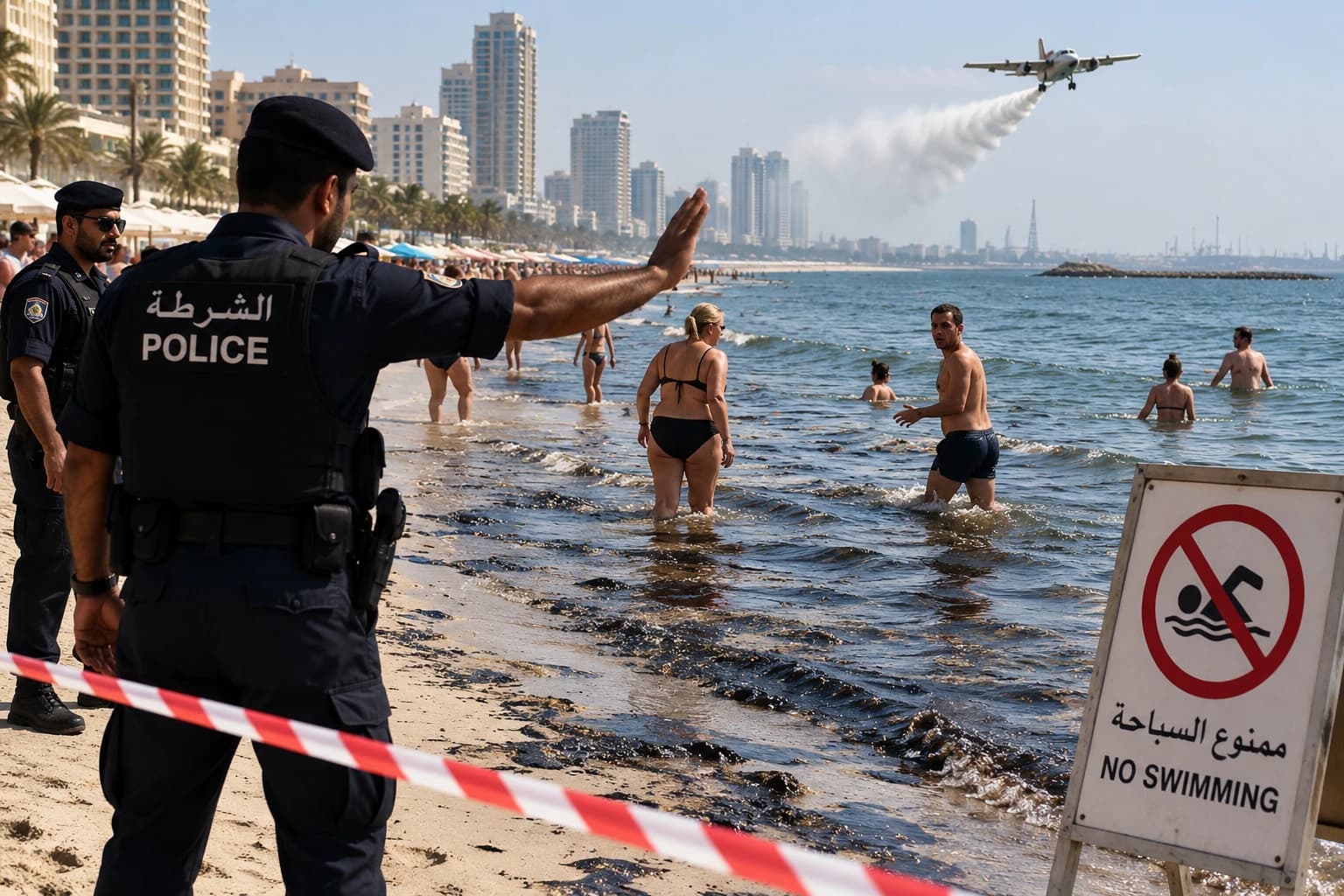
The authorities began containment work: installing booms, cleaning and remediation involving local and federal bodies, as well as coastal surveys. Beaches and coastal areas of Umm Al Quwain are temporarily closed for assessments; fishermen and beachgoers have been urged not to fish in the affected areas. Ras Al Khaimah closed all its beaches on Saturday 'until further notice', and on Wednesday Sharjah announced the temporary closure of all its beaches as part of 'proactive precautionary measures', deploying specialised teams to prevent the pollution from reaching the shore.
Why speed matters
Experts interviewed by The National stress that containing the slick is the main way to limit damage to marine ecosystems. Rob Mortimer, head of the Dubai-based company Fuelre4m, which supplies substances for dispersing oil films, noted that while the slick 'holds together' with the help of floating booms, it is relatively easy to collect from the surface, but the longer the wait, the more the oil disperses and the larger the area that has to be treated. Inesaf Benzaki, campaign leader at Greenpeace MENA, added that the semi-enclosed geography of the Persian Gulf limits water exchange with the open ocean, which means pollutants can persist longer; according to her, even after the visible oil is removed, residues may remain in coastal sediments and sensitive habitats — mangroves, seagrass meadows and lagoons — prolonging the consequences of the spill.