The key facts
- The Council of the EU adopted its position on 23 October; the European Parliament committee vote is set for 5 November, the plenary for 12 November
- The EU Council adopted its position on 23 October; the European Parliament committee vote is scheduled for 5 November, with the plenary on 12 November
- The ETUC demands that workers' rights be enshrined in binding articles rather than preambles, citing that 63% of existing European companies (SEs) are 'shelf' structures
- The startup community advocates preserving the free choice of administrative headquarters and opposes excluding entire industries
- The startup community advocates preserving the free choice of administrative headquarters and opposes excluding entire sectors
What is happening with EU Inc.
The project of a unified digital company form, EU Inc., has been stalled by a dispute over whose rights apply to workers when a company is registered in one EU country while its employees work in another. The Council of the EU approved its negotiating position on 23 October, whereas in the European Parliament, votes in the legal affairs committee were twice postponed in October due to disagreements among political groups. A new committee vote is scheduled for 5 November, with the plenary vote set for 12 November. This is reported by Euronews.
What the dispute is about
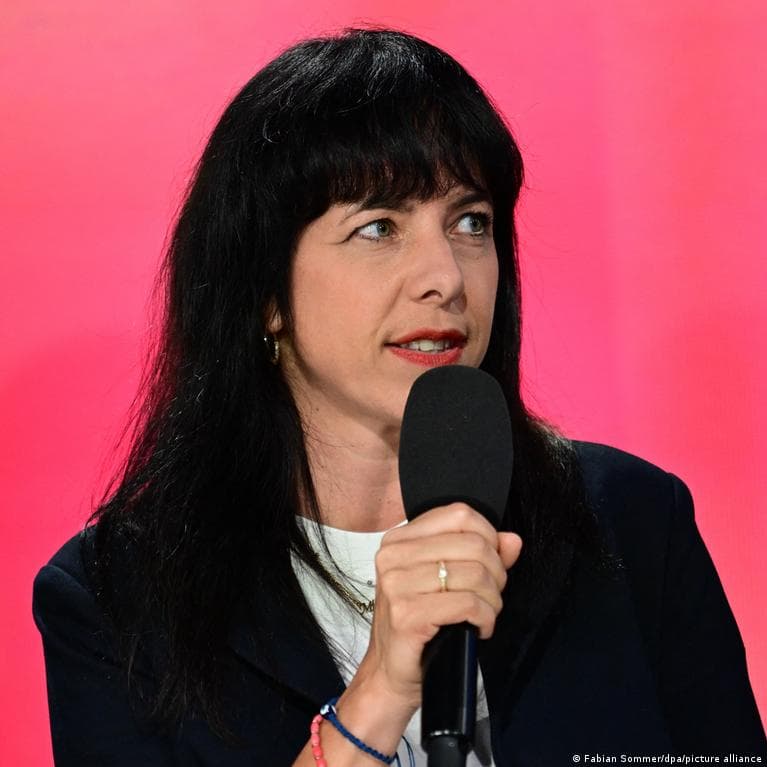
Labour law lawyers generally acknowledge that ordinary workers' rights are preserved: under EU conflict-of-law rules, the choice of another country's law cannot deprive an employee of the mandatory guarantees of the country where they usually work. The gap, according to the trade unions, lies in rights tied to the company itself, above all in worker representation at board level. Under the Commission's proposal, such rights for EU Inc. follow the place of registration, and a company can be registered without actually having its headquarters and staff there — meaning that founders effectively choose the worker participation regime when creating the company. ETUC Deputy Secretary General Isabelle Schömann told Euronews that the risk is real: 'We already have evidence that businesses are looking for a letterbox company.' According to figures she cited from the European Trade Union Institute, 63% of existing European companies (SEs) are empty 'shelf' structures.
Trade union demands and the startups' position
The ETUC demands that guarantees be written into binding articles rather than preambles, which have no legal force. The key demands are: application of collective rights and participation rights at the place of employees' habitual work; the principle of no lowering of protection — where several national regimes apply, the highest level applies; aggregation of headcount across branches, subsidiaries and controlled companies of a group when calculating thresholds for participation; an anti-circumvention clause covering artificial structures more broadly than 'wholly artificial' ones; access for inspectors and trade unions to staff data, workers' right to sue in the country of employment, and the possibility of revoking EU Inc. status in cases of serious abuse. The unions consider the Council's mandate with optional protection for branches insufficient: it is voluntary, covers only branches, and could leave workers sidelined from the parent company's board. Schömann also criticises the speed of the procedure: '48 hours is far too little for preventive checks,' and warns that with rapid closures, workers may be unable to trace unpaid wages and contributions. The second contentious point is stock option schemes: the ETUC insists they must not replace pay ('you cannot pay an electricity bill with them'), whereas the Parliament's draft makes options voluntary and prohibits using them to replace wages or reduce social contributions. The startup community rejects accusations of seeking to weaken worker protection. Simon Schäfer, CEO of the Factory network, who signed a letter to EU leaders on 15 October saying the negotiations are 'washing out' the substance of the proposal, names as his priority preserving the free choice of the administrative headquarters — the very thing that makes EU Inc. a real alternative to Delaware. In his words, 'we are united with the trade unions in that we do not want abuses of workers' rights,' and targeted rules such as banning pay being undercut below the minimum via options are better than excluding entire industries. He is prepared for the project to be delayed: 'Getting it right now is almost more important than speed.'
What will be decided on 5 November
The key stumbling block is the fallback option for cases where management and workers fail to agree on representation. The Social Democrats and the Greens consider the default protective option a red line, while Renew and business-oriented MEPs object to exporting a single model of co-determination across borders. According to Euronews, the compromise being discussed in Parliament would require companies to set up a local subsidiary after exceeding the host country's threshold, but this might not affect the parent company's board. If the vote on 5 November goes ahead, it will become clear whether the gap can be bridged.