The key facts
- After 30, the skin produces less collagen and elastin, and aggressive skincare damages the protective barrier
- The main factor in premature aging is ultraviolet radiation, which acts year-round, including in cloudy weather
- Savina recommends SPF of at least 30 with reapplication every two hours, gentle cleansing, and giving up tanning beds
Your usual skincare routine may be doing harm
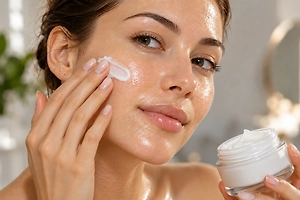
After the age of 30, the skin gradually produces less collagen and elastin, cells renew more slowly, and moisture is retained less effectively. This was reported to Life.ru by Anastasia Savina, a cosmetologist at SM-Cosmetology. According to her, the process itself is natural, but an unhealthy lifestyle and improper care make its outward signs more noticeable — and it is not only sun and cigarettes that are to blame, but also an excessive fondness for scrubs, acids, alcohol-based products, and using several active products at the same time. Such care can damage the skin's protective barrier: instead of smoothness, a person gets irritation, flaking, and dryness, against which even fine wrinkles become more visible.
Sun, smoking, and squinting
The specialist named ultraviolet radiation as the main factor in premature aging: it damages collagen fibers and causes dryness, pigmentation, and loss of firmness. Protection is needed year-round, including in cloudy weather: Savina recommends broad-spectrum products with SPF of at least 30, reapplying them every two hours during prolonged time outdoors, and avoiding tanning to the point of pronounced skin darkening as well as tanning beds. Smoking, she said, increases oxidative stress, impairs blood supply to tissues, and destroys collagen and elastin; the length of the smoking history also matters, so the most effective measure is quitting the habit entirely. A less obvious factor is constant squinting, which makes expression lines around the eyes more pronounced; the doctor advises wearing sunglasses and getting eyes checked in time, but there is no need to deliberately suppress facial expressions.
What to do instead of experimenting
Savina emphasized that maintaining healthy-looking skin does not require dozens of jars of cosmetics: it is enough to gently cleanse the face with warm rather than hot water, moisturize regularly, protect it from the sun, get enough sleep, and not go to bed with makeup on, removing it gently — with micellar water or a cleansing oil rather than vigorous rubbing. Chronic sleep deprivation, alcohol, an unbalanced diet, and sharp weight fluctuations do not create wrinkles overnight, but they can worsen the complexion and hinder skin recovery. If wrinkles appear suddenly along with pronounced dryness, itching, or redness, the doctor recommends seeing a dermatologist rather than trying to fix the problem with aggressive home procedures. Earlier, the same outlet reported on microcurrent therapy: according to the cosmetologist, the first results are sometimes visible after a single session, but a lasting effect requires a course of 5–15 procedures, and the method has contraindications and does not provide radical rejuvenation.