The key facts
- The 1996 treaty expires on December 12, 2026, and contains no automatic extension provision
- Bangladesh says India has not responded to a request for talks; India points to the JRC commission
- Without a treaty, at least three rivers nearly dried up in the past, including the Gorai, which supplies fresh water to the Sundarbans
The treaty expires in a matter of weeks
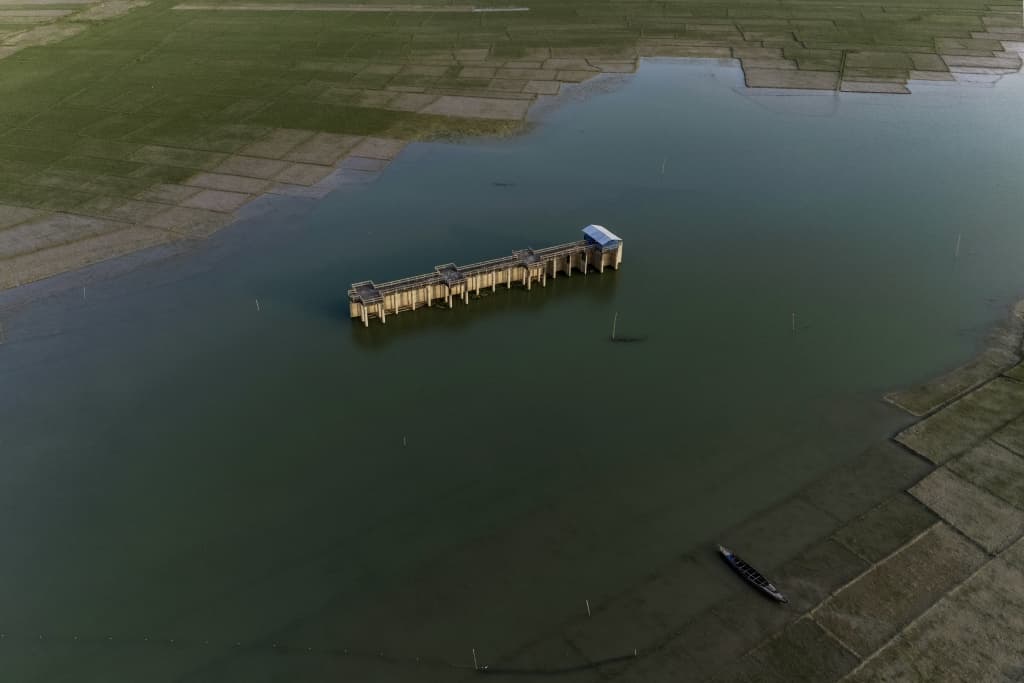
The 30-year treaty between Bangladesh and India on sharing the waters of the Ganges expires on December 12, 2026, and by the end of October the two sides had not announced agreement on a new deal. AFP reports this, citing the state of play around the negotiations. The 1996 treaty governs the distribution of water during the dry season at the Farakka barrage in India, roughly 20 km upstream of the border with Bangladesh, where the river is known as the Padma. The document contains no provision for automatic extension.
The positions of the parties
Rashed Al Mahmud Titumir, adviser to the Prime Minister of Bangladesh who heads the technical committee on water sharing, told AFP that the country needs a new treaty based on 'mutual benefit and respect.' According to Dhaka, India has not responded to a request to open talks on an extension. India's Ministry of External Affairs, for its part, said that 'discussions on river-related matters' fall within the remit of the Joint Rivers Commission (JRC), whose last technical round took place in May. The most recent officially confirmed JRC meeting at ministerial level was held in 2022 — after a 12-year hiatus. A separate agreement on the Teesta river has not moved forward since 2011.
What has already happened without a treaty
Disputes over the water began in 1975, when India opened the 2.2-km-long Farakka barrage; Bangladesh accused it of diverting most of the water. With UN involvement, an agreement was reached in 1977, but by the late 1980s the arrangements had ceased to operate. Sheikh Rokon of the Dhaka-based environmental organization Riverine People told AFP that in the years without a treaty the Ganges suffered and at least three rivers nearly dried up — including the Gorai, which carries fresh water into the Sundarbans, the world's largest mangrove forest and a World Heritage site that holds back saltwater intrusion as sea levels rise. The country's largest irrigation system, the Ganges-Kobadak, designed to irrigate 955 sq. km of farmland, 'became inoperable due to water shortages,' he said; even under the current treaty its coverage shrank to 550 sq. km, according to the state agency BSS. Rokon warned that without a new agreement the situation could be worse, since the demand for fresh water on both sides has grown significantly.
Consequences for people in the basin
The 2,525-km Ganges basin is the most populous river basin in the world: according to the World Bank, 655 million people live there, including more than 50 million in Bangladesh. In the arid Barind region, 72-year-old priest Bikash Soren told AFP that for nearly three months a year the river barely flows; he said that last season, after rice and wheat crops died due to falling water levels, two farmers took their own lives. Fish catches in the river have declined, and 55-year-old Abu Bakar Siddik switched to raising fish in ponds. In Chapainawabganj district, the river has widened by three kilometers over recent years — nearly doubling — according to Bangladesh's Water Development Board; Rehana Khatun, a resident of the village of Fielder Bazar, described how flooding destroyed her home. In May, Dhaka approved a $2.8 billion barrage project on the Padma with a 113 MW hydropower plant, intended to ease the water shortage.
Political context
Relations between New Delhi and Dhaka deteriorated after former Bangladeshi leader Sheikh Hasina fled to India in 2024 following an uprising, where she remains. Sentenced to death in absentia for crimes against humanity, she has promised to return to Bangladesh in December — the same month the treaty she signed expires. According to reports, Bangladeshi Prime Minister Tarique Rahman may also visit India before the treaty expires, but the visit has not been confirmed. Former Bangladeshi JRC member Malik Fida A. Khan told AFP that India has built 'additional dams' upstream and voiced the opinion that a new agreement should include provisions on climate change and take the entire river basin into account.