The key facts
- Houdini died on October 31, 1926, in Detroit at age 52 of peritonitis following a ruptured appendix; nine days passed between the blows in Montreal and his death.
- Houdini died on October 31, 1926, in Detroit at 52 from peritonitis after a ruptured appendix; nine days passed between the blows in Montreal and his death.
- A direct link between the student's blows and the ruptured appendix has not been proven; theories of poisoning and death in a water cell remain legends.
- His widow Bess spent ten years trying to contact him through séances and gave up after the final public séance on October 31, 1936.
- His widow Bess spent ten years trying to contact him through séances and gave up after the last public séance on October 31, 1936.
A Death That Fell on Halloween
Exactly one hundred years ago, on October 31, 1926, Harry Houdini died in Detroit — a performer audiences had grown used to seeing escape from any trap: handcuffs, locked boxes, a vat of water. The news of his death on a day traditionally associated with ghosts spawned a host of legends in itself. For the centenary of the event, Life.ru examined the circumstances of the performer's final days and separated the confirmed facts from the myths that have accumulated over a hundred years.
Who He Was and How He Became the King of Escapes
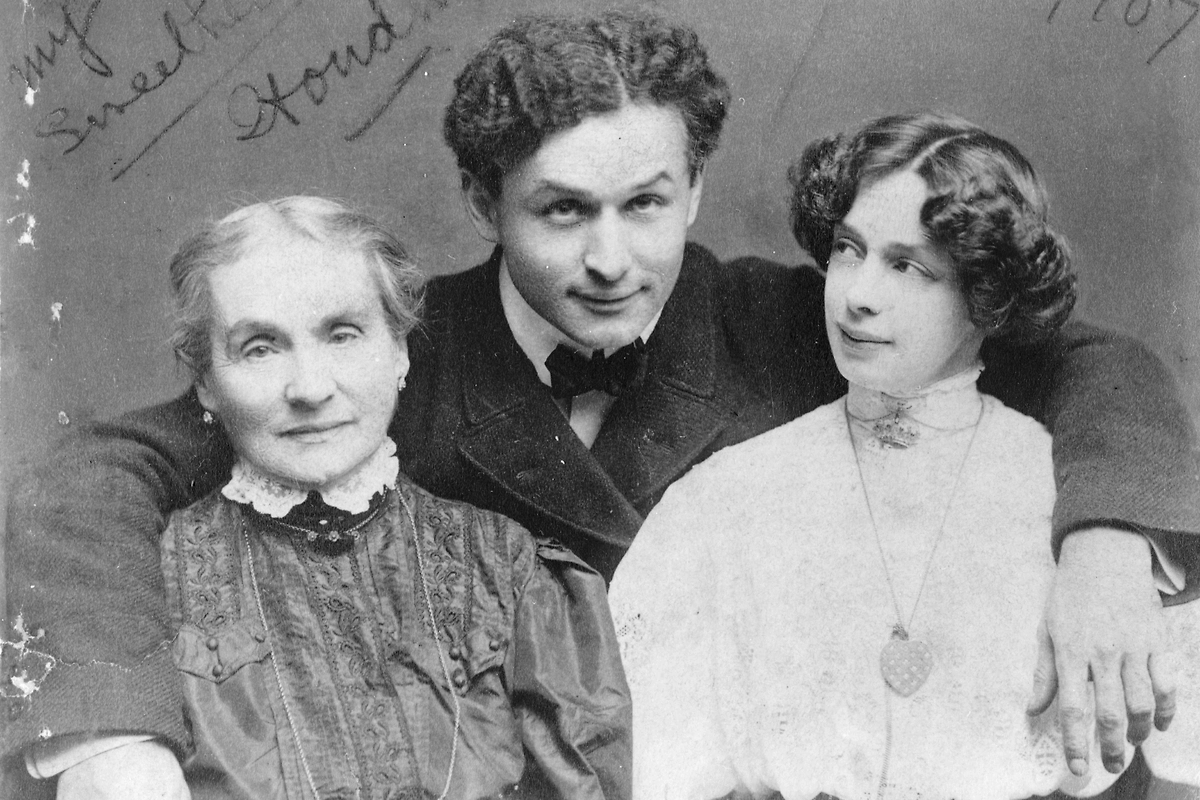
The future illusionist's real name was Erik Weisz (in the US, Ehrich Weiss). He was born on March 24, 1874, in Budapest to a rabbi's family and moved to America as a child. He took his stage name in honor of the French illusionist Jean Eugène Robert-Houdin, adding a letter to his idol's surname. In 1894, Houdini married the performer Wilhelmina Beatrice Rahner — Bess, who became his stage partner.
The turning point came in 1899, when the theater manager Martin Beck saw Houdini's act: he was intrigued by the handcuff escape. What had previously been part of the program became its main event, and
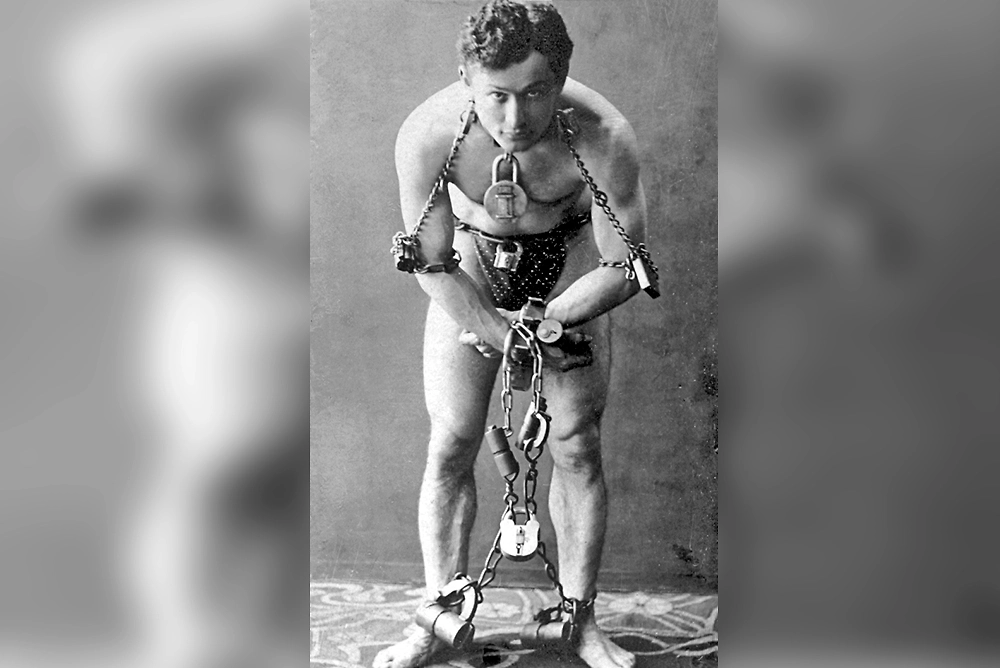
in 1900 the performer set off to conquer European audiences. For publicity, Houdini would visit police stations and offer to be locked up: if the local jail could not hold the visitor, what could be expected of him on stage that evening. No single picklock suited to all handcuffs existed — he studied locks, used hidden keys, and relied on the help of assistants.
His Most Dangerous Acts
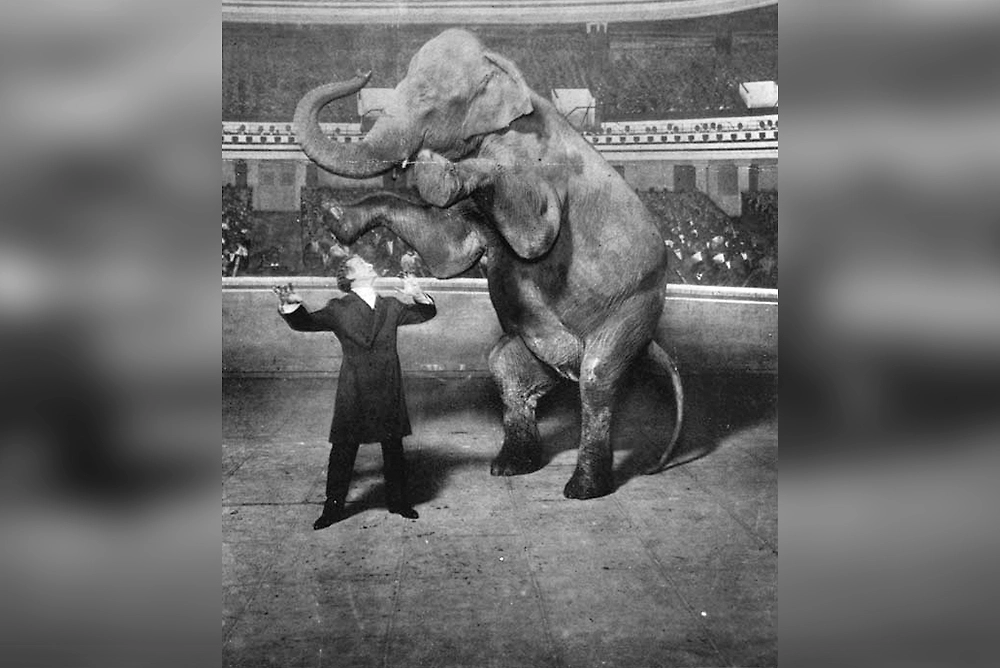
In 1908, Houdini introduced the escape from a milk can filled with water: before the act, he asked audience members to hold their breath, and people quickly gave up. In 1912 in New York, he was shackled, placed in a box, and lowered into the East River; that same year in Berlin he presented the 'Chinese Water Torture Cell,' in which he was secured by the ankles and submerged head-first in a tank. Among his famous illusions were the 'Metamorphosis,' in which Houdini, locked in a trunk, switched places with his wife in a matter of seconds, and the disappearance of the elephant Jennie at New York's Hippodrome in 1918. He also hung upside down over the street while escaping from a straitjacket. Attempts to repeat his water tricks after the performer's death sometimes ended in tragedy — as in the case of Joseph Burrus, which Life.ru covered in its roundup '5 Tricks That Did Not Go as Planned'.
The War on Spiritualism and the Feud with Conan Doyle
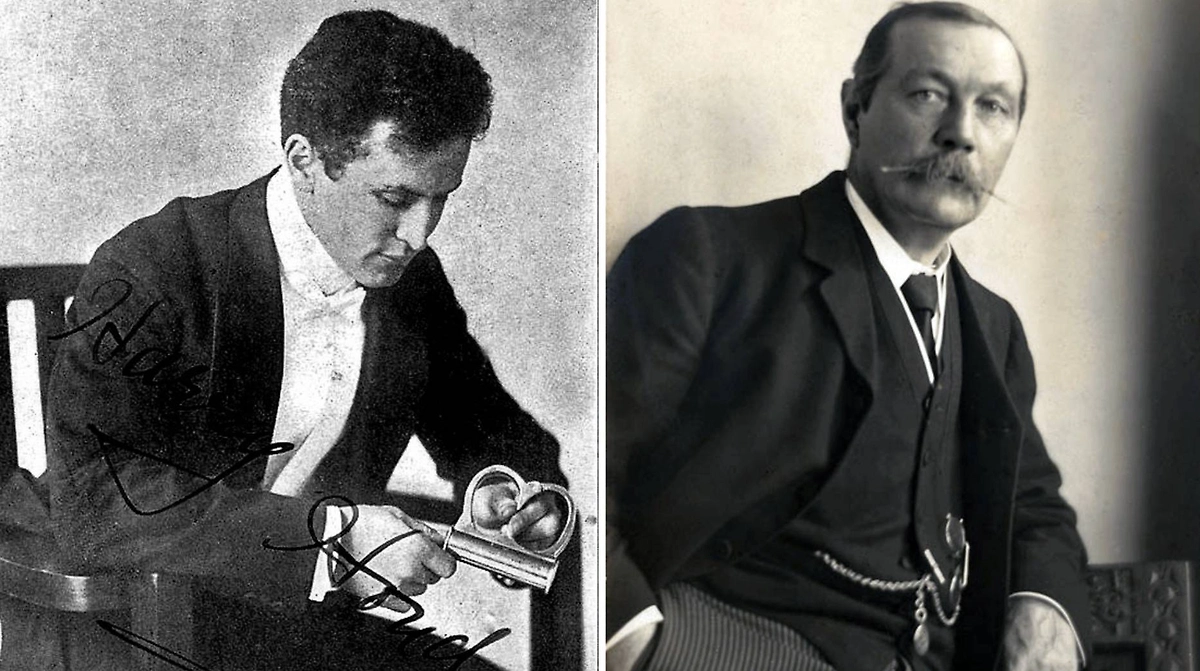
After World War I, which claimed the lives of many loved ones, séances became enormously popular. Houdini himself, who took his mother's death in 1913 very hard, denied an afterlife and considered mediums frauds. His close friend Arthur Conan Doyle, by contrast, was a committed supporter of spiritualism. In 1922, the writer's wife allegedly received a message from Houdini's mother during a séance — but the text was in English, which the deceased, according to her son, did not speak, and it contained a cross, inappropriate for a rabbi's wife. The disagreement escalated into a public feud. In the book 'A Magician Among the Spirits,' Houdini also described the contest run by Scientific American, which in January 1923 offered two prizes of $2,500 each for verifiable 'psychic' phenomena: the illusionist joined the committee and took part in testing the medium Mina Crandon, known as Margery, exposing her methods.
The Final Nine Days
On October 22, 1926, while on tour, Houdini injured his ankle but did not stop working. In Montreal, students came to see him backstage, and one of them, Jocelyn Gordon Whitehead, asked whether the performer could really withstand strong blows to the stomach. According to eyewitness accounts, after Houdini's answer the young man delivered several blows without giving him a chance to prepare properly. His condition worsened, but after the evening performance on October 23 the artist set off for Detroit by train. The next day a doctor suspected acute appendicitis and recommended going to the hospital immediately, but audiences were waiting at the Garrick Theater, and Houdini went on stage — that program became the last of his life. The operation was performed on October 25: surgeons found a ruptured appendix and developing peritonitis. The performer could not be saved — he died on October 31 at the age of 52. Nine days passed between the blows in the dressing room and his death.