The key facts
- The first budget of Andy Burnham's cabinet: a direct £100 payment to 20 million households amid rising energy prices caused by the US–Iran war
- First budget of Andy Burnham's cabinet: a direct £100 payment for 20 million households amid rising energy prices caused by the US–Iran war
- The bank corporation tax surcharge is doubled to 6%, and founders' relief is introduced — a 10% rate on capital gains up to £10 million
- The GDP growth forecast for 2026 has been raised to 1.2%, but lowered to 1.0% for 2027 against 1.6% in March
- The 2026 GDP growth forecast has been raised to 1.2%, but the 2027 forecast has been cut to 1.0% against 1.6% in March
'A steady course' amid global upheaval
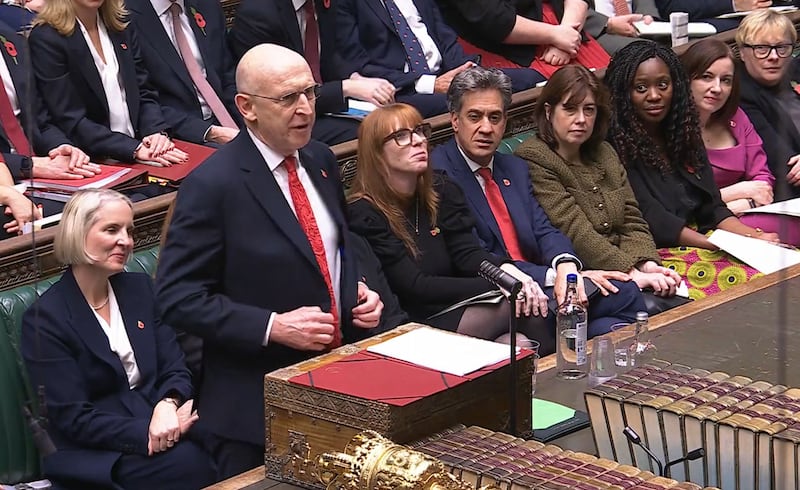
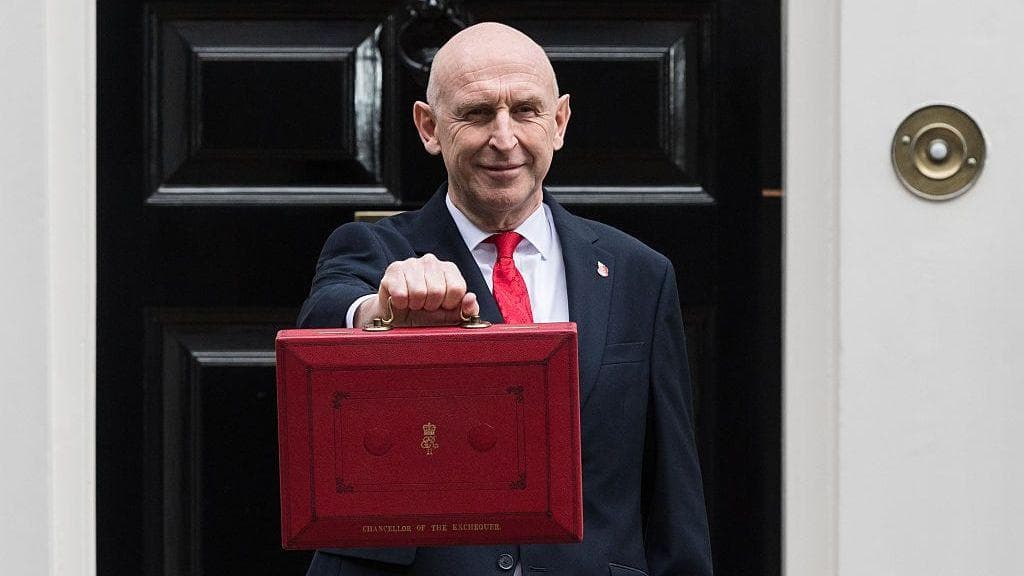
On 28 October, Chancellor of the Exchequer John Healey presented to the House of Commons the first budget of the new Labour government of Prime Minister Andy Burnham. As described by The National, it was a budget in the spirit of a 'steady course': measures to counter the consequences of the wars in the Middle East, but without risking a scare in the bond markets. Healey promised fiscal discipline in the face of 'global economic storms' and mentioned the war in the Middle East eight times in his hour-long speech, calling it, alongside Vladimir Putin's invasion of Ukraine, one of the main factors behind the tough economic forecasts.
Supporting households at the expense of banks and the gambling industry
The central measure was a direct payment of £100 to 20 million households which, according to the Chancellor, would 'ease the burden in the coldest months and help people get through to spring' against the backdrop of sharply more expensive gas and electricity. As reported by euronews, the surcharge on corporation tax for banks is being doubled to 6%, and the funds will go towards this one-off subsidy. The National clarifies that the measures are also financed by levies on the gambling industry and an increase in the tax rate on income from property and savings. Healey also announced a restructuring of the energy market to reduce bills, while making a caveat about the Jackdaw gas field in the North Sea: at first he said Energy Secretary Miatta Fahnbulleh had rejected it, then corrected himself — the field had been approved.
A pivot towards 'wealth creators'
The Chancellor abandoned an increase in capital gains tax, the introduction of a wealth tax and an expansion of the 'mansion tax' — measures which, it is estimated, prompted the departure of Britain's wealthiest people to Monaco, Italy and the UAE after Labour raised taxes two years ago. Instead, benefits were announced for young business founders, a scaling-up programme for women entrepreneurs, and founders' relief — a 10% rate on capital gains over a lifetime up to £10 million for the founders of the most successful companies; the circle of beneficiaries will be determined by a consultation. 'When business founders take the risk of starting a company and creating wealth, we must recognise that success and keep these people here so they invest again,' Healey said. Experts gave a reserved assessment: Jamie Morrison, head of the tax practice at HW Fisher, called the budget 'unremarkable' and suggested the government was postponing serious changes until 2029; in his words, this saved wealthy people from leaving but did almost nothing to bring them back. Becky Fatemi of UK Sotheby's International Realty noted that 'nothing particularly harmful' was announced, apart from a 2% increase in tax on income from property, but there was also 'nothing to celebrate'.
Pensions, housing and devolution
Among the budget's other measures: replacing the Lifetime ISA with a new First-Time Buyer ISA for first-home buyers, with changes to the penalty rules — if the home costs more than the set limit, the saver will get back at least their own contributions. Healey also confirmed the reform of the pensions 'triple lock' (annual uprating by the highest of three indicators: inflation, wage growth or 2.5%) and the creation of a national social care service which, he said, will save £15 billion a year by the end of the 2030s and £50 billion by 2050. Finally, a 'roadmap for fiscal devolution'was announced: from next year, 20% of business rates revenue will go to mayors; from 2028, mayors will also receive a share of income tax; and by the end of the decade, 100% of that tax will remain locally.
Markets breathed a sigh of relief, but the fiscal buffer shrank
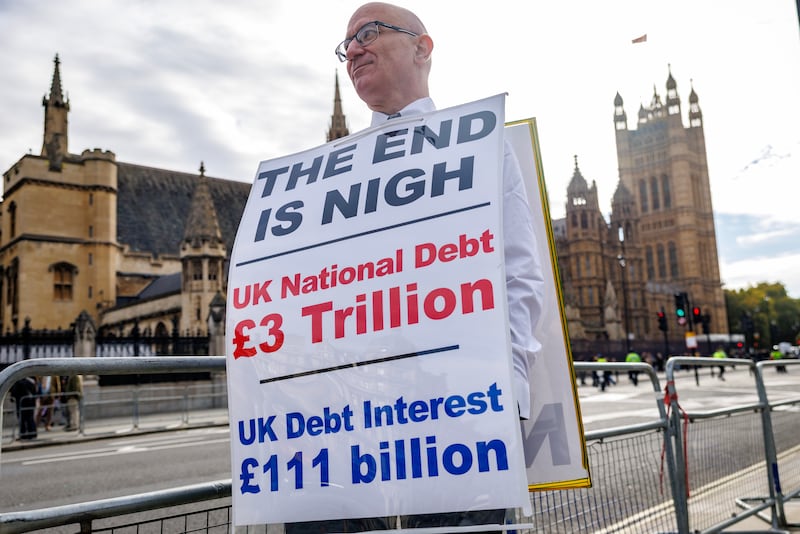
According to the updated forecast, the economy will grow by 1.2% in 2026 — above the 1.1% estimate given shortly after the start of the US–Iran war — but in 2027 growth will slow to 1.0%, compared with the 1.6% forecast in early March. Healey put the fiscal headroom at £15 billion — broadly in line with expectations, but noticeably lower than the £23.6 billion in March. Markets took the budget calmly: ten-year bond yields fell by about 3 basis points to 5.31%, and thirty-year yields by 4.5 points to 5.70%. Analysts linked the calm reaction to the intention to avoid a repeat of Liz Truss's 2022 'mini-budget', which triggered a bond market collapse: 'The whole point of today was to avoid a Liz Truss moment,' said Mike Bell of BlueBay Asset Management. Separately, Healey pledged to raise defence spending to 3% of GDP by the end of the decade and to set out in the next spending review a path to NATO's target of 3.5% of GDP by 2035.