The key facts
- The summit in Santorini discussed the use of AI in anti-doping work: data analysis, test planning, investigations
- WADA acknowledges that AI also helps rule violators
- Lawyers warn: athletes' queries on platforms may later be used in cases against them
The Santorini Summit
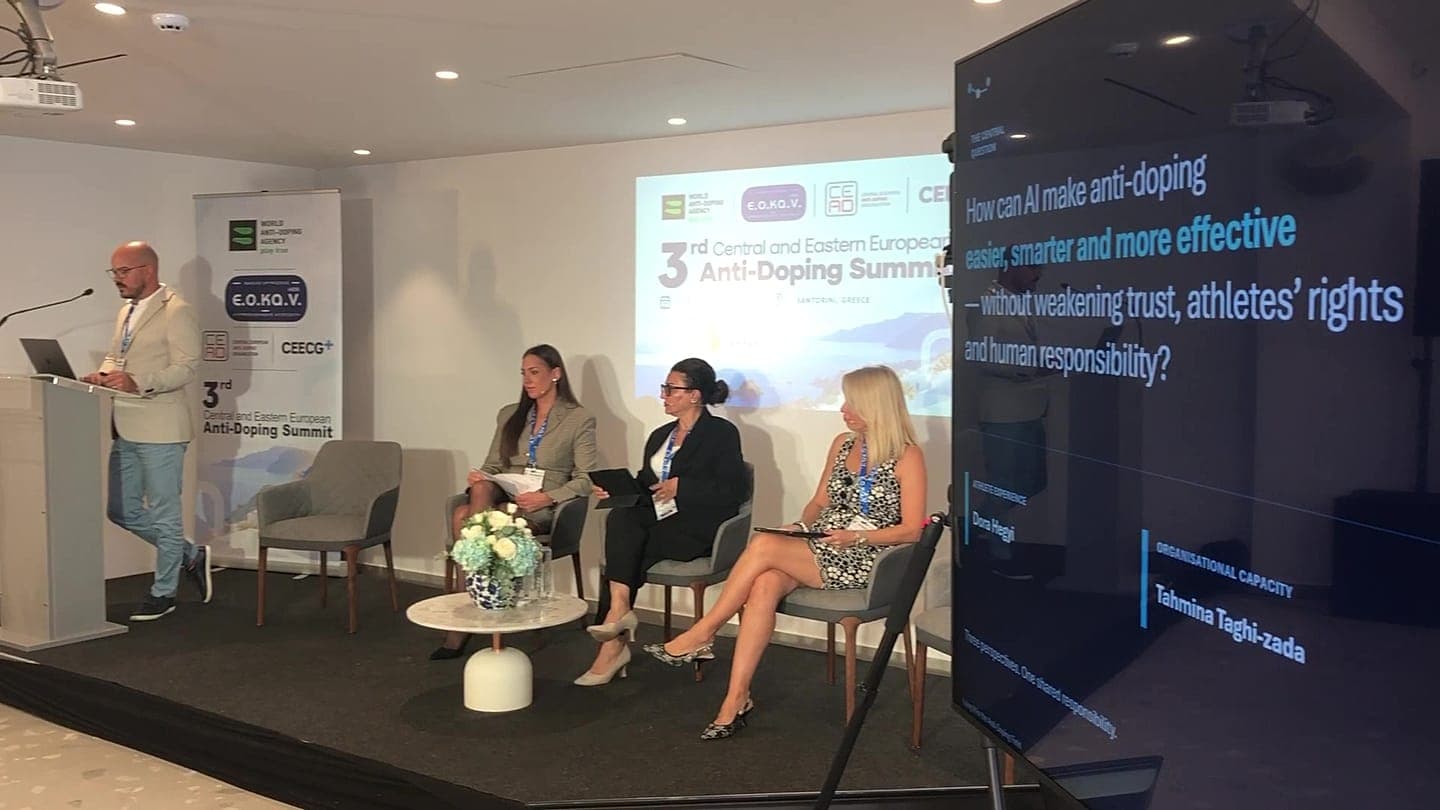
The use of artificial intelligence in the fight against doping became one of the key topics of the third Anti-Doping Summit of Central and Eastern European countries, held in Santorini with the participation of representatives of the World Anti-Doping Agency (WADA) and 26 countries. Technologies capable of supporting data analysis, improving test planning and assisting in investigative procedures were discussed; some tools can process large volumes of data and may be useful to many competent organizations. This was reported by Euronews, which covered the event.
WADA's position: a tool for both sides
WADA European Office Director Sébastien Guillot, in a comment to Euronews, called AI a new tool that everyone is learning to use, and noted its 'enormous power' for understanding trends, identifying patterns that violators may use, and analyzing data — above all to improve testing. At the same time, he warned directly: if these tools are useful to anti-doping structures, they are also useful to those who cheat, so it is important to figure out how to apply them so that they make the system stronger.
Legal risks for athletes
Lawyer Penny Konitsioti, vice-chair of the Disciplinary Committee of Greece's national anti-doping organization, drew attention to a little-known but significant point: when an athlete searches a platform for health-related or doping-related information, they should know from the very beginning — and this should be explicitly stated in the terms of use, not hidden in 'fine print' — that their queries may later be used in legal proceedings and turn against them. In her words, AI should remain a support tool for competent authorities — for example, in gathering evidence or assisting a sports judge — but should never replace established procedures and human judgment.
Data, transparency and human control
Participants agreed that technological progress must be accompanied by concrete safeguards: maintaining human oversight in disciplinary procedures, transparency in the use of new tools, and protection of personal data, the need for which was especially emphasized — digital systems create new opportunities but also raise the requirements for handling sensitive information. Dóra Hegyi, a former Hungarian artistic gymnastics champion and vice-chair of WADA's Athlete Council, noted the substance of the discussion on how AI can inform athletes and help national anti-doping organizations work more effectively, as well as on legal aspects and the athletes' own views. In her words, if trust is built in such a way that AI systems are developed together with athletes, and not only for them, this could bear fruit in future anti-doping programs. The summit also discussed changes to the rules on therapeutic use exemptions and results management procedures; participants confirmed that the goal of the global anti-doping community is reliable and consistent procedures with full respect for international standards and athletes' rights.