The key facts
- More than 6,200 works from 258 photographers were submitted to the 44th Hungarian press photography exhibition
- The MÚOSZ Grand Prix went to Diána Nemeh for the series 'Nimród'; the André Kertész Prize went to Noémi Napsugár Meleg of Telex
- The exhibition at the Robert Capa Center is open until November 8
Hungary's main showcase of press photography
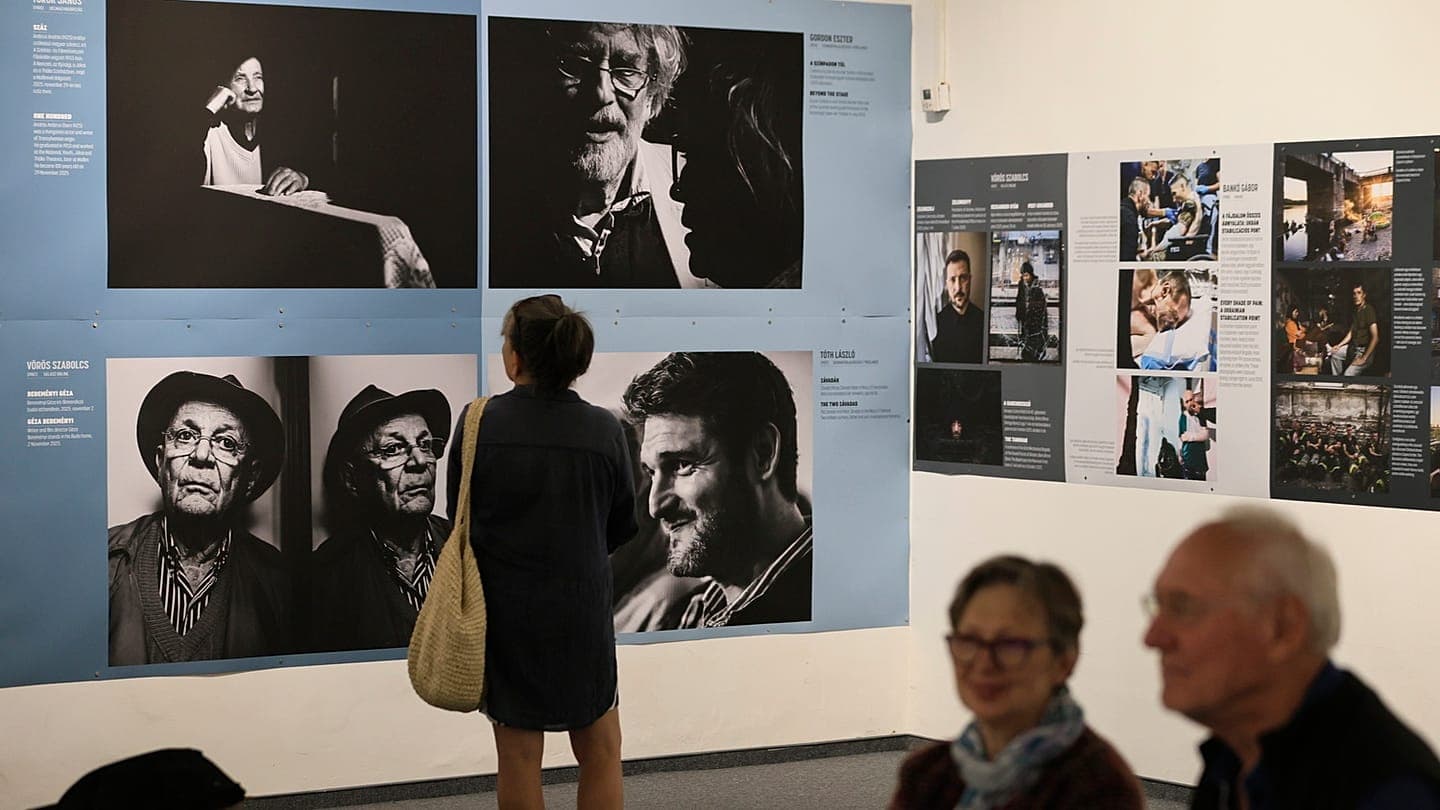
In Budapest, at the Robert Capa Contemporary Photography Center, the 44th Hungarian press photography exhibition has opened, euronews reports. More than 6,200 works from 258 photographers were submitted to the competition; the exhibition displays the top three works and special prize winners in each of the sixteen categories, as well as images the jury considered particularly important or interesting — so described the selection process photographer András Bankuti, chairman of the photojournalists' section of the Hungarian Press Association (MÚOSZ). The exhibition runs until November 8.
Theme of the year: society facing technology
If last year's exhibition was dominated by themes of political change, ballerinas and parental care, this year, according to the outlet, the dominant theme is the looming social transformation brought about by technology. At the opening, center director Orsolya Körösi emphasized that the work of photojournalists is becoming ever more important: a photographer does not merely take pictures but is present, bears witness, selects and interprets, thereby endorsing the claim that what is shown is close to reality. In her words, in the age of artificial intelligence, when it is increasingly hard to tell the genuine from the artificially created, it is especially valuable to have a place where authentic photojournalism, created under one's name and with responsibility, is presented, defended and celebrated.
The no-retouching rule
Bankuti explained the competition's strict rules: retouching is forbidden even in the smallest details — if, for example, a politician has a stain on their clothing in a photo, any alteration counts as interference and the photograph is immediately disqualified. He added that the publication of an image in any outlet is not the competition's responsibility, whereas its task today, when the authenticity of an image is valued above all, is to carefully monitor its veracity.
The winners
This year's MÚOSZ Grand Prix went to freelancer Diána Nemeh for the series 'Nimród', while the André Kertész Prize was awarded to Noémi Napsugár Meleg of the outlet Telex. Meleg, who had regularly covered almost all major protests, received the main recognition for documenting her own tragedy: after the death of her 18-year-old younger brother, she spent years photographing her grieving family and his classmates. She said she studied at the same school as her brother, and that it felt 'quite surreal' to find herself, 15 years later, in the very same places, at the same freshman camp where he was supposed to be. According to her, for a long time she kept the photos 'in a drawer' and showed them to no one, and only a year and a half later showed them to her closest professional friends — which, she noted, shifted something in her own process of coping with the loss.