The key facts
- Nearly 150 scientists from more than 30 countries demand that the climate crisis be given the status of a global health emergency
- According to Lancet Countdown, climate change was responsible for 68% of heat-related deaths in 2016–2023, up from 55% in the previous decade
- The outlets cite different estimates of heat-related deaths in 2023: DW — more than half a million, euronews — a record 710,000
- Outlets cite differing estimates of heat-related deaths in 2023: DW — more than half a million, euronews — a record 710,000
What the scientists propose
Nearly 150 researchers from more than 30 countries have called on the World Health Organization and the UN system to officially declare climate change a 'global health emergency'. This was reported by Deutsche Welle citing the annual Lancet Countdown on Health and Climate Change report, funded by the charitable organization Wellcome Trust. In the authors' view — a view also covered by euronews, official status would shift climate policy from slow voluntary commitments to mandatory and coordinated emergency-mode governance: strengthening surveillance and early-warning systems, rapid mobilization of resources, and legally binding accountability mechanisms.
What the report's figures show
The report compares the current decade with the period before the signing of the Paris Agreement, which the WHO once called 'the most important agreement of the century for public health'. According to the report, climate change was responsible for 68% of heat-related deaths in 2016–2023, up from 55% in the previous decade; the annual increase in such deaths has more than doubled. The area of territory affected by extreme drought is growing more than 700% faster than in the preceding decade, and estimated losses of potential income from heat last year amounted to $1.07 trillion. In 2025, heat 'erased' 573 billion potential working hours; the economies of Africa and Southeast Asia were hit hardest, with losses reaching 5% of GDP compared with 0.5% in developed countries.
Discrepancy in mortality estimates
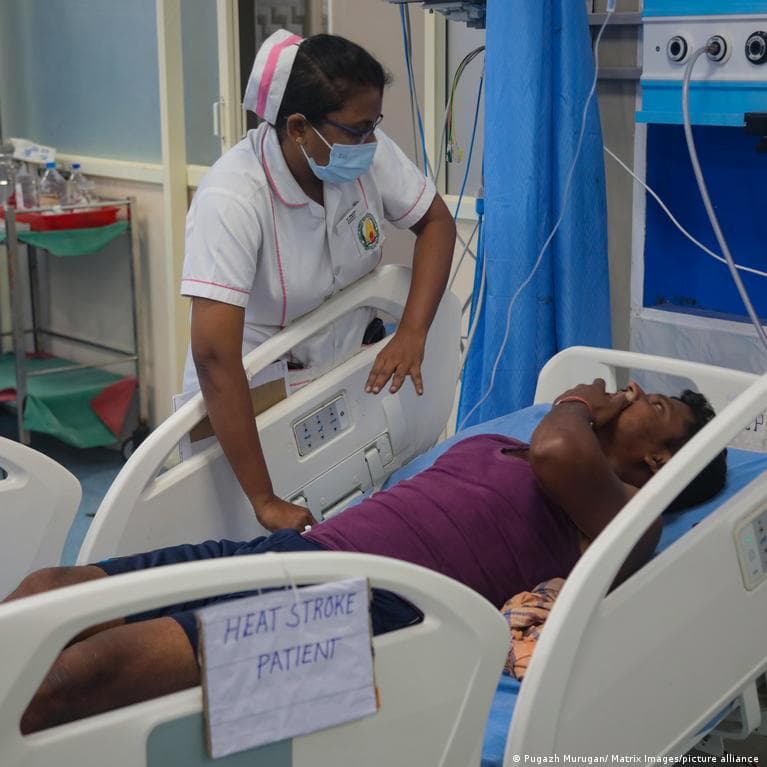
The outlets cite different figures for heat-related deaths in 2023. Deutsche Welle, citing the report, writes of more than half a million deaths that year and nearly 3 million since 2016. Euronews, also citing the Lancet Countdown report, gives a record 710,000 deaths in 2023, of which more than 70% are linked to human-caused climate change, and notes an increase in annual heat-related mortality of nearly 36% over recent decades. The outlets agree on the overall picture: the past 11 years have seen the highest temperatures on record, and climate change is creating more favourable conditions for the spread of dengue and the Zika virus.
What already works and what is lacking
Lancet Countdown executive director Marina Romanello stated that 'we have more than enough evidence' that measures work: climate early-warning systems are already reducing damage from extreme weather events, and the growth of renewable energy has helped halve mortality from fossil-fuel air pollution in half of the 140 countries assessed — roughly 323,000 deaths per year. The number of countries with national health adaptation plans for climate threats has grown from 14 in 2015 to 56. At the same time, according to the report, fossil fuels still provide more than 80% of the world's energy, energy-related emissions hit a record in 2024, and net fossil fuel subsidies have doubled since 2016 to $6.2 trillion. Developing countries need about $3.3 billion a year to adapt their health systems, but in 2024 only about a third of that amount was allocated; the gap is worsened by foreign aid cuts initiated by the United States, followed by Germany with the second-largest reduction.
What mechanism is proposed
The closest existing analogue is the WHO mechanism known as a 'Public Health Emergency of International Concern' (PHEIC), which was applied during the COVID-19 pandemic and mpox outbreaks. However, as Deutsche Welle notes, it was designed for short-term emergencies and is not suited to a complex threat requiring sustained action across several sectors at once. Romanello stressed that a broader approach is needed, 'so as not to respond to one emergency after another,' but rather to build a long-term response that strengthens countries' resilience. Among the report's other proposals, as reported by euronews, are an immediate global ban on the exploration and development of new fossil fuel deposits, a complete phase-out of coal-fired power generation by 2035, and a shift to a predominantly plant-based diet. For now, these are calls and proposals rather than adopted decisions: implementing them would require the creation of a new mechanism by the UN and its member states.